Selling with Jeff

Posts about:

Remodeling (22)

Transactional Analysis for Stronger Remodeler Sales Calls

What transactional analysis is and why it matters in remodeling sales

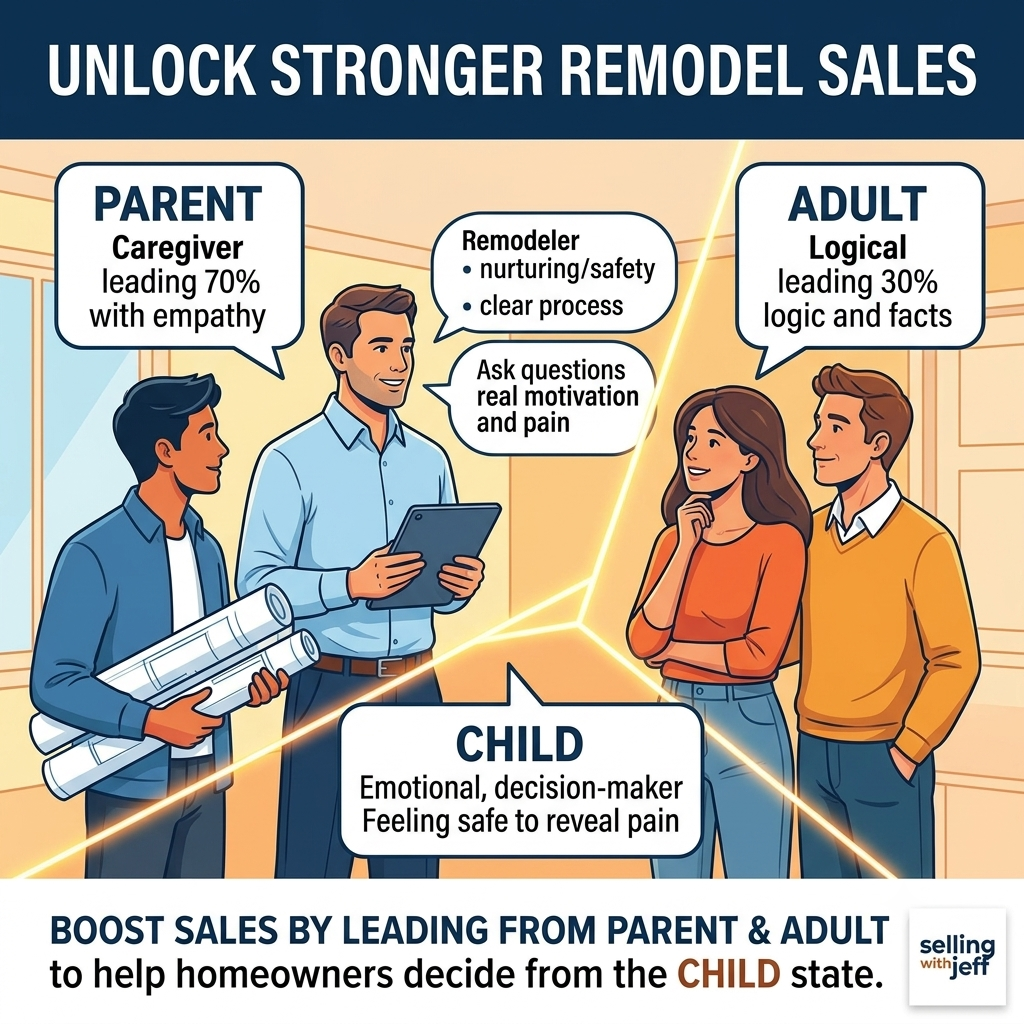
Transactional analysis in sales is a simple psychology model that explains why smart homeowners act inconsistently in conversations. It says every interaction happens from three ego states—Parent, Adult, and Child—and your results improve when you recognize the state you and your prospect are in and respond on purpose instead of by habit.

Read More

Shorten Stalled Remodel Deals with Better Qualification

Why high‑end remodel deals are stalling today

Stalled remodeling deals usually signal weak qualification, not bad luck. When the buyer’s problem, decision process, and priority are fuzzy, projects drift: discovery drags on, design revisions pile up, and prospects push calls out “one more week.” Fixing this starts with how you run the very first conversation.

Read More

Remodeling Sales: Sell Like a House Doctor

Why remodeling is a “need, don’t want” sale (and why that matters)

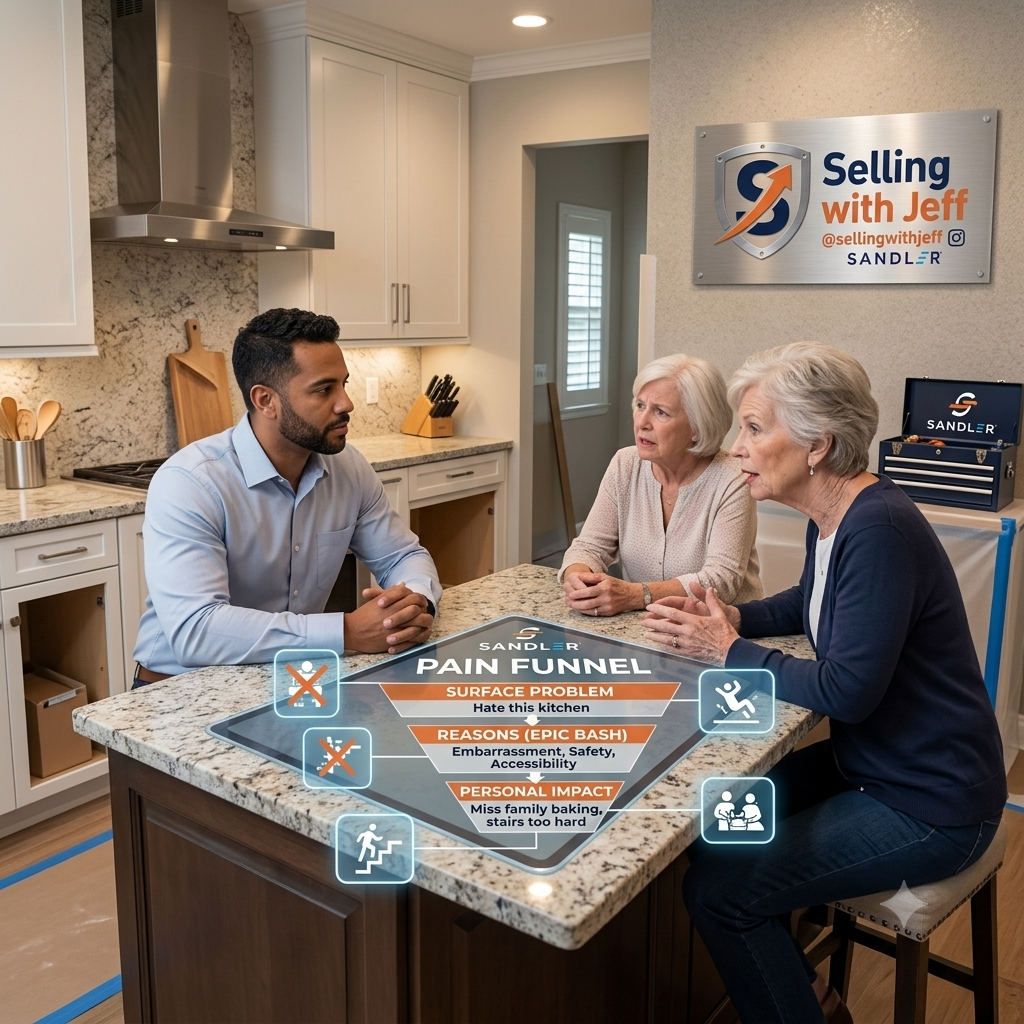
Remodeling is a classic “need, don’t want” purchase: homeowners rarely want the disruption, dust, or noise, but they need safety, usability, and dignity in their homes. Great remodeling salespeople act like a house doctor, diagnosing what hurts today instead of pitching luxury upgrades.

Read More

Use “What Number Scares You?” in Remodeling Budget Talks

Why traditional remodeling budget questions backfire

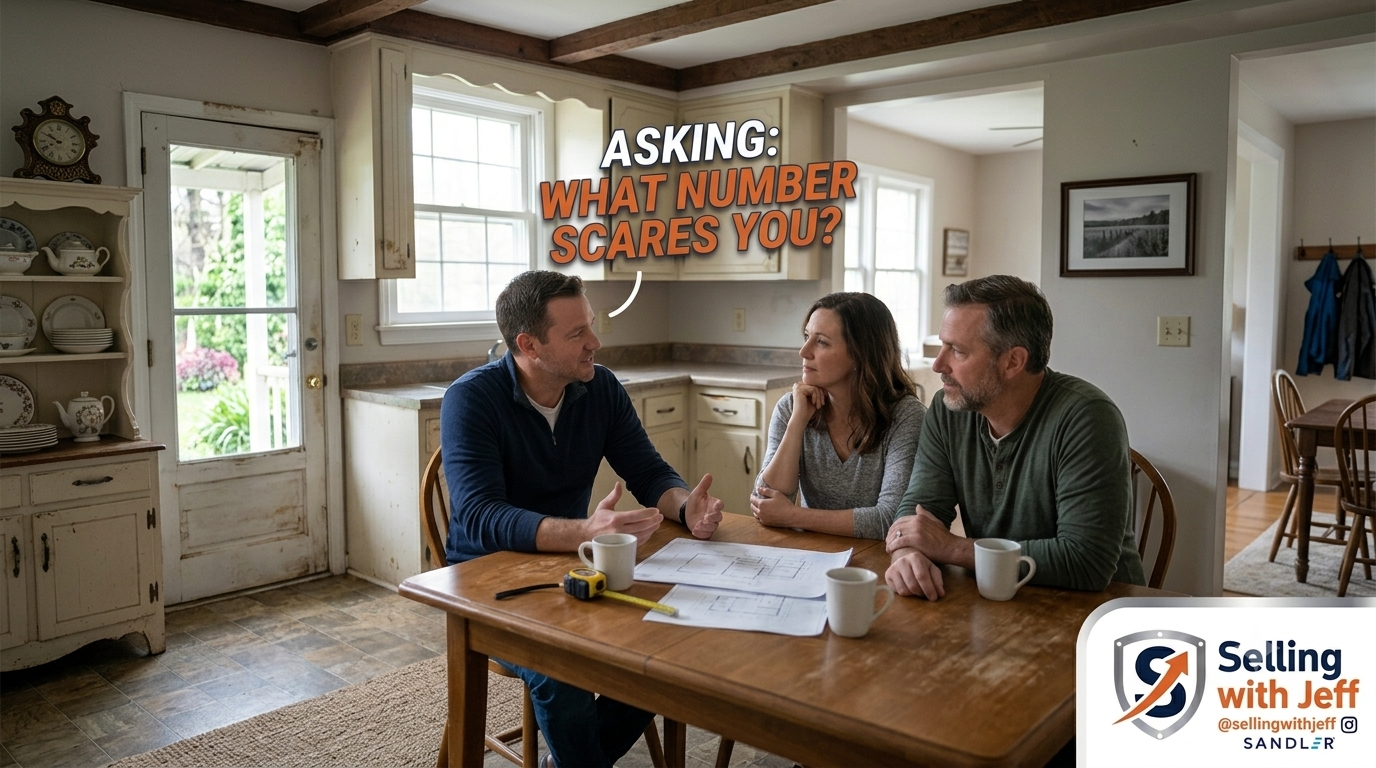
Remodeling budget conversations work best when you replace a direct “What’s your budget?” with the softer, disarming question, “What number scares you?” This shift helps homeowners talk honestly about money, reduces awkward silence, and gives you a realistic ceiling before you invest time in design.

Read More

Four Levels of Pain: Close More Remodeling Deals

Understand pain: the most powerful sales emotion

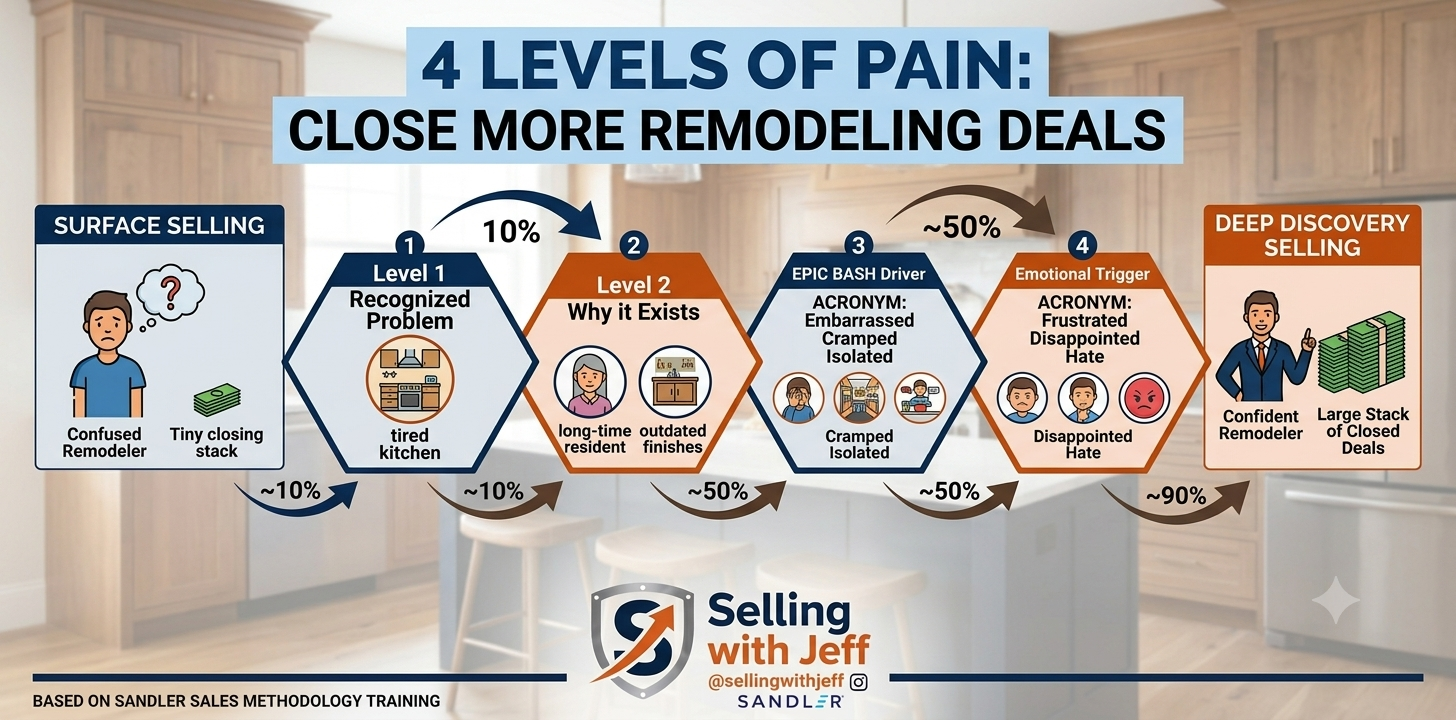
The Sandler “pain step” helps remodelers find a homeowner’s compelling emotional reason to make a change, then connect their project and price to that emotion so decisions happen faster and ghosting drops. In other words, you move from “nice design” conversations to clear, confident yes-or-no decisions.

Read More