Selling with Jeff

Posts about:

Budget

Sandler Budget Step: Be Brave Asking for Money

Why budget feels scary—and how Sandler reframes the money talk

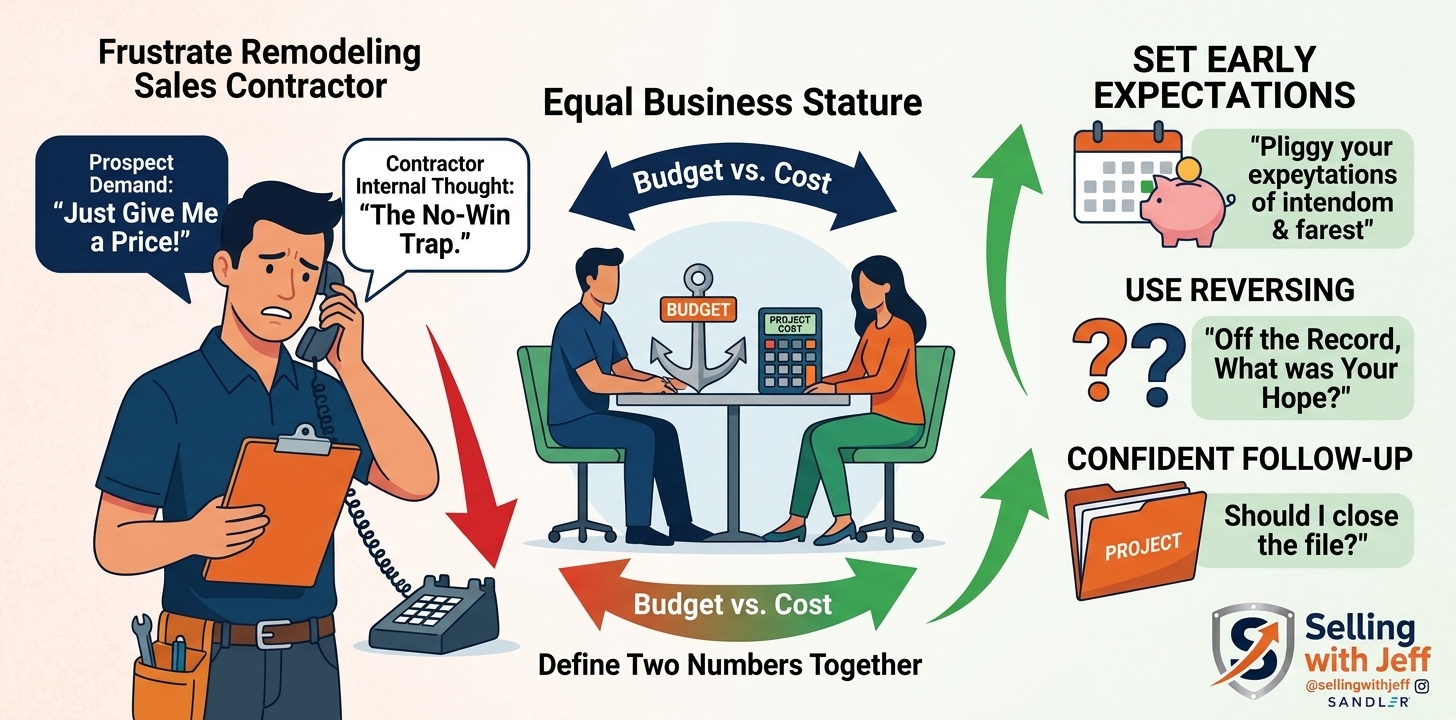
The Sandler budget step is about qualifying how serious a prospect is—by talking openly about money, timing, and priorities before you invest big effort in proposals or site visits. When you skip this step, you end up writing free estimates for people who are really just shopping for the lowest price.

Read More

Budget Conversations That Win Design-Build Clients

Start budget talks after pain—not after free consulting

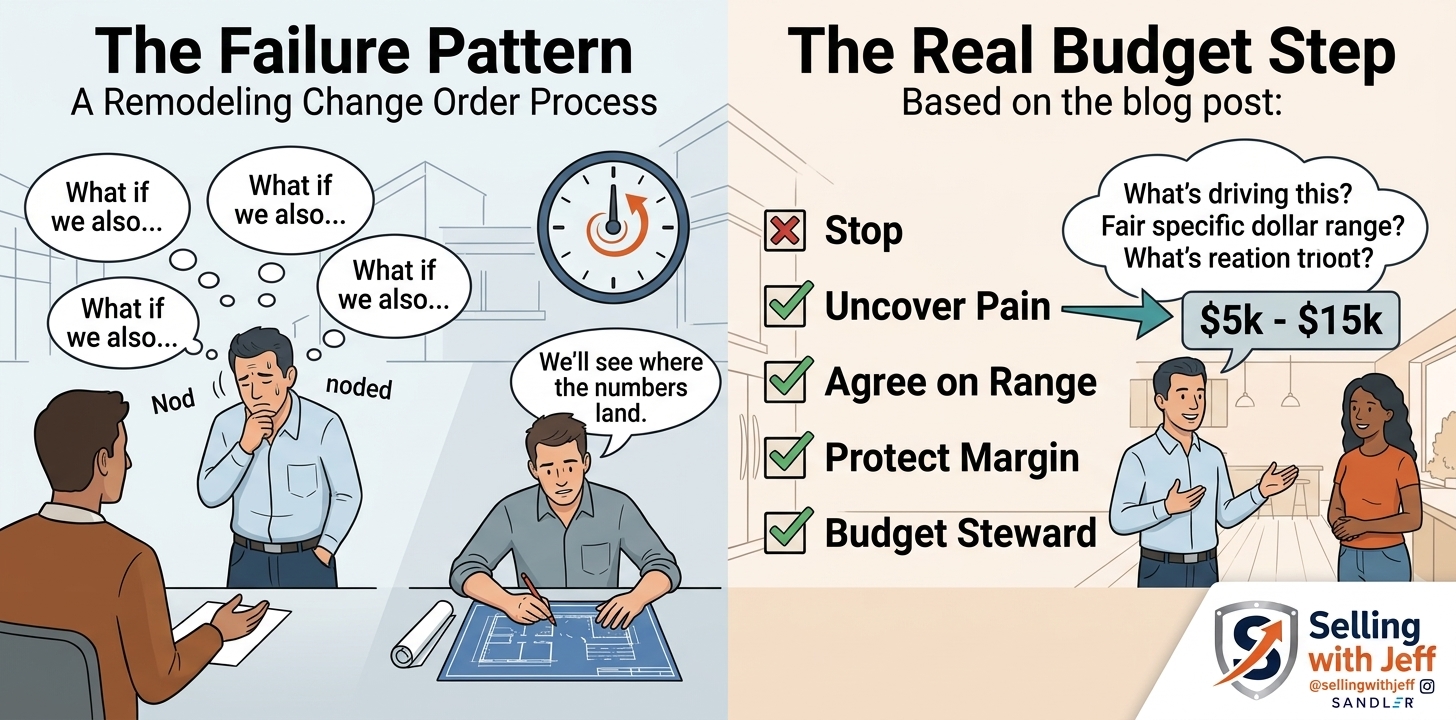
A strong budget conversation starts after a deep discussion of pain and investment, not after you’ve given free design ideas. Once you understand what is not working in their home and how it affects daily life, you can connect budget to relief, not just square footage and finishes.

Read More

Stop Letting Prospects Turn You Into a Commodity

Why price-focused prospects keep grinding your numbers down

Sales commoditization happens when prospects see every builder as interchangeable and use price as the only decision filter. To escape that trap, you must change the conversation from “How cheap can you be?” to “What’s the cost and risk of choosing the wrong builder for this project?”

Read More

Stop Being the Architect’s “High Bid”: A Remodeler’s Playbook

Reset the relationship: how to stop being commoditized by architects

The fastest way to stop being the architect’s high bid contractor is to change the rules of the relationship. That means setting clear expectations about referrals, bids, and access to the client, and positioning yourself as a collaborative expert rather than a commodity price on a spreadsheet.

Read More

Remodeling Budget Conversations When Demand Explodes

Set the tone for remodeling budget talks before numbers appear

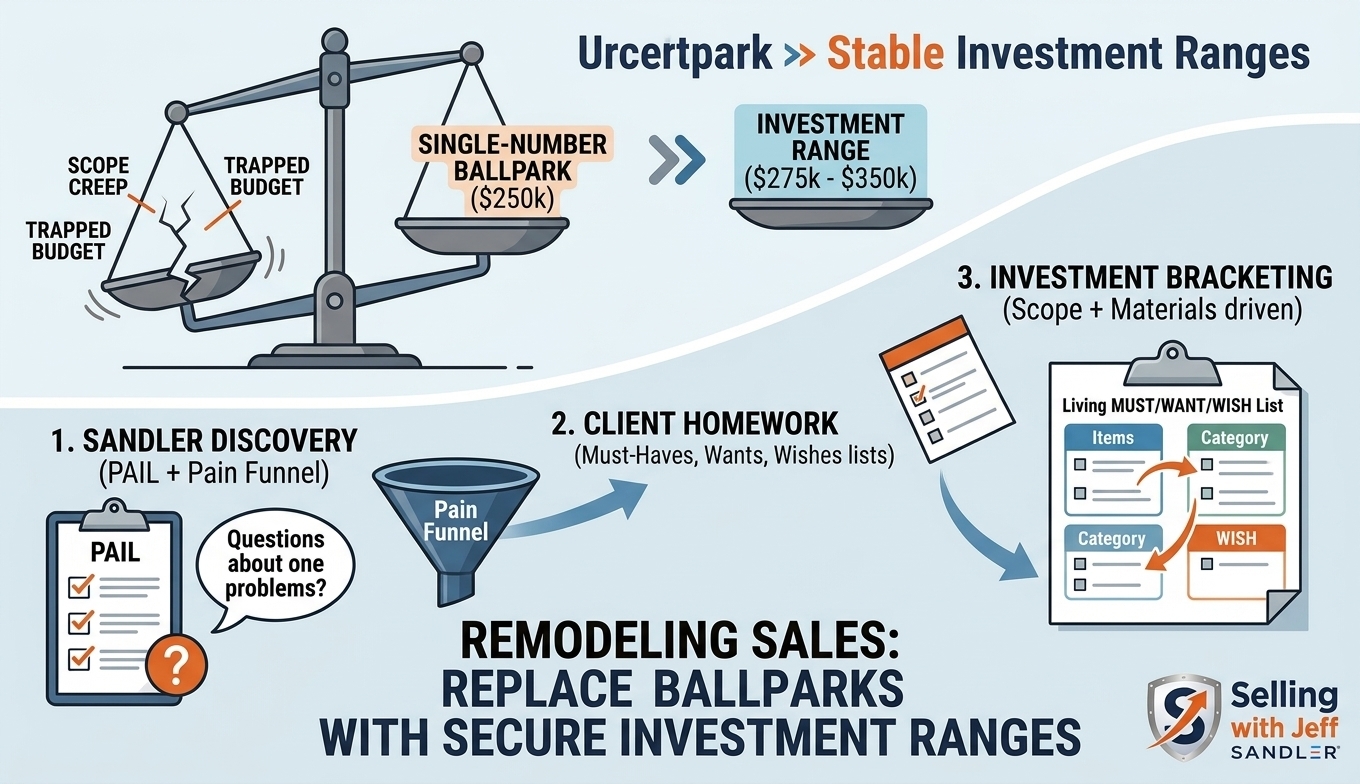
Remodeling budget conversations work best when they’re framed as joint planning, not price reveals. Tell homeowners exactly when and how you’ll talk money, use clear ranges instead of single numbers, and make them state their expectations first so you’re aligning, not defending your price.

Read More