Selling with Jeff

Posts about:

Design Build

Sales Detective Skills for Design-Build Redesigns

Turn “unpaid consulting” into deliberate sales practice

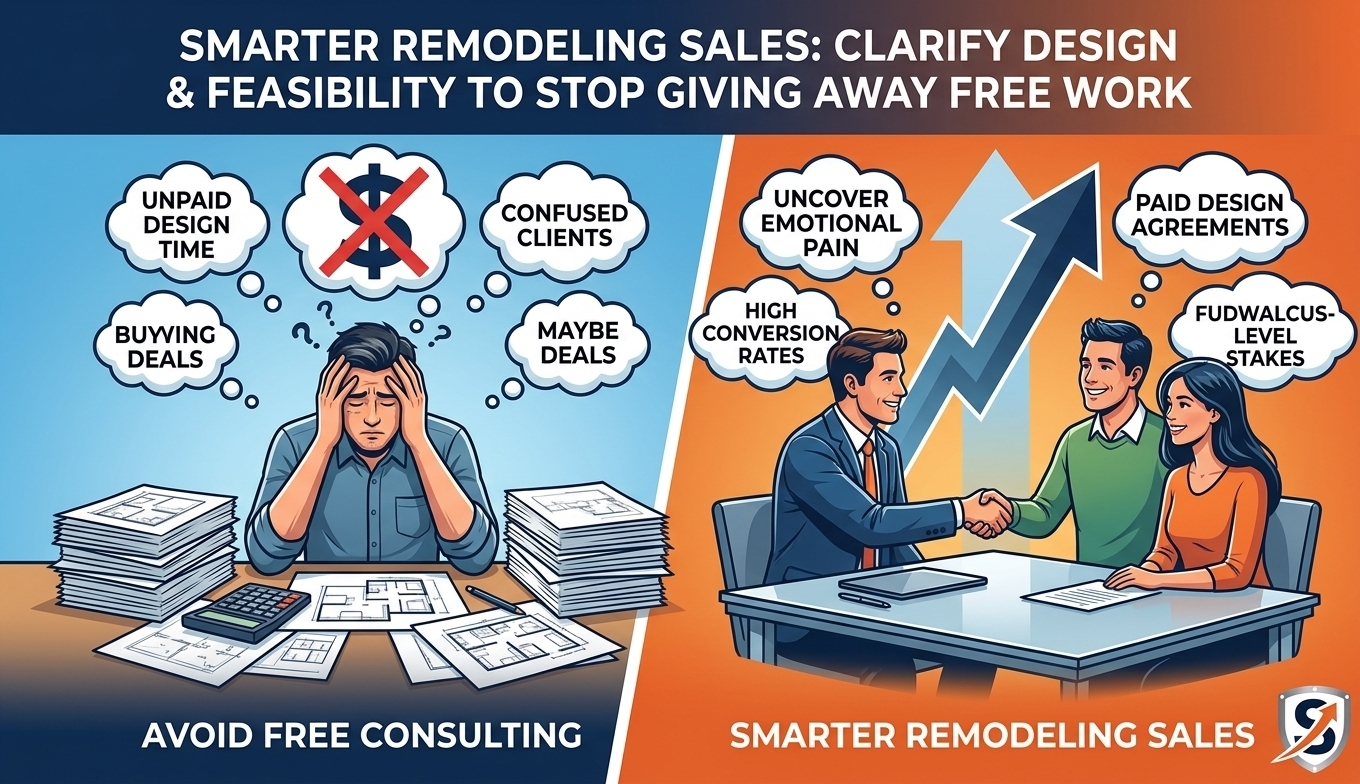
The fastest way to reduce painful redesigns is to treat low‑probability opportunities as structured practice, not unpaid consulting. Use extra capacity to rehearse your sales process, sharpen your questions, and test language, but always anchor the conversation in a clear path to a yes/no decision so it doesn’t drift into free design work.

Read More

Design-Build First Visits: Pain-First Meetings That Close

Here’s a photorealistic, cinematic design-build consultation scene with a low-angle composition, dramatic lighting, material samples, a floor plan tab

Why Being Last Wins More Design-Build Jobs

A strong design-build sales process aims to be the last serious conversation a homeowner has before they choose a contractor. In competitive design-build work, showing up third or fourth—after other builders—means prospects have seen what “average” looks like and are finally ready to decide when you walk in the door.

Read More

Turn Design Presentations Into Decisions with ETCFF

Use ETCFF to turn design presentations into firm decisions

The fastest way to turn a great design meeting into an actual project is to keep tying every choice back to ETCFF—Expand, Time, Cost, Fix, Feel. Instead of treating the workshop as a show-and-tell, you use each step of ETCFF to confirm why they invited you, why now, and what must happen at the end of the meeting.

Read More

Design-Build Trust: Stop Losing Clients After Design

Spot the real reason clients leave after design

Most design-build firms blame budget when homeowners walk away after design, but often the real issue is missing design-build trust. When clients don’t fully trust your team or process, every price feels risky, every change feels scary, and “We’ll think about it” becomes the safest option.

Read More

Stop Over‑Designing with Needs, Wants, Wishes

What ‘Needs, Wants, and Wishes’ Really Mean in Remodeling Design

The needs, wants, and wishes framework helps remodeling designers turn emotional client stories into clear design priorities. “Needs” are non‑negotiables the project must include, “wants” are features clients value and will fund, and “wishes” are nice‑to‑have ideas that only belong in the plan if the budget allows.

Read More