Mastering Client Conversations: Avoiding Common Pitfalls
Unlock the secrets to effective client conversations and build stronger sales relationships.
Posts about:
Unlock the secrets to effective client conversations and build stronger sales relationships.
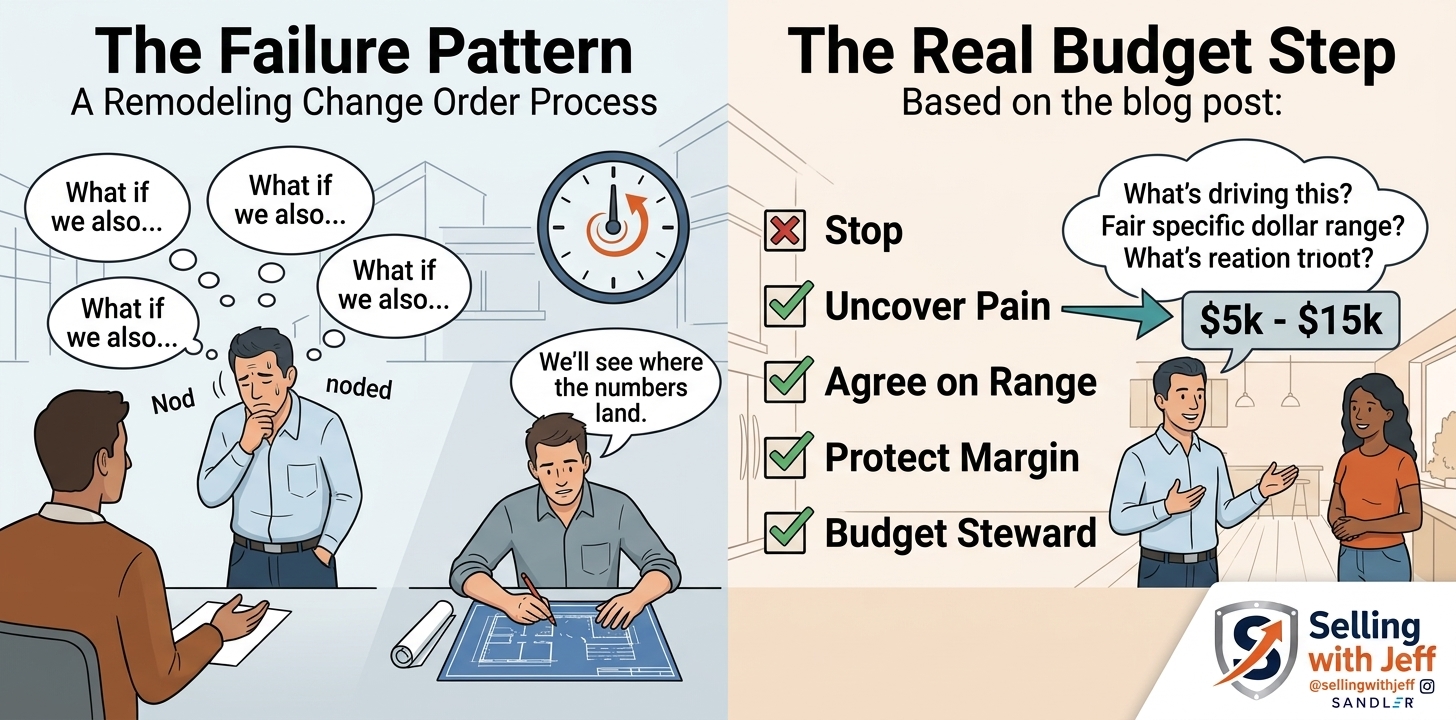
Every remodeler has been there. A dream prospect shows up, tells you all the right things, nods through your discovery questions, and starts talking like the contract is already signed. Your gut whispers, “Slow down.” Your ego screams, “Let's go!” And before you know it, you’ve convinced yourself this is the one—the $300K kitchen + addition combo that’s going to make your quarter.
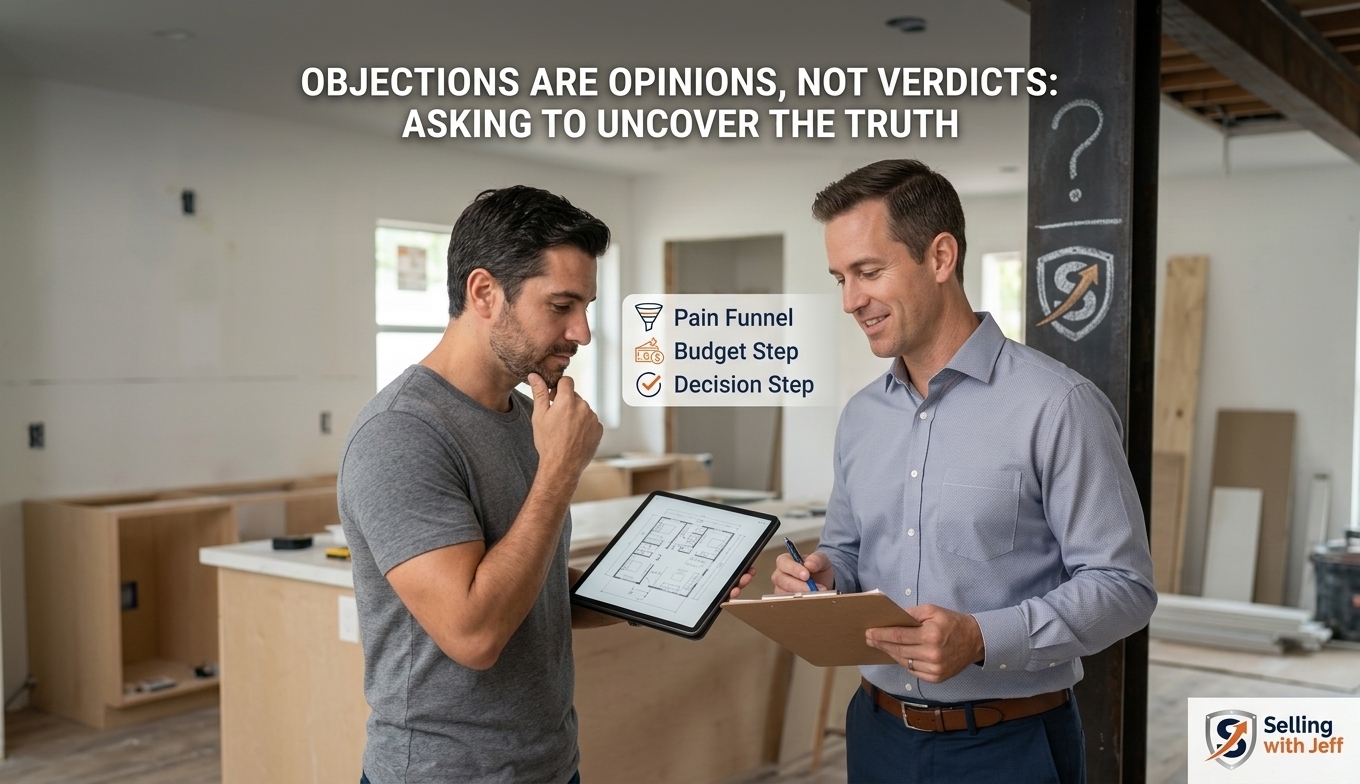
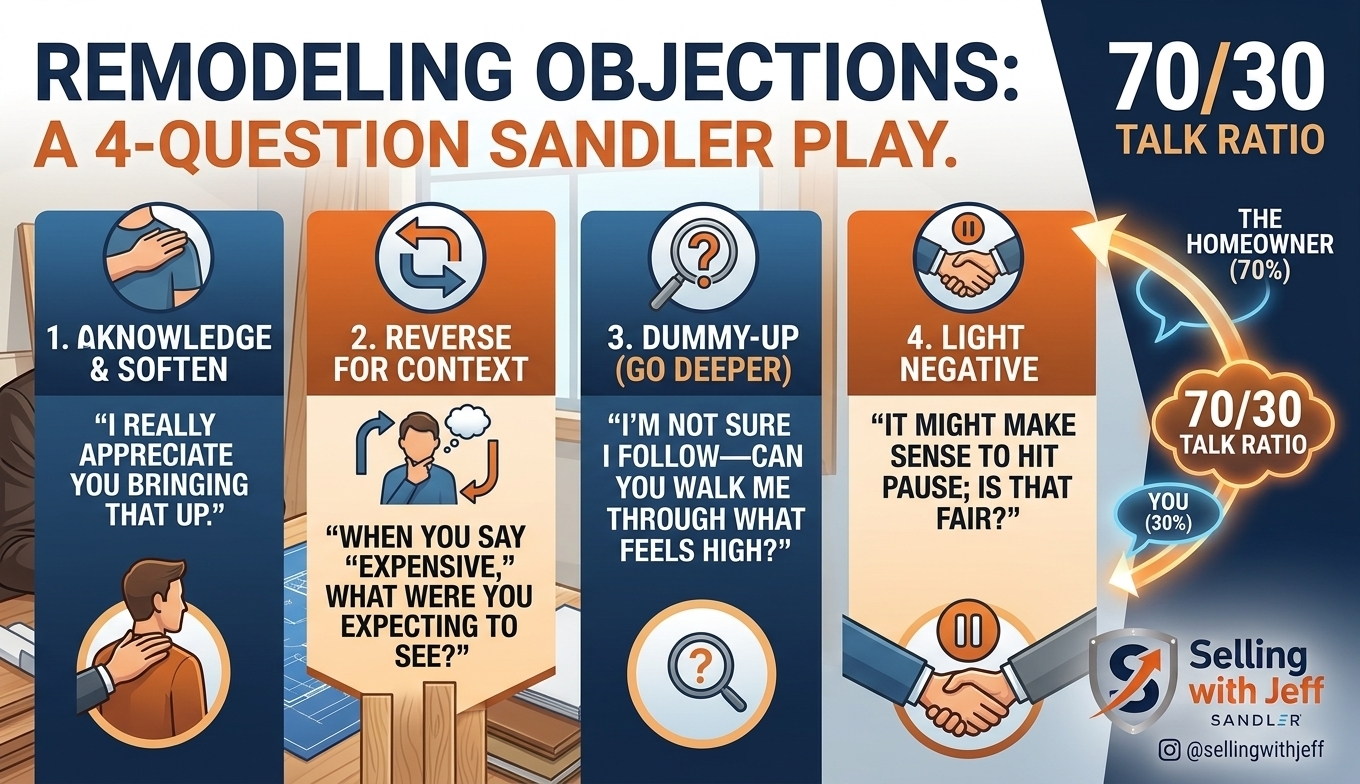
Handling client objections is a critical skill that every sales professional must master. Whether it’s budget constraints or project timelines, successfully navigating these conversations can make or break a deal. In this blog post, we will delve into effective strategies for addressing client concerns with empathy and professionalism. By understanding the root causes of objections and adopting a collaborative approach, sales professionals can better navigate these challenges and maintain strong client relationships.
In the competitive world of sales, understanding your client's needs is paramount. Tactical empathy, a concept popularized by former FBI negotiator Chris Voss, involves deeply empathizing with your counterpart's situation. It's about acknowledging their fears, concerns, and aspirations to create a rapport that fosters trust. By demonstrating genuine empathy, you can make clients feel heard and valued, which opens the door to more meaningful and productive negotiations.
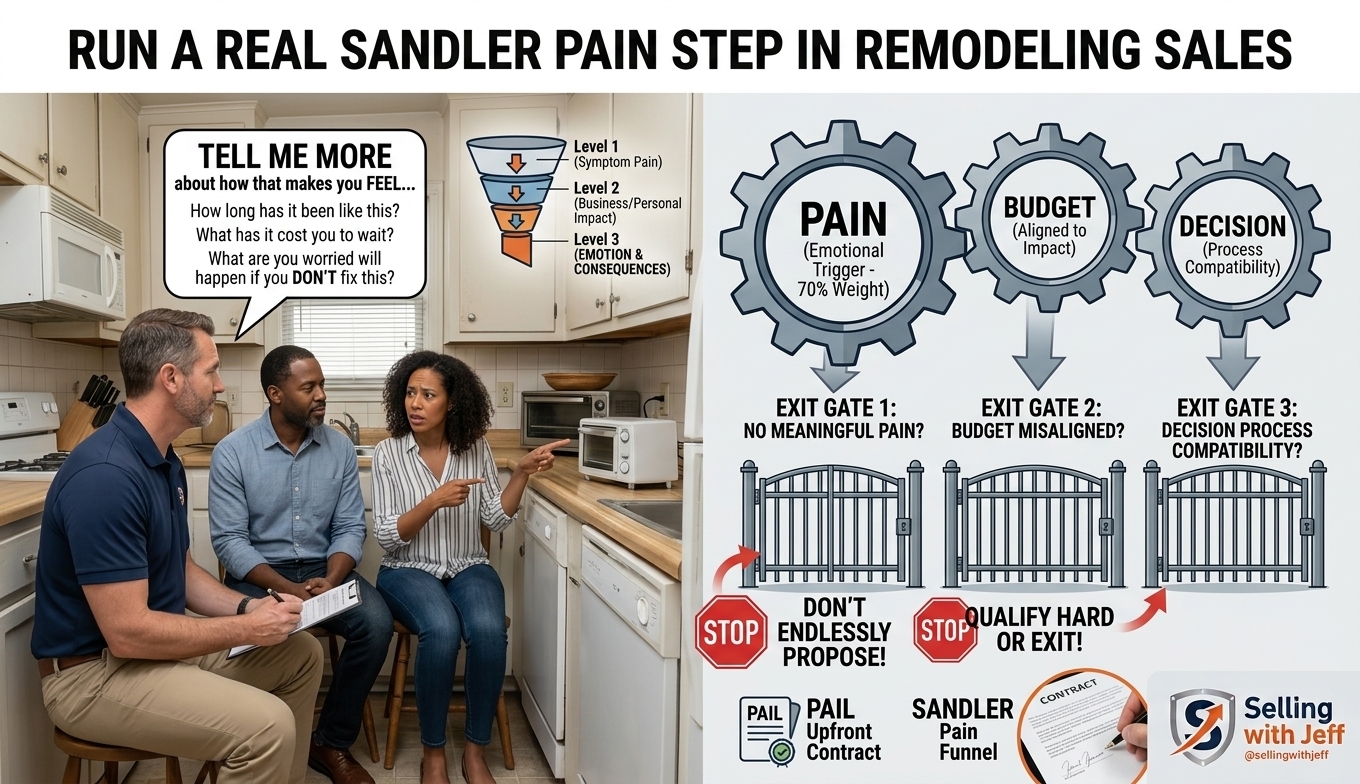
Understanding buyer emotions is crucial for any sales professional aiming to close more deals. There are four primary buyer emotions that drive purchasing decisions: pain in the present, pain in the future, pleasure in the present, and pleasure in the future. Each of these emotions influences the buying process differently and requires a unique approach.