
Selling with Jeff

Posts about:

Objections

Stop Discounting: Sell Value Without Killing Margin

Why price isn’t the real problem when deals get stuck

The real reason clients stall isn’t usually price – it’s lack of trust, unclear value, or an incomplete decision process, so protecting margin means diagnosing the real problem instead of reflexively cutting price. When people say, “Your price is too high,” they’re often signaling fear, confusion, or conditioning—not a hard no.

Read More

Handle Sales Stalls with the Acknowledge–Explore–Resolve Method

Acknowledge stalls and objections without creating resistance

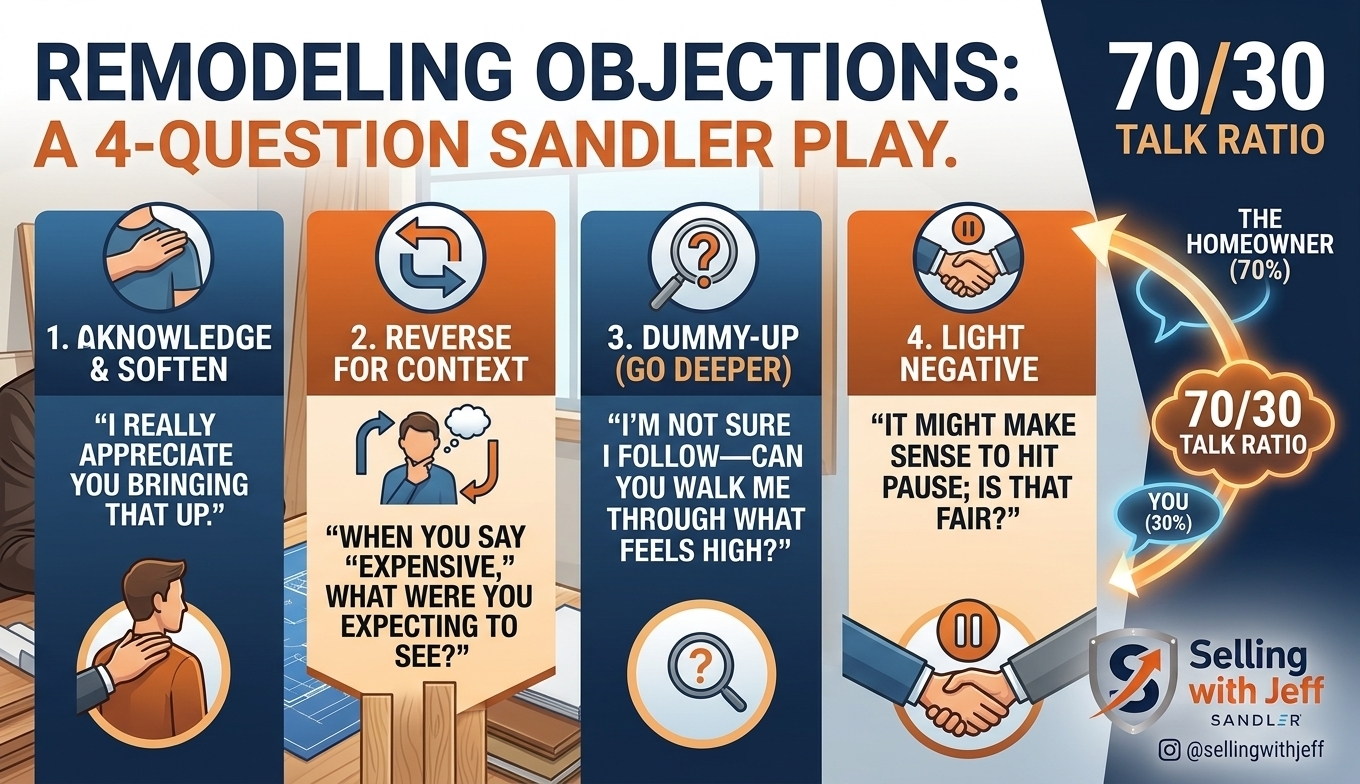
When a buyer pushes back, don’t rush to defend your offer; start by acknowledging the objection and lowering resistance. Top Sandler trainers emphasize that most objections are really uncertainty, not final decisions, so your job is to make it safe for the prospect to keep talking instead of shutting down.

Read More

Handle Sales Objections the Sandler Way

Start with the Dummy (Curiosity) Curve, Not Product Pitches

Effective handling sales objections starts by asking more questions than you answer. Instead of proving how smart you are, act like a curious beginner: slow down, ask simple questions, and let the prospect do most of the talking so you uncover what is really driving their pushback.

Read More

Handle Sales Objections With the Curiosity Curve

Why your first reaction to objections is killing your margin

When clients push back on price, timeline, or terms, the most effective way to handle sales objections is to pause and ask a clarifying question instead of defending, explaining, or discounting. This keeps you out of panic mode, uncovers the real concern, and protects your margin over the life of the deal.

Read More

Handle Remodeling Sales Curveballs Like a Pro

Set clear expectations so busy homeowners never feel ignored

The best way to keep overwhelmed homeowners calm during a remodel is to set clear expectations about your sales and project process before they sign. In practice, that means explaining timelines, handoffs, communication rhythms, and what “busy season” really looks like for your team in plain language.

Read More