Selling with Jeff

Posts about:

Emotion

Sales Detective Skills to Stop Selling on Hopium

What “hopium” is and why it quietly kills sales careers

Sales hopium is when reps chase weak deals based on hope instead of evidence, staying busy with unqualified prospects instead of focused on real opportunities. It shows up as bloated pipelines, endless follow-ups, and “maybe” deals that never close, quietly destroying time, margin, and confidence.

Read More

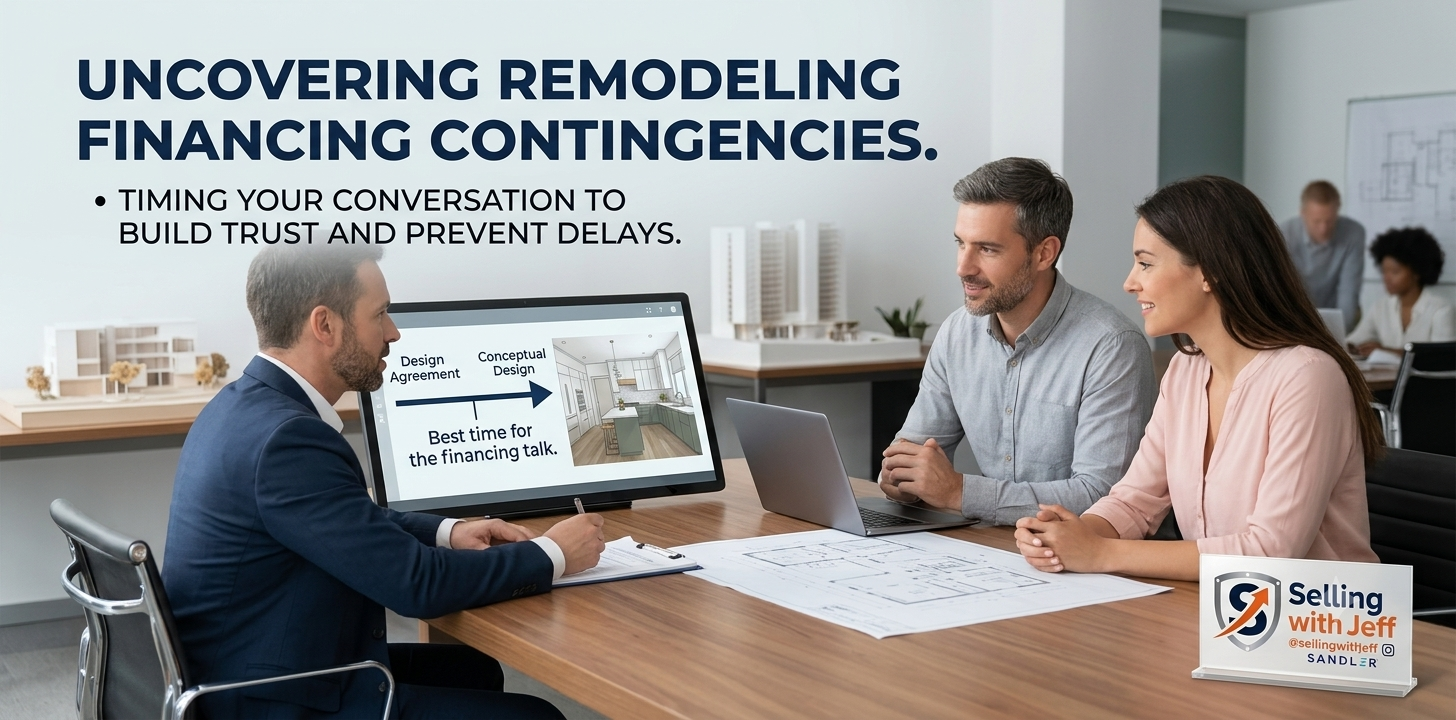
Remodeling Financing Talks That Don’t Kill Trust

Why timing your remodeling financing conversation matters

A remodeling financing conversation is a short, direct check on how a client will access funds for their project and what could delay that money. The best time is after they sign the design agreement but before conceptual design, when trust is forming and there’s still room in the schedule to adjust.

Read More

Decision Enablement: Stop Selling, Start Guiding

Why sales is really decision enablement, not persuasion

Decision enablement means your primary job in sales is helping prospects make a clear yes-or-no choice, not pushing them to buy. Instead of convincing, you surface their pains, clarify options, and guide them through each micro‑decision so they feel confident, not pressured.

Read More

Stop Discounting: Sell Value Without Killing Margin

Why price isn’t the real problem when deals get stuck

The real reason clients stall isn’t usually price – it’s lack of trust, unclear value, or an incomplete decision process, so protecting margin means diagnosing the real problem instead of reflexively cutting price. When people say, “Your price is too high,” they’re often signaling fear, confusion, or conditioning—not a hard no.

Read More

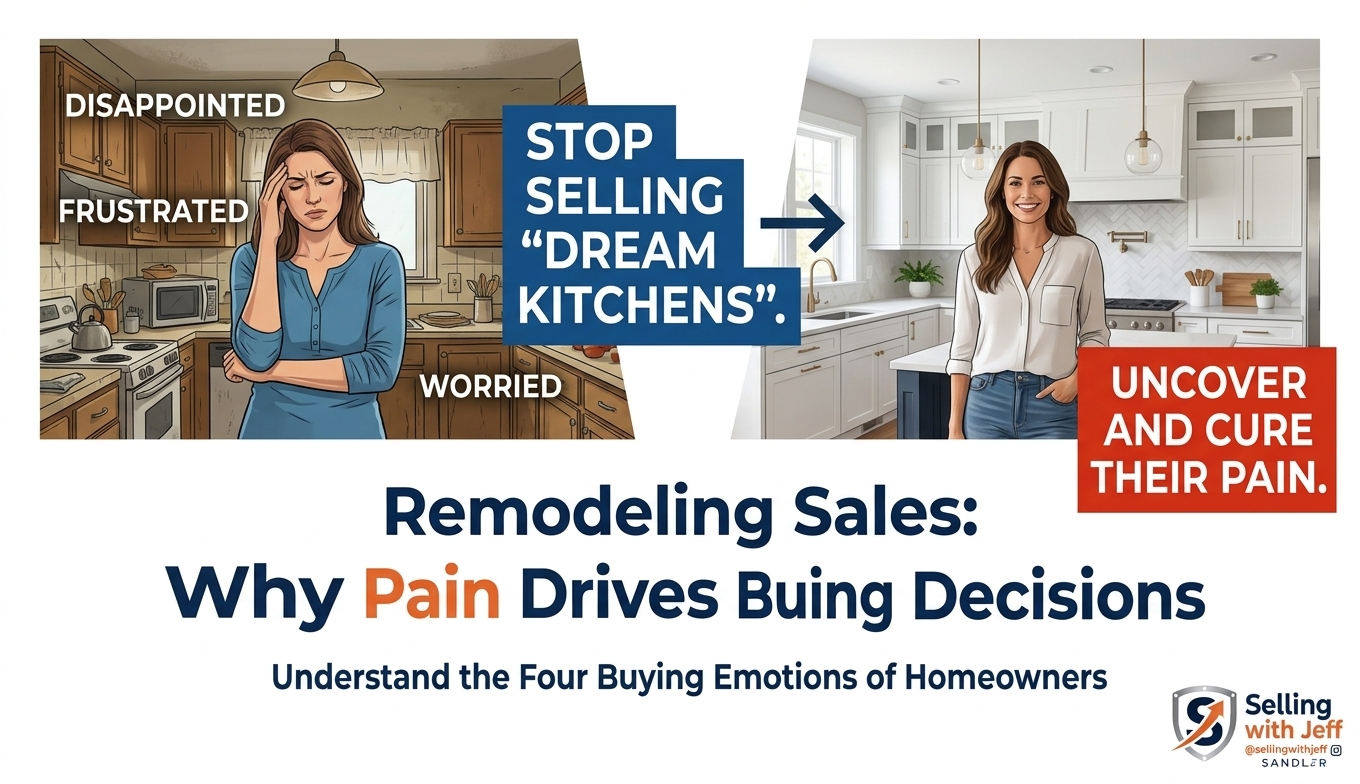
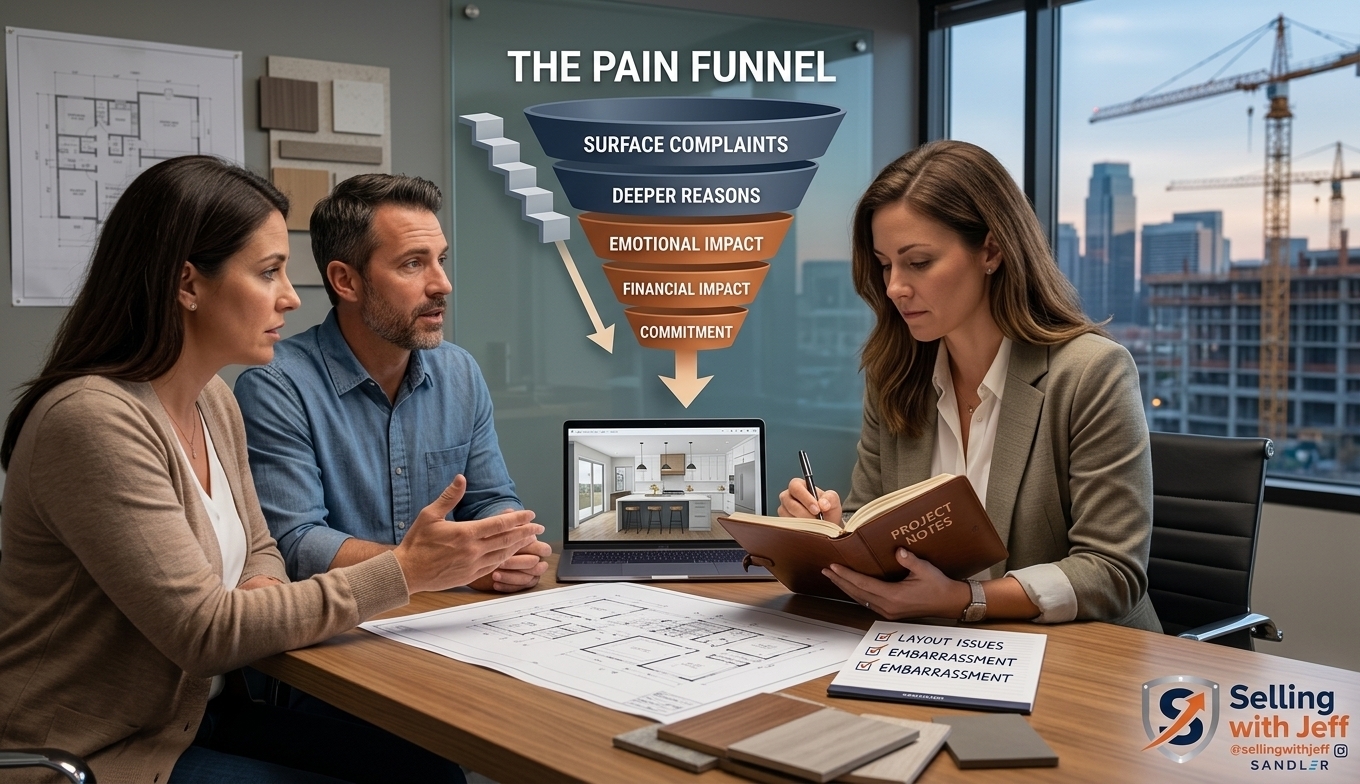
Four Levels of Pain: Close More Remodeling Deals

Understand pain: the most powerful sales emotion

The Sandler “pain step” helps remodelers find a homeowner’s compelling emotional reason to make a change, then connect their project and price to that emotion so decisions happen faster and ghosting drops. In other words, you move from “nice design” conversations to clear, confident yes-or-no decisions.

Read More