
Mastering Sales: The Art of Effective Questioning
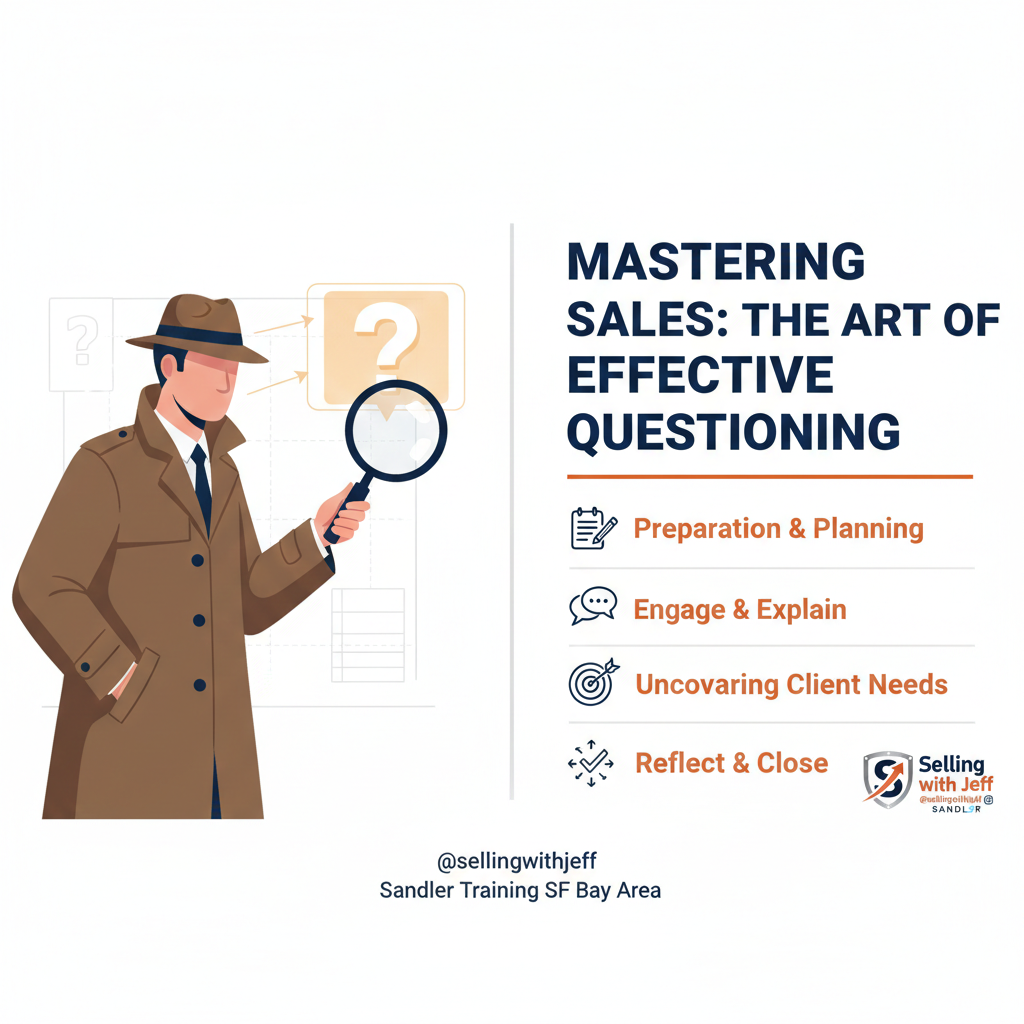
Preparation and Planning: The Foundation of Effective Questioning
In sales, preparation and planning are the cornerstones of success. Just as detectives meticulously prepare for an investigation, sales professionals must undertake thorough pre-call planning. This involves understanding the client's background, potential pain points, and previous interactions.
At Sandler Training SF Bay Area, we emphasize a structured approach to pre-call planning. This means rehearsing your opening statements, jotting down essential questions, anticipating objections, and mentally placing yourself in the client's shoes. This preparation ensures that you walk into every meeting with confidence, ready to steer the conversation towards uncovering the client's true needs.
Engage and Explain: Building Rapport with Clients
Building rapport is crucial in any sales interaction. Engaging with your client and clearly explaining the purpose of your meeting sets a positive tone. This step is akin to a detective establishing a connection with a witness, ensuring they feel comfortable and understood.
Active listening plays a pivotal role here. By genuinely listening and responding thoughtfully, you create an environment of trust. Explain the process and objectives of your meeting clearly, and encourage your clients to share their thoughts freely. This transparency not only builds trust but also lays the groundwork for a more in-depth exploration of their needs.
Uncovering Client Needs with Targeted Questions
The heart of effective questioning lies in uncovering the client's true needs. Much like a detective uses specific questions to gather critical information, sales professionals must employ targeted questions to get to the root of the client's challenges.
Use open-ended questions to encourage detailed responses. Avoid jargon and multi-part questions that might confuse the client. The goal is to understand their pain points, budget constraints, and decision-making processes. By doing so, you can tailor your solutions to meet their specific needs, increasing the likelihood of closing the deal.
Reflect and Close: Ensuring Clear Communication and Next Steps
Reflection and closure are essential to ensure both parties are on the same page. Summarize the key points discussed during the meeting and clarify any ambiguities. This step is comparable to a detective summarizing findings with a witness to ensure accuracy.
End the meeting with a clear closing statement that outlines the next steps. Set follow-up appointments and assign action items to both parties. This structured approach not only prevents misunderstandings but also keeps the sales process moving forward efficiently.
Mastering the art of effective questioning in sales is about preparation, engagement, targeted inquiries, and clear communication. By adopting these detective-inspired techniques and best practices from Sandler Training, sales professionals can uncover their clients' true needs and close more deals successfully.