Selling with Jeff

Posts about:

Budget (2)

Magic Budget Questions for Custom Home Builders

Why custom home deals stall when you skip real budget talks

A magic budget conversation is a structured way for custom home builders to uncover a client’s true financial range before you design, price, or send a contract. Done well, it keeps you out of unpaid design work, protects your margins, and prevents the “ghosting” that happens when sticker shock hits by email.

Read More

Stop Giving Remodeling Prices Too Soon

Why giving prices too soon kills remodeling deals

Remodeling budget conversations work best when you stop “giving a price” and instead uncover what the homeowner is truly willing and able to invest. When you quote numbers before trust, pain, and priorities are clear, you create sticker shock, friction, and stalled deals instead of confident decisions.

Read More

Anticipatory Coping in Remodeling Sales to Reduce Client Stress

Clarify the want‑need matrix so you sell the way homeowners actually buy

The want‑need matrix explains why remodeling feels stressful and why you must sell differently than retail or luxury purchases. Remodeling is usually a “need, don’t want” buy: homeowners must fix problems but don’t enjoy dust, decisions, or disruption. When you accept this, your job shifts from persuader to stress‑manager.

Read More

Stop Awkward Budget Calls in Remodeling Sales

Turn silent budget calls into confident money conversations

The fastest way to fix awkward price conversations is to change how you give a ballpark, not just what number you say. For remodelers, that means anchoring high with “up to” pricing, tying budget to clear pain points, and using questions to qualify instead of defending your number.

Read More

Sandler Budget Step for Remodelers: Stop Losing Control

Why homeowners hide budgets and why the Sandler budget step matters

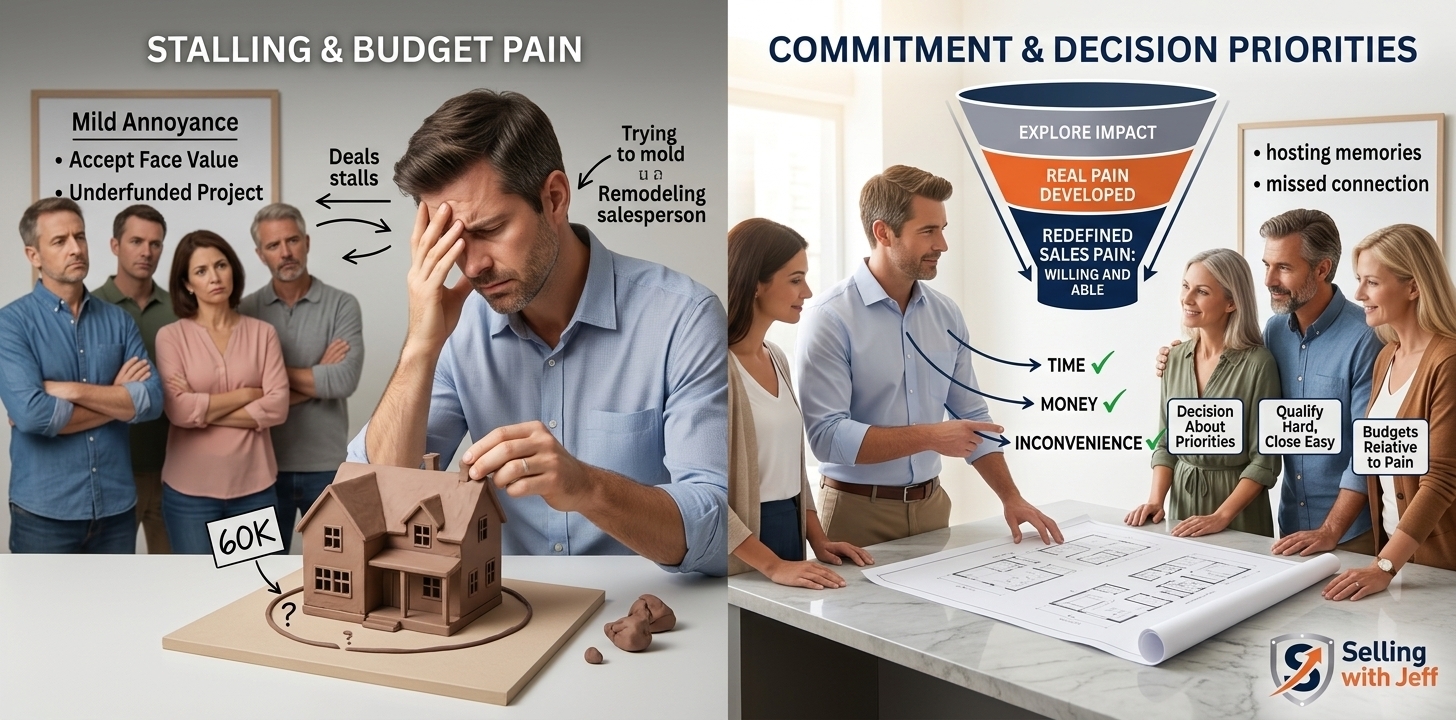
A Sandler budget step works when you ask about money only after building trust and uncovering pain, then agree on time, money, and resources before you ever design or propose. In remodeling, that shift protects your margins, prevents scope creep, and stops you from building detailed estimates for projects that were never real.

Read More