Selling with Jeff

Posts about:

Transactional Analysis

Transactional Analysis in Sales: Stay in Adult, Win More

Why sales calls go sideways: the real psychological problem

Transactional analysis in sales explains why conversations that start fine suddenly feel tense, confusing, or out of control. Most sales calls derail not because your solution is wrong, but because one or both people shift into an emotional state where they can’t listen, think clearly, or make a confident decision.

Read More

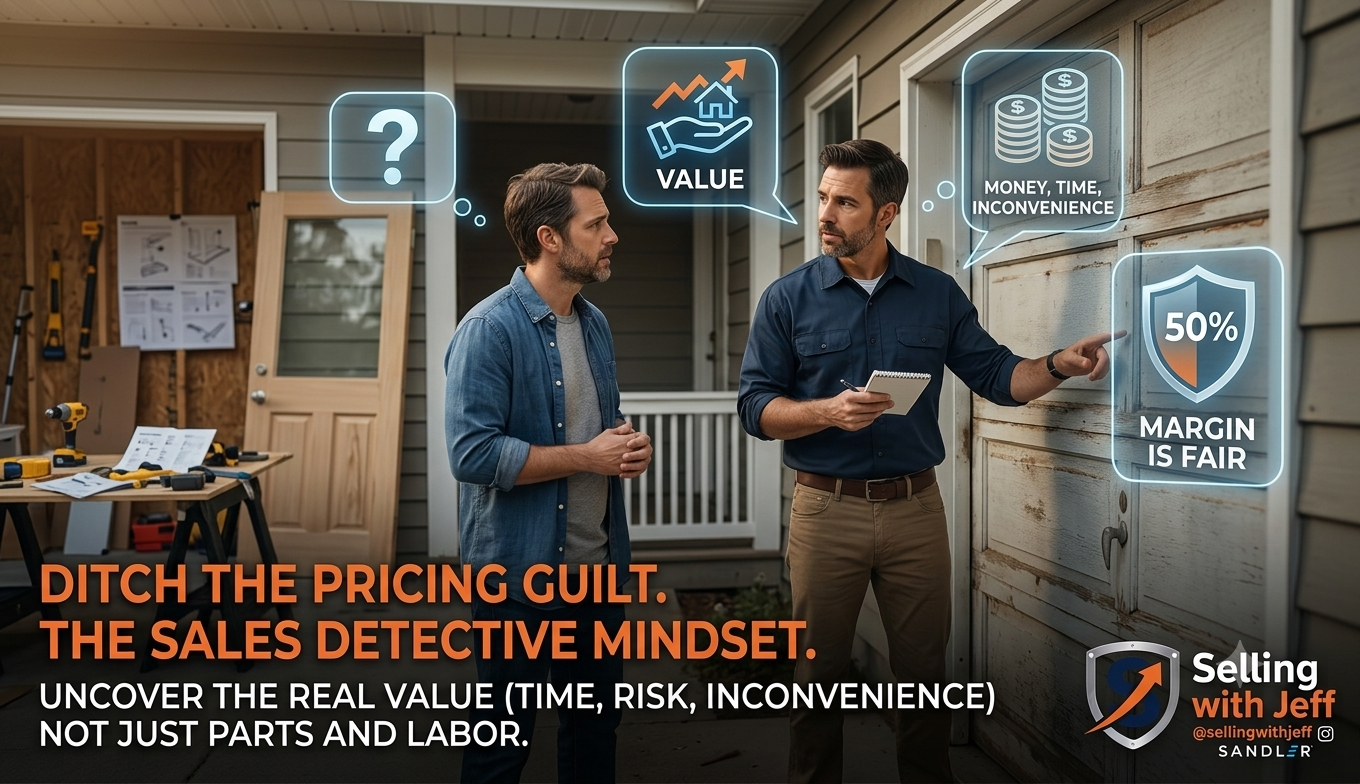
Sales Detective Mindset to Beat Pricing Head Trash

Stop pricing guilt: what a sales detective really sells

The sales detective mindset means you stop guessing what a homeowner values and start uncovering it with questions. When you understand their real problems, risks, and frustrations, your price becomes a fair investment instead of a guilty secret—especially on “simple” service jobs like a single door, window, or small repair.

Read More

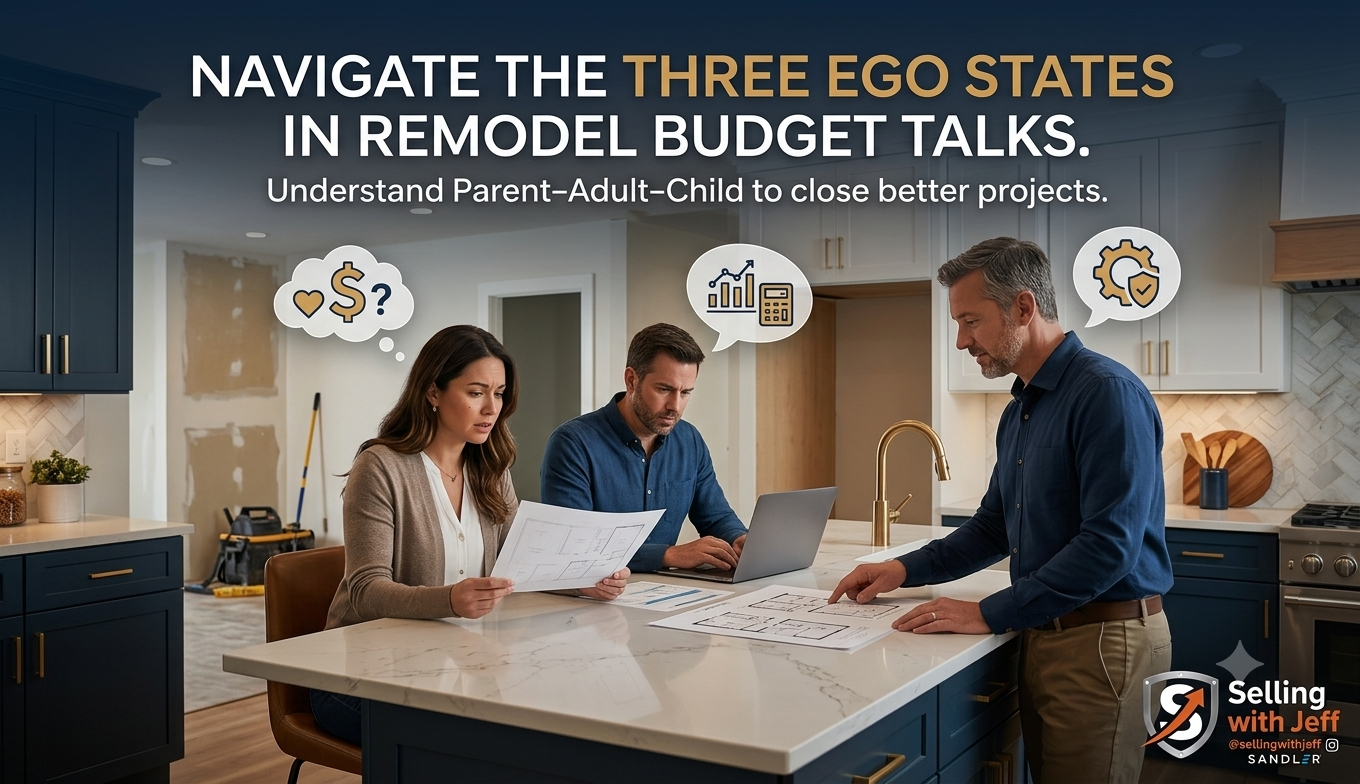
Buyer Psychology in Remodeling Budget Talks

Understand Parent–Adult–Child in everyday remodeling sales

Buyer psychology in remodeling explains why smart homeowners still act emotionally when they talk about big projects and money. Transactional Analysis says every client switches between three ego states—Parent, Adult, and Child—and your job is to meet them where they are, then guide the conversation instead of reacting.

Read More

Parent, Adult, Child: How Clients Really Decide to Buy

Why understanding Parent, Adult, Child changes your sales results

The Parent–Adult–Child model explains how clients actually decide to buy. Buyers say yes from their emotional Child state, then justify that decision later in Adult with numbers and in Parent with “Is this responsible?” If you sell only to logic, you get shopped and commoditized.

Read More

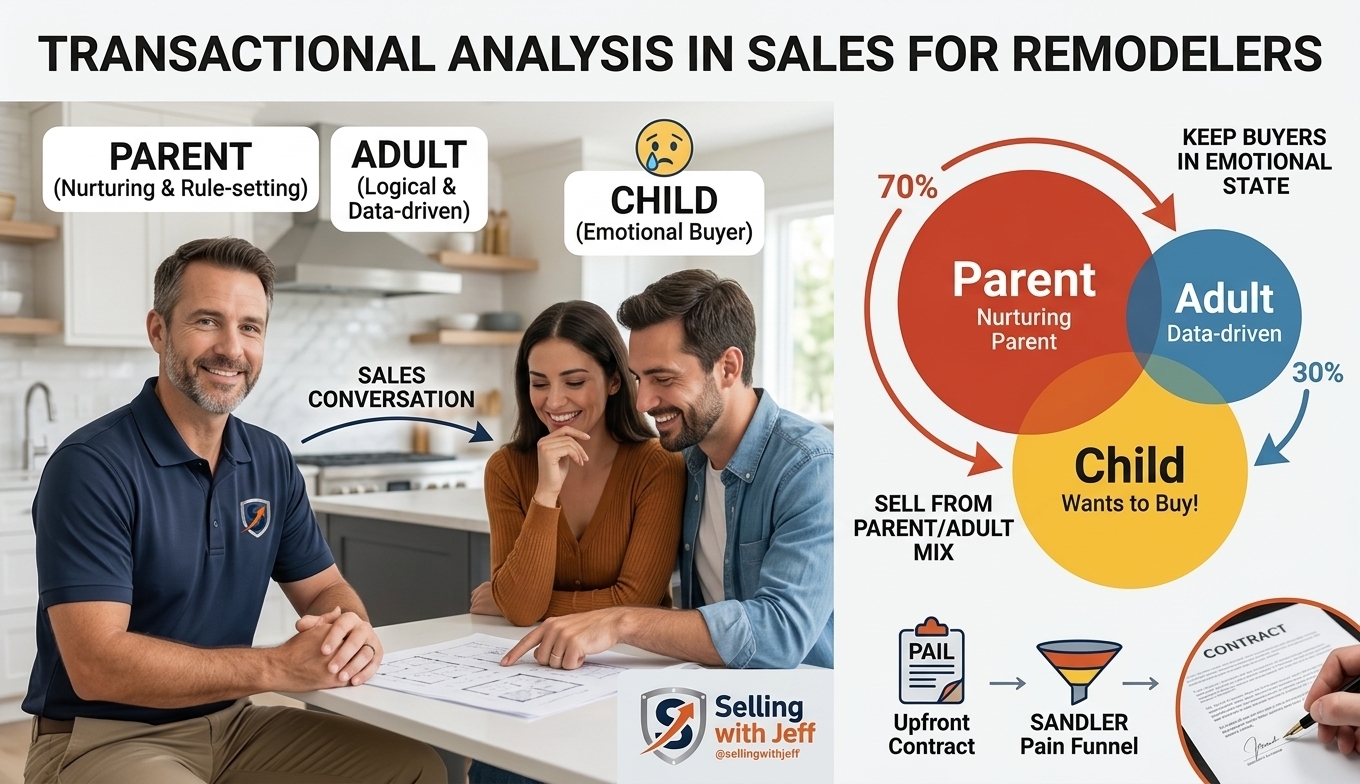
Transactional Analysis for Stronger Remodeler Sales Calls

What transactional analysis is and why it matters in remodeling sales

Transactional analysis in sales is a simple psychology model that explains why smart homeowners act inconsistently in conversations. It says every interaction happens from three ego states—Parent, Adult, and Child—and your results improve when you recognize the state you and your prospect are in and respond on purpose instead of by habit.

Read More