Remodeling Sales: Why Pain Drives Buying Decisions
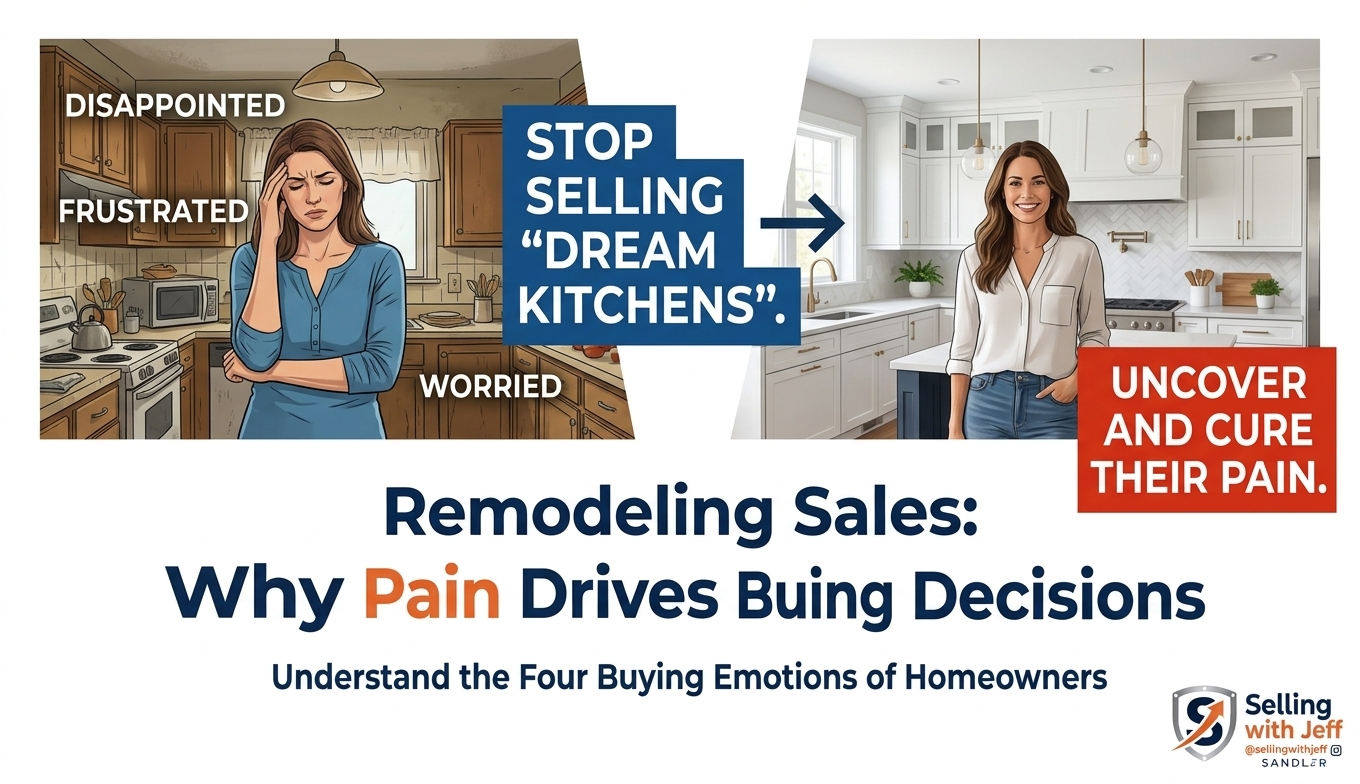
The four buying emotions every remodeler must understand
Remodeling sales pain is the homeowner’s emotional discomfort with their current space or a problem they see coming, not just a wish for a prettier kitchen. When you uncover and name that pain, you create urgency, stand out from competitors, and make it easier for them to say yes.
In remodeling, every buying decision sits at the intersection of two axes: pain vs. gain and present vs. future. That gives you four buying emotions:
- Pain in the present ("Our kitchen layout drives us crazy every night.")
- Pain in the future ("I’m afraid these stairs will become unsafe as we age.")
- Gain in the present ("If we do this now, we can finally host Thanksgiving this year.")
- Gain in the future ("Someday we’d love a spa bathroom.")
Pain in the present is the easiest to sell to; gain in the future is the hardest. Timeshare presentations are a classic gain-in-the-future pitch. One trainer described a resort team doing about 500 presentations a month and closing only 4–5 deals—around a 1% close rate—because the benefits are distant and optional. Homeowners spend on your projects for a different reason: to escape pain they feel now or clearly see coming.
Your job is to stop selling “dream kitchens” and start understanding which of the four emotions is really driving the conversation.
Three layers of pain: surface, reasons, and real-life impact
Most remodelers only hear the top of the pain story: “The kitchen is old and outdated.” That’s surface pain—the obvious problem sitting in front of the homeowner. It’s enough to get you invited out, but it’s not enough to win a complex, high-ticket project.
Below surface pain are two deeper layers:
- Reasons (why it exists): "The kitchen has been this way since we moved in. We’ve tried organizing, new paint, even different appliances, but nothing fixes the layout."
- Impact (how it affects them): "We’re embarrassed to have friends over. We don’t host, we don’t reciprocate invitations, and it’s starting to feel isolating."
Impact is where real money appears. In the training story, Jeff weighed about 345 pounds and saw a fasting blood sugar of 368—dangerously high. He’d known for years that his weight was unhealthy (surface). The true trigger for change was the impact: the pain of imagining missing his kids’ graduations. That emotional impact took him from 12 cans of Coke a day to losing 100 pounds and bringing his blood sugar down near 104.
Your homeowners are the same. “We want a new attic suite” is surface. The reasons might be working from home, kids crowding each other, or in-laws moving in. The impact could be daily stress, lack of privacy, or tension in the marriage. Unless you reach that impact layer, you’re just another contractor with a drawing set.
Using emotional language to uncover real remodeling motivation
Research shared in Sandler-style buyer psychology training suggests that roughly 95% of buying decisions start emotionally and are only later justified logically. That means your technical explanation of framing, fixtures, and finishes will not land unless you first connect to the homeowner’s emotional reality.
The easiest way to do that is by listening for, and gently inviting, emotional words. One field-tested set is FUDWACAs: frustrated, upset, disappointed, worried, anxious, concerned, annoyed, hate, struggling. When a prospect naturally uses one of these, you’ve reached emotional impact.
If they don’t use those words on their own, you can label what you’re hearing. For example:
"It sounds like you’re really frustrated that the cluttered kitchen means you never host friends anymore. Is that fair?"
Once they agree—"Yes, it is frustrating"—they now own that emotion. You’ve moved beyond “dated cabinets” to “I’m frustrated and isolated in my own home.” Sandler material on the pain funnel for remodelers shows that most reps bail out at the surface level, which is exactly when they start sounding like every other bidder. Staying with the conversation and calmly asking follow-up questions is what separates order takers from trusted advisors.
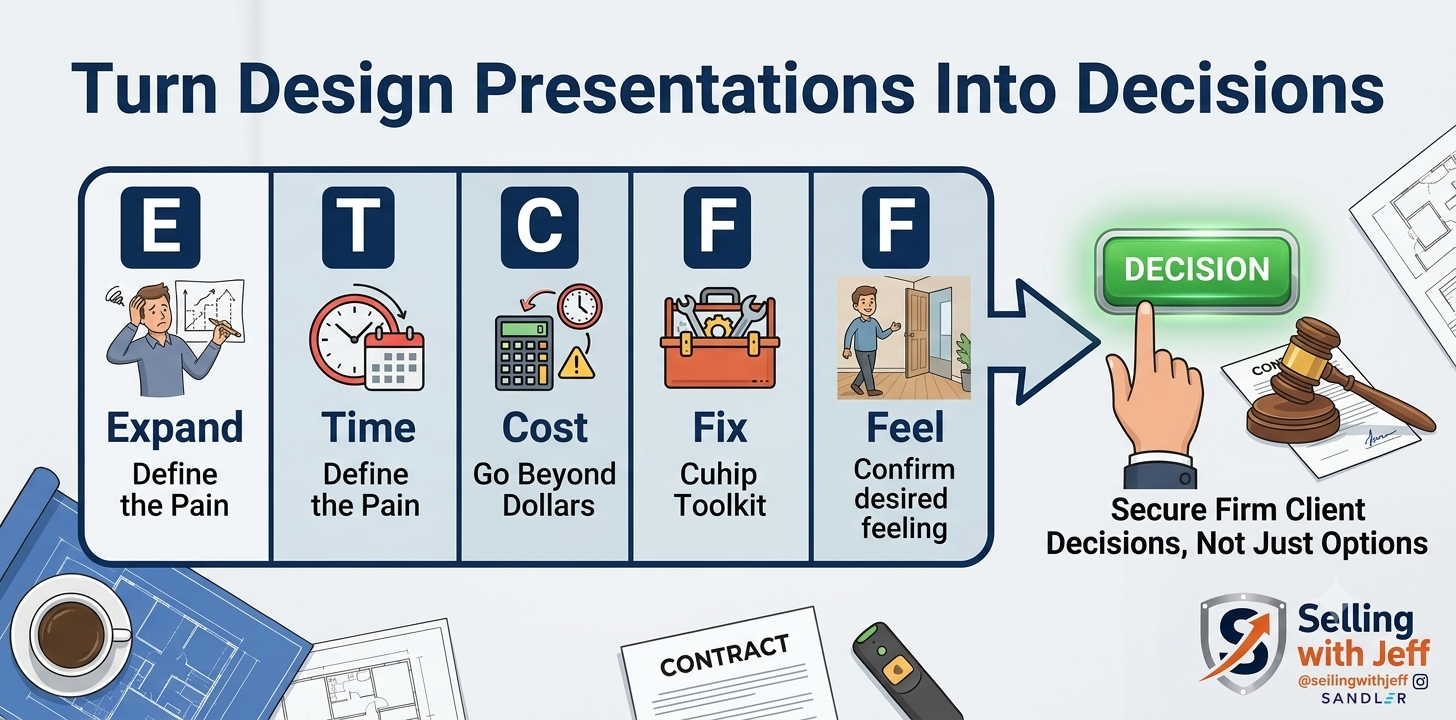
For more depth on structured questioning, see ideas like the ETCFF sequence (Expand, Time, Cost, Fix, Feel) described in resources such as ETCFF Questions for Remodeler Sales Teams.
Turn pain into action: higher close rates without hard selling
Once you see pain as layered, you can connect it directly to your close rate. Training data shared with remodelers shows three rough patterns:
- Only surface pain (one to three issues): about a 15% close rate.
- Surface + reasons: around 30% close rate.
- Three to five pains, each taken down to impact: close rates approaching 85% on well-qualified opportunities.
At the same time, more than 90% of salespeople stop after gathering one to three surface pains. Only a small minority consistently carry three to five pains all the way down to emotional impact. That gap is your competitive advantage.
Practically, this means structuring calls differently. Don’t let the homeowner drag you straight into the attic “tour” before you’ve agreed on an agenda. Use a simple upfront contract—time, goals, mutual next steps—then explore their pains until you hear clear emotional language. When you later present your design and price, explicitly tie each recommendation back to those words: "You told me the crowded mudroom leaves you feeling overwhelmed every morning. This layout gives you storage and breathing room so that stress is gone."
You’re not manipulating anyone; you’re helping them fix the problems that actually matter in their daily life. Do that consistently, and you’ll win more projects without cutting your price or pushing harder at the end of the call.