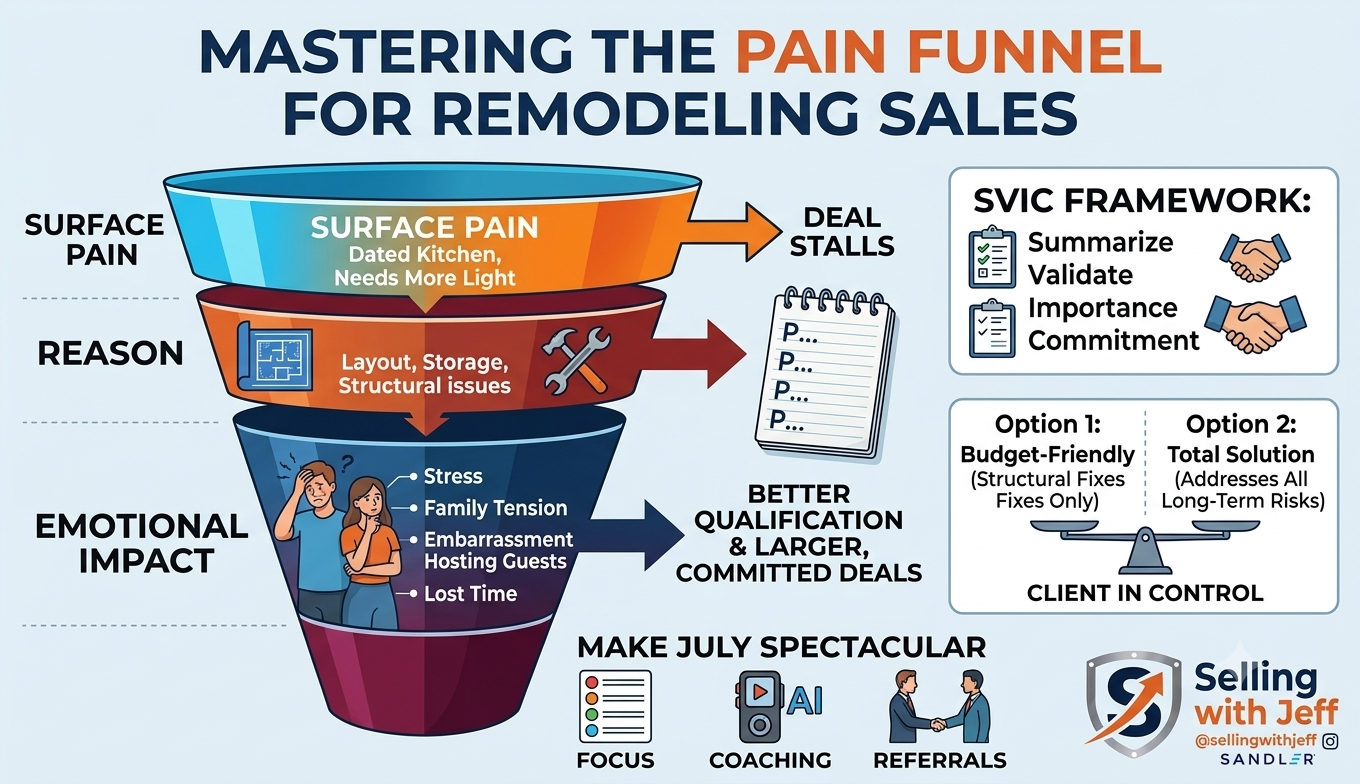
Control the Remodeling Sales Process, Don’t Rescue It

Lock in the meeting outcome before you talk scope
A strong remodeling sales process starts with agreeing on the outcome of every meeting. Before you look at drawings or walk the house, confirm whether this conversation ends in a clear yes or no, and what “yes” actually means (signed agreement, deposit paid, and next step scheduled).
Most remodelers skip this and slide straight into friendly chatter and scope talk. That’s how you end up hearing, “We just need a little more time” after you’ve spent hours presenting. Instead, use a simple upfront contract at the start of proposal reviews: “At the end of today, can we agree to do one of two things—either you tell me no, or we sign the agreement and schedule next steps?” Notice there is no third option of “thinking it over.”
If they say they’ll still need time or want to talk to another designer, handle that before you present. Ask when they’ll finish that conversation and get a specific follow‑up meeting on both calendars. If they refuse to schedule, that’s a warning sign: you’re about to build free estimates for someone who isn’t ready to decide.
Use pain and budget questions to avoid sticker shock
Clients get angry at prices when you haven’t linked the number to their pain. Use a short pain funnel and “magic budget questions” before you ever share a dollar figure. That way, the price feels like the cost of solving problems they admitted out loud, not a random estimate.
Start by summarizing why they reached out. For example: “You told me the current layout means you cook alone, the kids can’t do homework nearby, and the moisture in the basement worries you. Did I miss anything?” Then ask, “On a scale of 1–10, how important is it to fix this, and why not a lower number?” That follow‑up uncovers emotional impact—stress, safety fears, family tension.
Once pain is clear, move to budget with a calm script: “You mentioned an initial budget of $450,000. Based on the design and finishes you’ve chosen, that won’t be enough. What have you talked about as the real range you’re willing and able to invest to get everything you want?” If they give a number, use follow‑ups like, “If that turns out not to be enough for everything on your list, where could more money come from?” This protects you from being double their number with no warning.
Stay out of the rescuer role when clients get upset
When a client discovers a costly change—like a pre‑permit garage redesign that adds $170,000—they often deflect. Instead of discussing the new scope, they attack past design decisions or timelines. If you’re not careful, you slide into the “rescuer” role: apologizing, discounting, and taking responsibility for every frustration.
Karpman’s drama triangle describes three roles in conflict: aggressor, victim, and rescuer. An upset client casts themselves as the victim and someone else (often your designer) as the aggressor. That leaves you to “fix it” by cutting price. Don’t take the bait. Acknowledge the frustration, then separate issues: “We’ll absolutely review what happened in design. First, can we agree on whether you still want this change, and at what level?”
Keep the conversation single‑threaded. Talk through the change order scope and price first. Ask, “What makes you want this change now? What happens if we leave it as originally designed?” Only after you’ve agreed on moving forward (or not) should you circle back to process complaints. This simple boundary protects your margin and your team.
Run better site visits so deals don’t stall later
Many remodelers start site visits with an immediate tour. Once homeowners feel they’ve “shown you the space,” they mentally check the box and rush you out the door, which kills deep discovery. Flip the sequence: sit down at the table first, then tour, then next steps.
Begin with light rapport, then a brief upfront contract for the visit: “We’ll spend a few minutes talking about what’s not working, then walk the space together, and if it makes sense, we’ll agree on what should happen next. Fair?” When you sit at the table, most homeowners will instinctively offer water or coffee. Accepting this small gesture subconsciously shifts you from “vendor” to “guest,” which makes it easier to have a real conversation.
Use the table time to get at least three clear pains and impacts before you move. For example, “Can you tell me more about what frustrates you day‑to‑day in this kitchen?” Then, when you tour, you can connect what you see back to what they said: “This traffic bottleneck is exactly what you meant about everyone bumping into each other.” That loop deepens urgency and sets up later budget talks. For more on structured questioning, see resources like Sandler Pain Funnel Skills for Remodeler Sales Teams and ETCFF Questions for Remodeler Sales Teams.