Turn Design Presentations Into Decisions with ETCFF
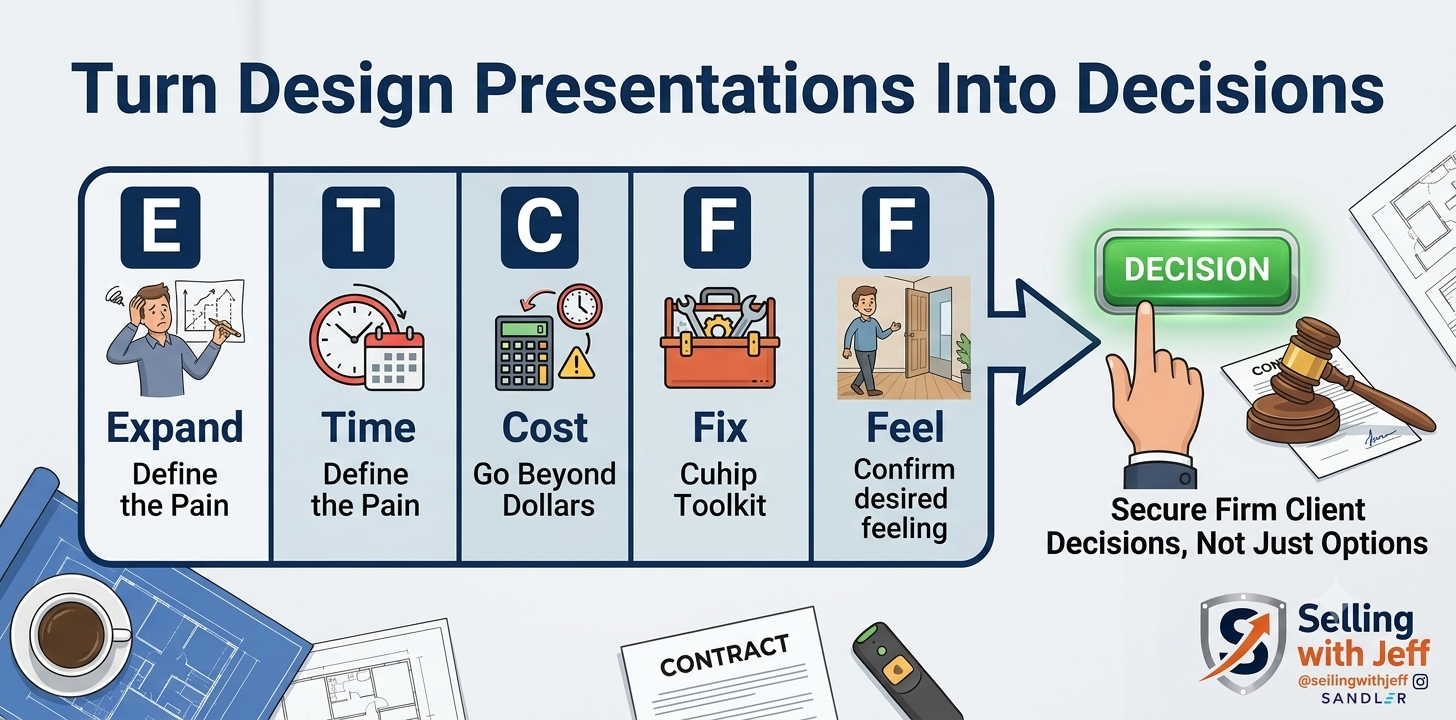
Use ETCFF to turn design presentations into firm decisions
The fastest way to turn a great design meeting into an actual project is to keep tying every choice back to ETCFF—Expand, Time, Cost, Fix, Feel. Instead of treating the workshop as a show-and-tell, you use each step of ETCFF to confirm why they invited you, why now, and what must happen at the end of the meeting.
Most remodelers use ETCFF in early discovery, then drop it once drawings appear. That’s when buyers drift into “just looking at options.” Before you show anything, reset expectations: “Today we’ll explore designs, talk through investment, and use the last 10–15 minutes to decide if it makes sense to reserve your construction spot.” Research on structured questioning in complex sales shows that teams who follow a defined pain sequence win more deals and face fewer price-only comparisons.
During the meeting, keep circling back: “You told me storage and feeling connected to the family were the big issues. As you look at this plan, which parts really fix that, and what still feels off?” This keeps the conversation anchored to impact, not just pretty renderings.
Run your design workshop agenda through ETCFF, not just layouts
A three-hour conceptual design workshop can overwhelm everyone. Running the agenda through ETCFF gives the session a backbone. Start with Expand: “Can you walk us through a typical dinner in your current kitchen? What’s frustrating about it?” Capture specific examples on a whiteboard—“garage trips for pans,” “can’t see kids while cooking.”
Next, move to Time: “How long have you lived with it like this? Why talk about it now instead of waiting another year?” This is where vacation schedules, school calendars, or “we’ll decide in August” timing issues surface, so you can ask, “Is now really the right time to tackle this, or will other priorities bump it?”
Cost goes beyond dollars. Borrow language from a practical ETCFF guide: “What is this costing you in time, stress, or family time?” Then Fix: “What have you already tried to do about it?” Finally Feel: “When this is done, how do you want the space to feel when people walk in?” Teams that walk clients through all five letters report higher close rates and fewer “we’re just getting numbers” conversations.
Hand off the homeowner’s “why” at pre-con so projects stay aligned
Many problems show up months later because the project manager only inherits the “what” (scope and drawings), not the “why” (pain and desired feelings). Use a short ETCFF recap in your pre-con meeting so everyone hears the story again, not just the specs.
In front of the homeowner and PM, say: “When we first talked, you told me the garage damage made the whole front of the house feel unsafe and embarrassing. You’ve lived with that for almost a year, and it’s been stressful every time guests pull up. This project is about feeling proud of your home again, not just new siding. Did I miss anything?”
Then invite the PM to repeat it in their own words and ask, “Anything you’d add?” This double-confirmation makes it much harder for clients to later say, “I didn’t realize that wasn’t included,” because everyone agreed on what you were really fixing. As highlighted in the remodeling pain funnel article, reconnecting to emotional drivers at each handoff keeps clients engaged and reduces mid-project friction.
Handle scope and budget surprises with “I’m confused,” not discounts
Even with good discovery, homeowners will sometimes react to price or scope with, “I didn’t think that would cost extra,” or, “I thought that was included.” Instead of getting defensive or discounting, use an ETCFF-style tone: calm, curious, and equal-stature.
One simple script is, “I’m a little confused and I want to make sure I didn’t miss something. Here’s what I understood we agreed to…” Then briefly restate the original pain, key scope choices, and how changes were added. Finish with, “Where did I miss what you were expecting?” This mirrors the “okay / not-okay” tactic your team already uses and invites them to own their part in the misunderstanding.
If they’re pushing for “just a number,” you can also protect your time: “If you’re only looking for the lowest bid, we’re probably not the best fit. Our clients hire us for the level of care and communication we’ve been talking about.” That stance, supported by earlier ETCFF work, keeps you from becoming a commodity and helps you win the right projects at the right margins.