
Selling with Jeff

Posts by:

Jeff Borovitz

Stop Over‑Designing with Needs, Wants, Wishes

What ‘Needs, Wants, and Wishes’ Really Mean in Remodeling Design

The needs, wants, and wishes framework helps remodeling designers turn emotional client stories into clear design priorities. “Needs” are non‑negotiables the project must include, “wants” are features clients value and will fund, and “wishes” are nice‑to‑have ideas that only belong in the plan if the budget allows.
Read More

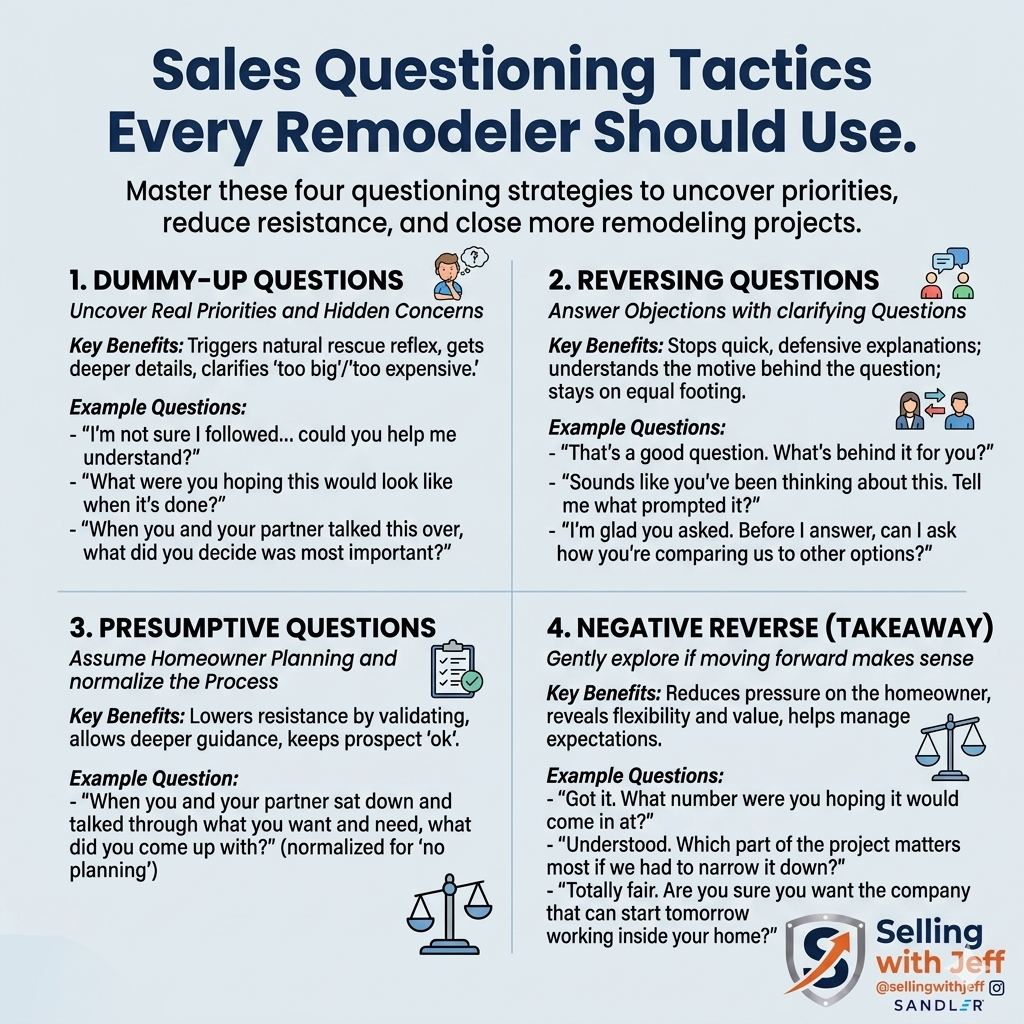
Sales Questioning Tactics Every Remodeler Should Use

Use dummy‑up questions to uncover what homeowners really mean

Sales questioning strategies help remodeling pros get past surface answers and into what homeowners actually care about. Dummy‑up questions sound unsure on purpose—“I’m not sure I followed…”—so prospects rush in to clarify. That extra detail reveals real priorities, hidden concerns, and what “too big” or “too expensive” means to them.

Read More

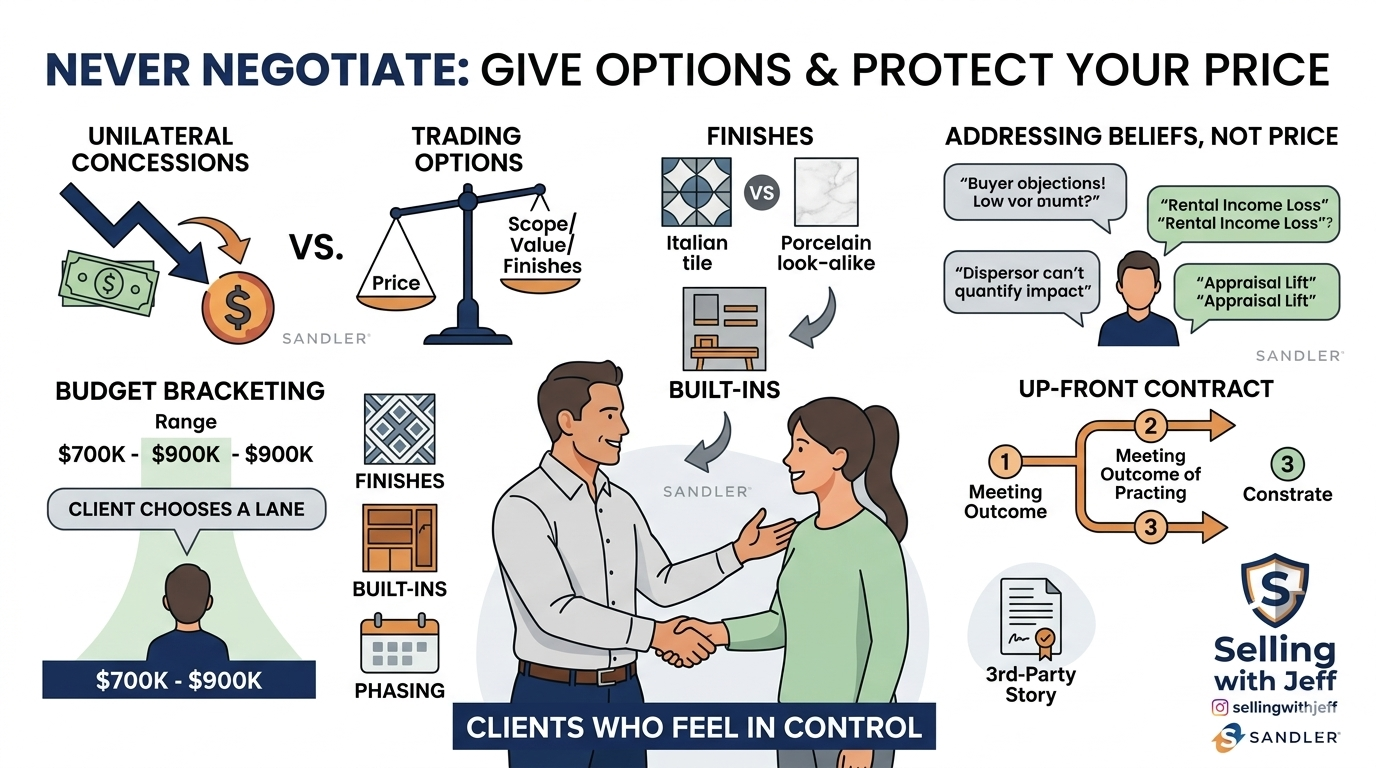
Never Negotiate: Give Options and Protect Your Price

Why price is never the real issue in high-value projects

Price resistance in high-value construction or remodeling projects is rarely about the actual dollar amount; it’s about the buyer’s beliefs about value, risk, and alternatives. When a homeowner says, “That’s more than we planned,” what they often mean is, “I’m not yet convinced this is the smartest way to invest this money compared with my other options.”

Read More

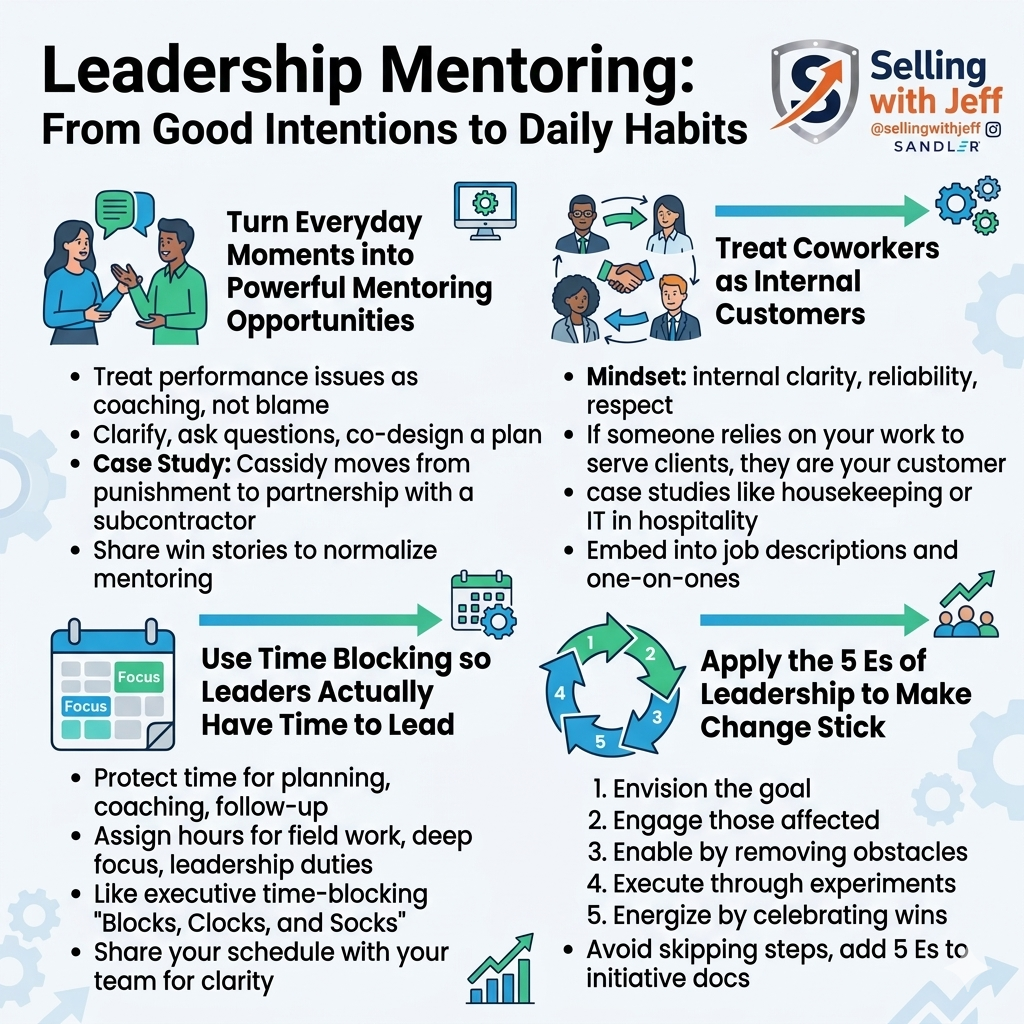
Leadership Mentoring: From Good Intentions to Daily Habits

Turn everyday moments into powerful mentoring opportunities

Effective mentoring happens when leaders turn real performance problems into coaching conversations instead of blame. A strong leader starts by clarifying the issue, asking questions, and co‑designing a plan so the other person owns the next steps. This approach turns a tense meeting into a chance to grow skills and trust around leadership mentoring.

Read More

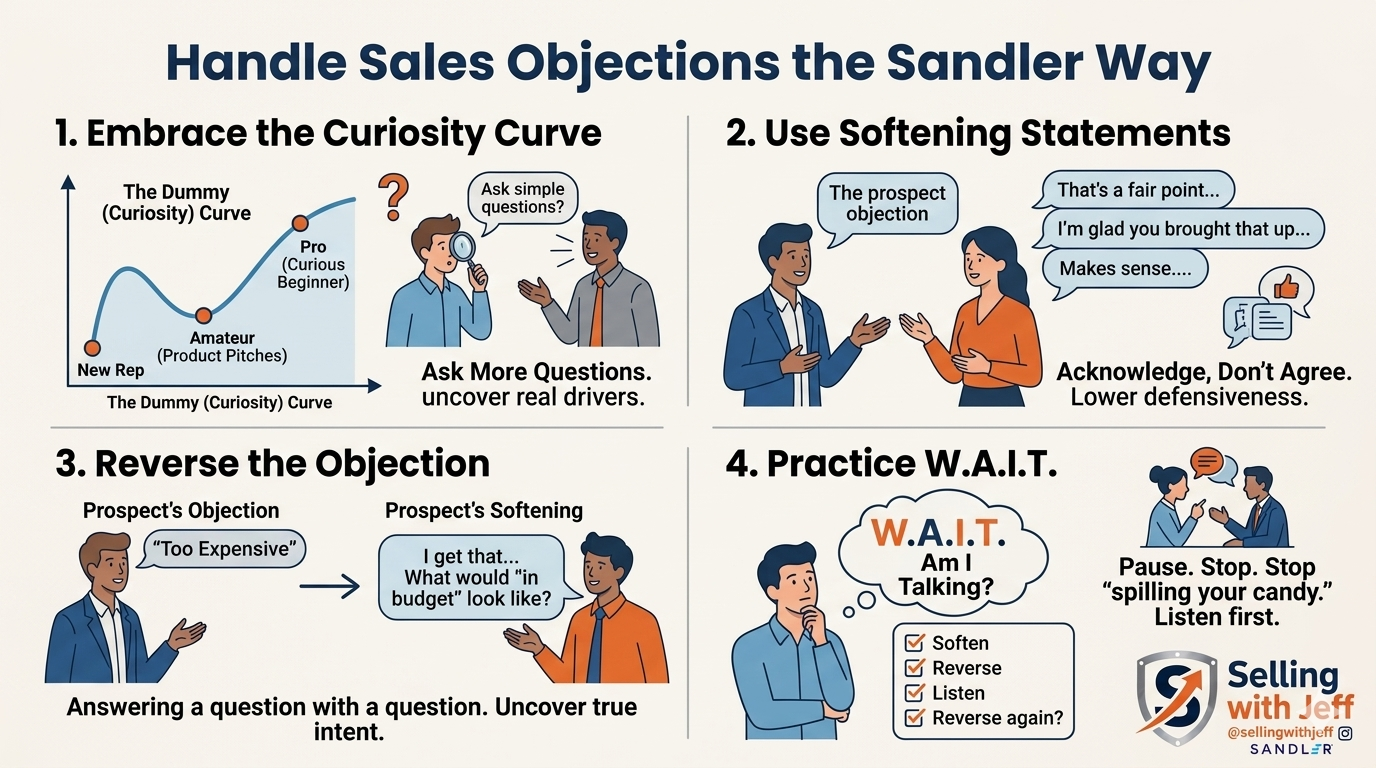
Handle Sales Objections the Sandler Way

Start with the Dummy (Curiosity) Curve, Not Product Pitches

Effective handling sales objections starts by asking more questions than you answer. Instead of proving how smart you are, act like a curious beginner: slow down, ask simple questions, and let the prospect do most of the talking so you uncover what is really driving their pushback.

Read More