
Selling with Jeff

Posts by:

Jeff Borovitz

Sell Design Services Without Sounding Salesy

Sell Design Services Without Sounding Salesy

Why Designers End Up Sounding Salesy in Real Projects

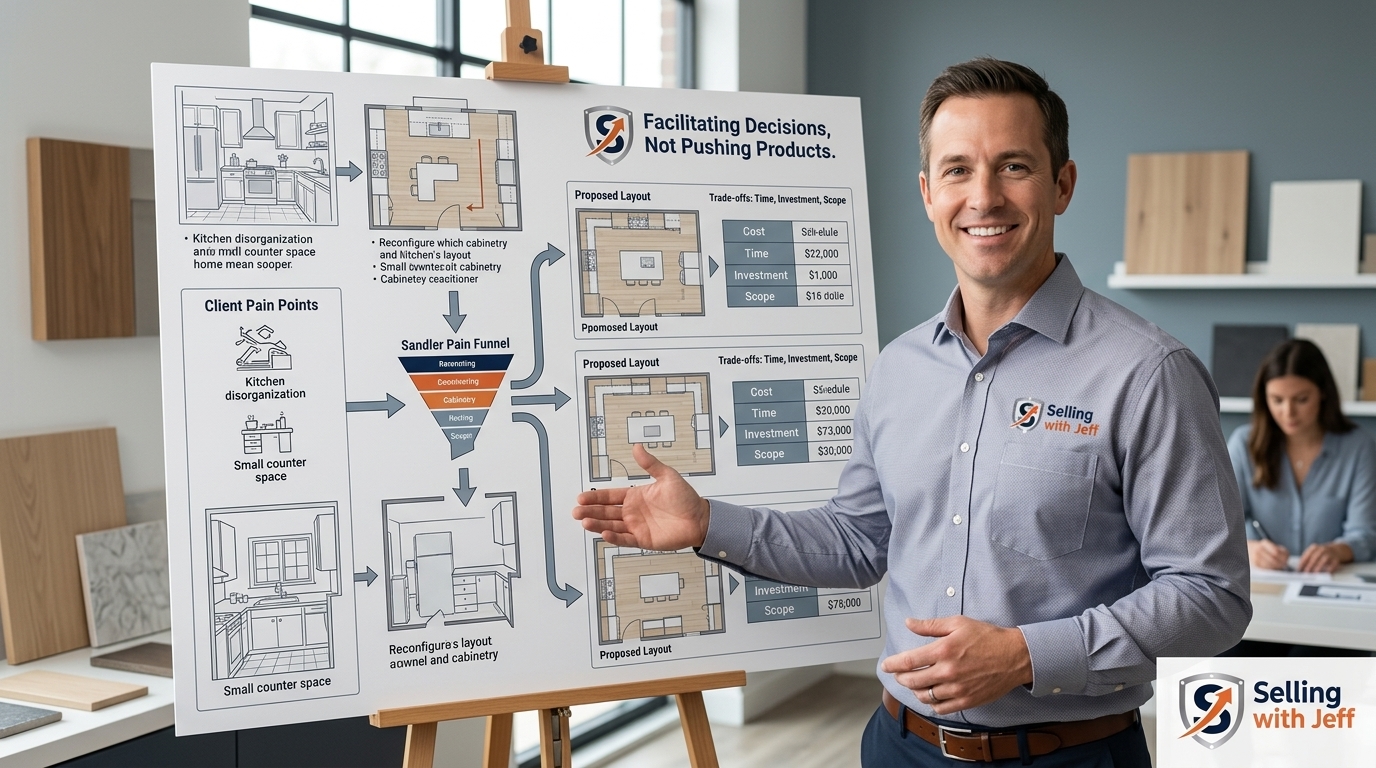
To sell design services without sounding salesy, stop pitching features and start facilitating decisions. Lead with the problems they asked you to solve, name the trade‑offs honestly, and use clear next steps around scope, time, and budget so it feels like joint planning, not pressure.


Read More

Remodeling Budget Objections: From “No Idea” to Real Numbers

Here’s a photorealistic editorial scene with the remodeler-sales professional and client collaborating at a modern showroom table, dramatic low-angle

Diagnose What’s Behind “We Have No Idea” on Budget

When homeowners say they have no budget, they’re rarely clueless; they’re protecting themselves. A remodeling budget conversation that works treats that line as a trust signal, not a roadblock: you slow down, uncover their pain, and show you’ll protect their money instead of weaponizing their number.

Read More

ADU Sales: Stop Over‑Qualifying and Start Selling Tours

Here’s a photorealistic cinematic scene with the tablet HUD elements, Bay Area ADU setting, and a dynamic late-afternoon sales-tour composition. If yo

Use CAPS on the first call, not price filters

ADU sales qualification means using a simple CAPS checklist—Characteristics, Alternatives, Pains, Symptoms—on the first call instead of obsessing over budget. You’re deciding who is worth a visit, not who can quote your cheapest number, so you stop killing deals before prospects have justified the real investment.

Read More

Remodeling Price Objections When One Spouse Isn’t Sold

Here’s a photorealistic cinematic kitchen consultation scene with the sales professional, two spouses, dramatic side lighting, and a polished remodeli

Why one-spouse remodeling objections blow up budgets and timelines

Remodeling price objections from one spouse usually aren’t about the number; they’re about risk, disruption, and past bad experiences. When you treat “that’s too much” as a math debate instead of a decision problem between two people, you discount, over‑design for free, and let big, winnable projects drift.

Read More