Selling with Jeff

Posts about:

Pain (3)

Ambitious Employees: Turn “Pains” into Business Growth

Why ambitious employees feel like a pain in the ass

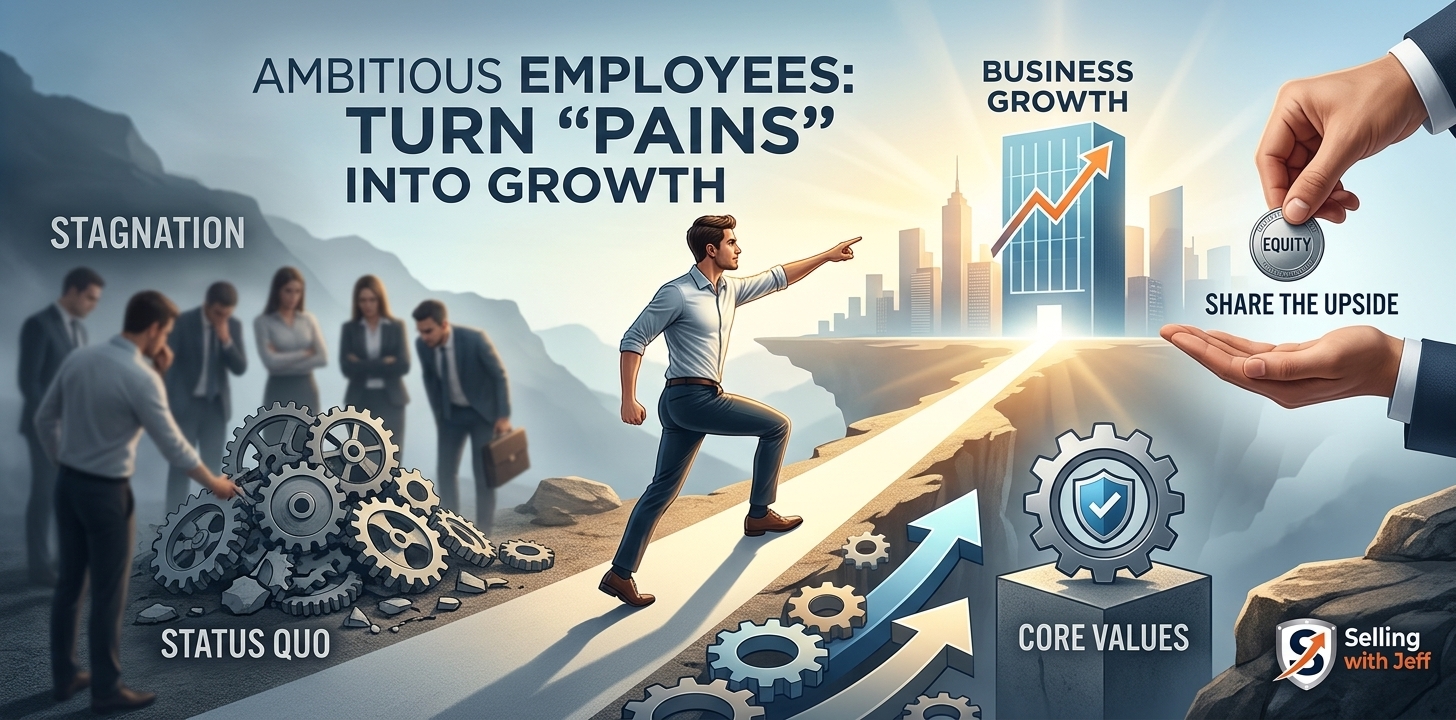
Ambitious employees are high performers who constantly question the status quo and push for better ways to work. They feel like a “pain in the ass” because they create friction, but they are the ones who expose weaknesses, spark innovation, and ultimately drive growth you cannot reach alone.
Read More

Sandler Pain Redefined: Time, Money & Inconvenience

The real reason budget is “too tight” in your deals

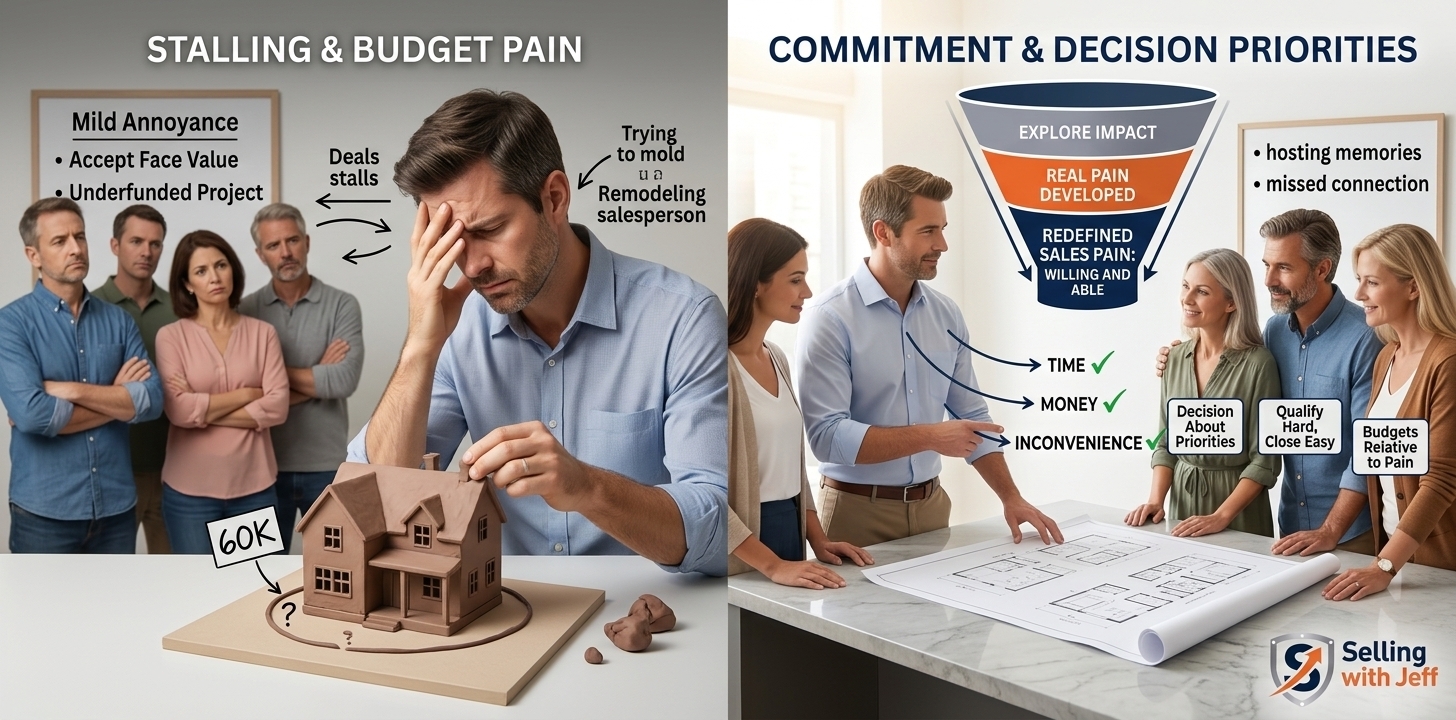
Most repeat budget problems aren’t math problems; they’re sales pain problems. When you clearly connect a prospect’s complaints to the real impact on their time, money, and inconvenience before you show numbers, budget stops being a hard limit and becomes a decision about priorities.

Read More

Remodeling Sales: Think Like a Detective

Redefine “pain” for aspirational remodeling projects

In remodeling sales, thinking like a detective means using questions to uncover why a homeowner is willing to invest time, money, and inconvenience—not forcing problems that aren’t there. You look for aspiration, identity, or pride, then translate those into clear, emotional reasons to move forward.

Read More

Remodeling Budget Calls: Use Pain and Recaps to Win

Why Remodelers Get Blindsided by Budget Objections

Remodeling budget blowups usually come from fuzzy conversations, not greedy clients. You leave the first visit with a “$300k” range, design toward $450–500k, then the homeowner swears they never agreed to that number. The result is a blown presentation, a lost week of estimating, and an educated non‑buyer.

Read More

Use Pain and Impact to Make Remodeling Budgets Easy

Why weak pain conversations create budget problems in remodeling sales

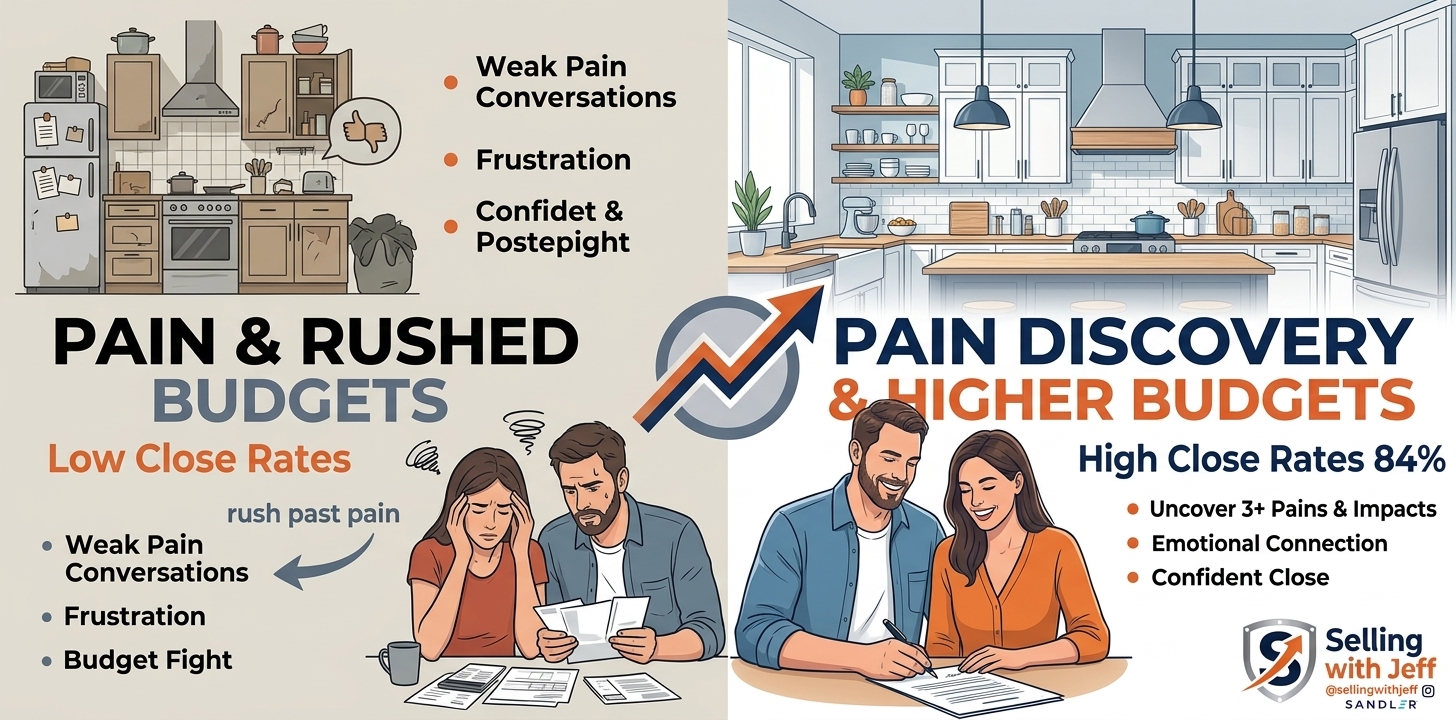
A strong remodeling sales pain conversation links a homeowner’s daily frustrations to clear emotional and financial impact. When you slow down to uncover multiple pains and the ripple effects of each, budget talks get easier, close rates rise, and “we need to think about it” shows up far less.

Read More