Selling with Jeff

Posts about:

Budget (12)

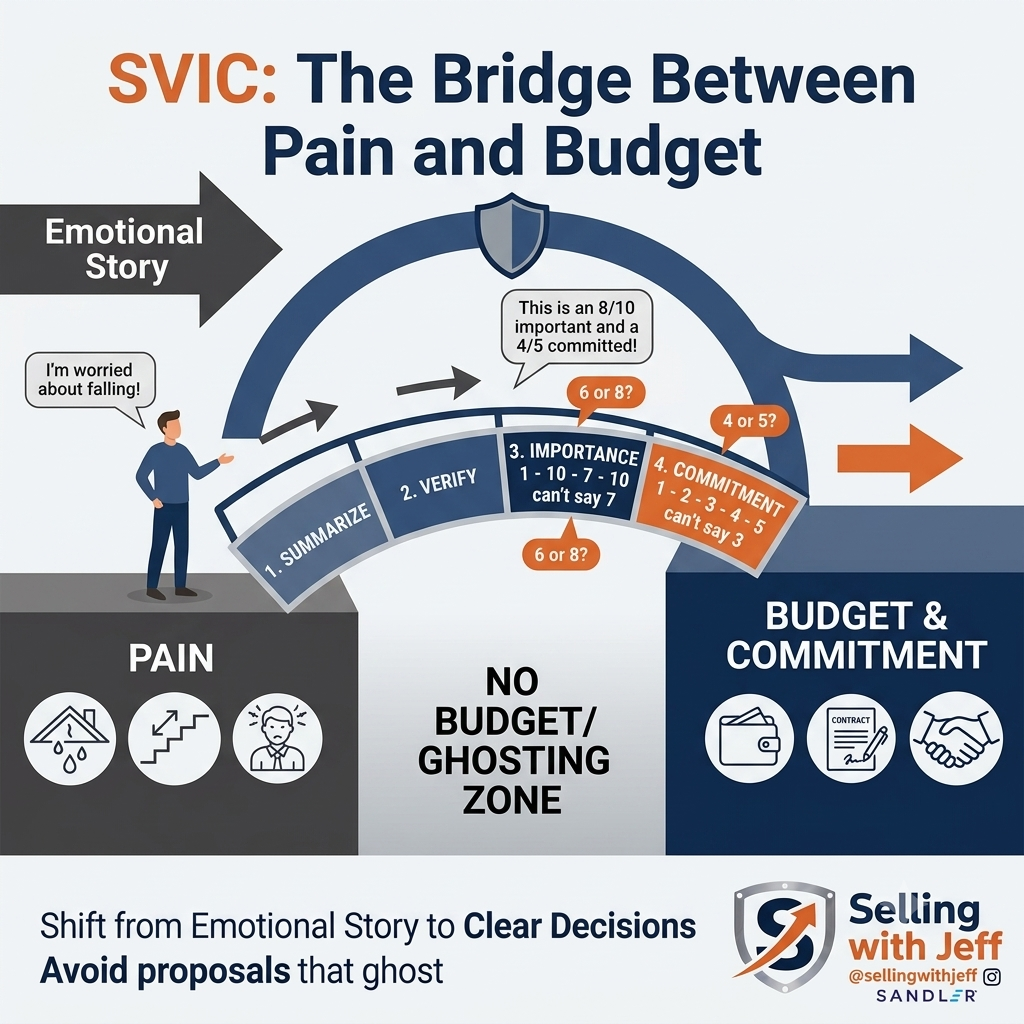
SVIC: The Bridge Between Pain and Budget

What SVIC Is and Why Your Deals Stall Without It

The SVIC sales framework is a four‑step checkpoint between the pain step and budget: Summarize, Verify, Importance, Commitment. Used correctly, it shifts the buyer from emotional story‑telling into clear decisions about fixing the problem, so you stop writing proposals for people who were never going to move forward.
Read More

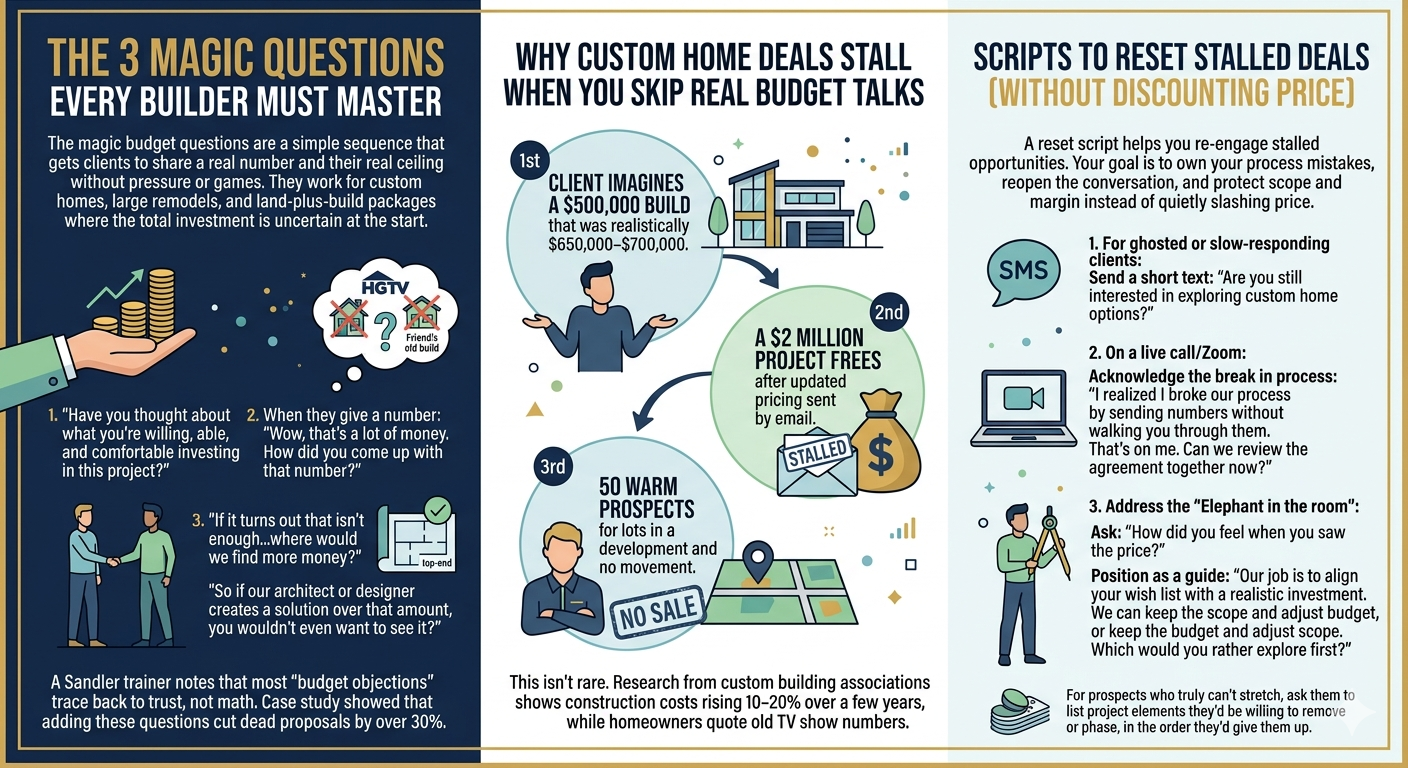
Magic Budget Questions for Custom Home Builders

Why custom home deals stall when you skip real budget talks

A magic budget conversation is a structured way for custom home builders to uncover a client’s true financial range before you design, price, or send a contract. Done well, it keeps you out of unpaid design work, protects your margins, and prevents the “ghosting” that happens when sticker shock hits by email.

Read More

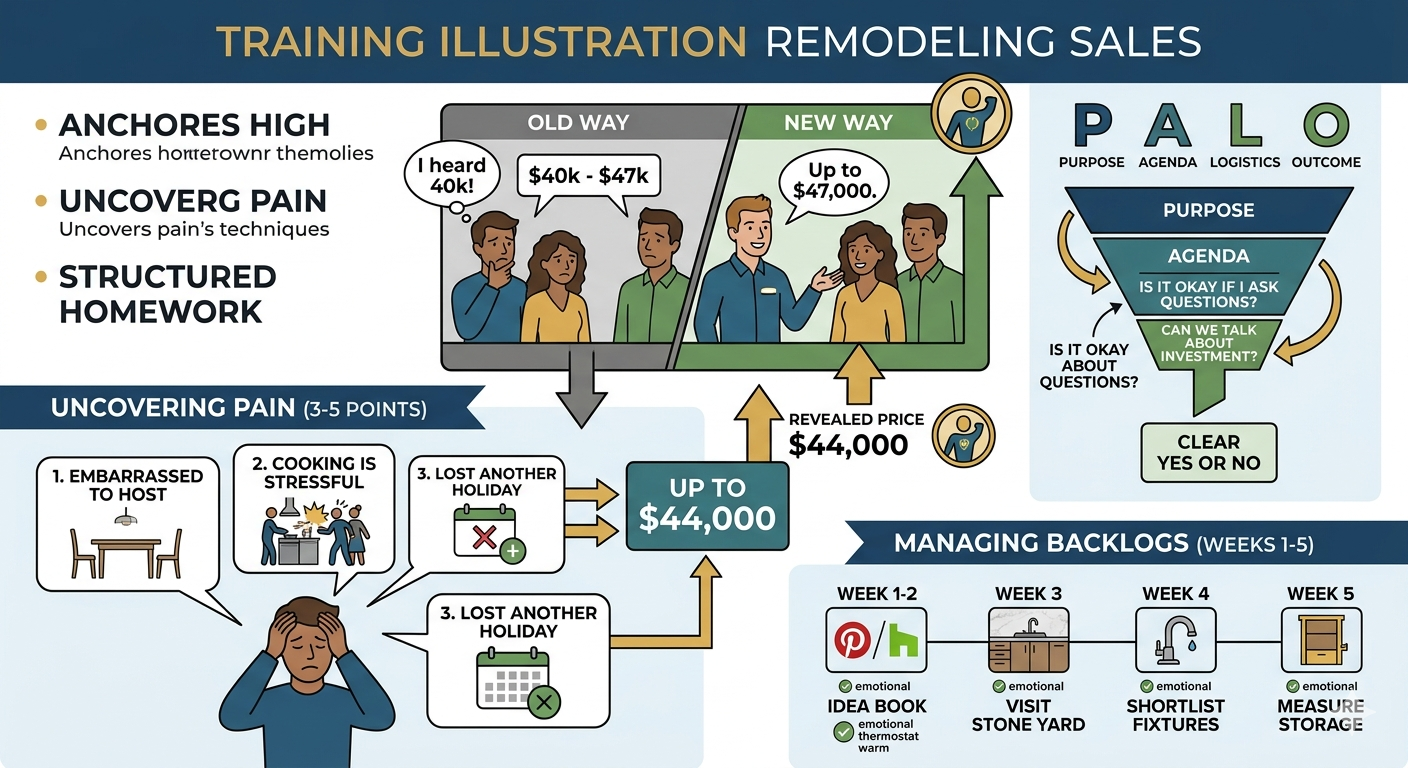
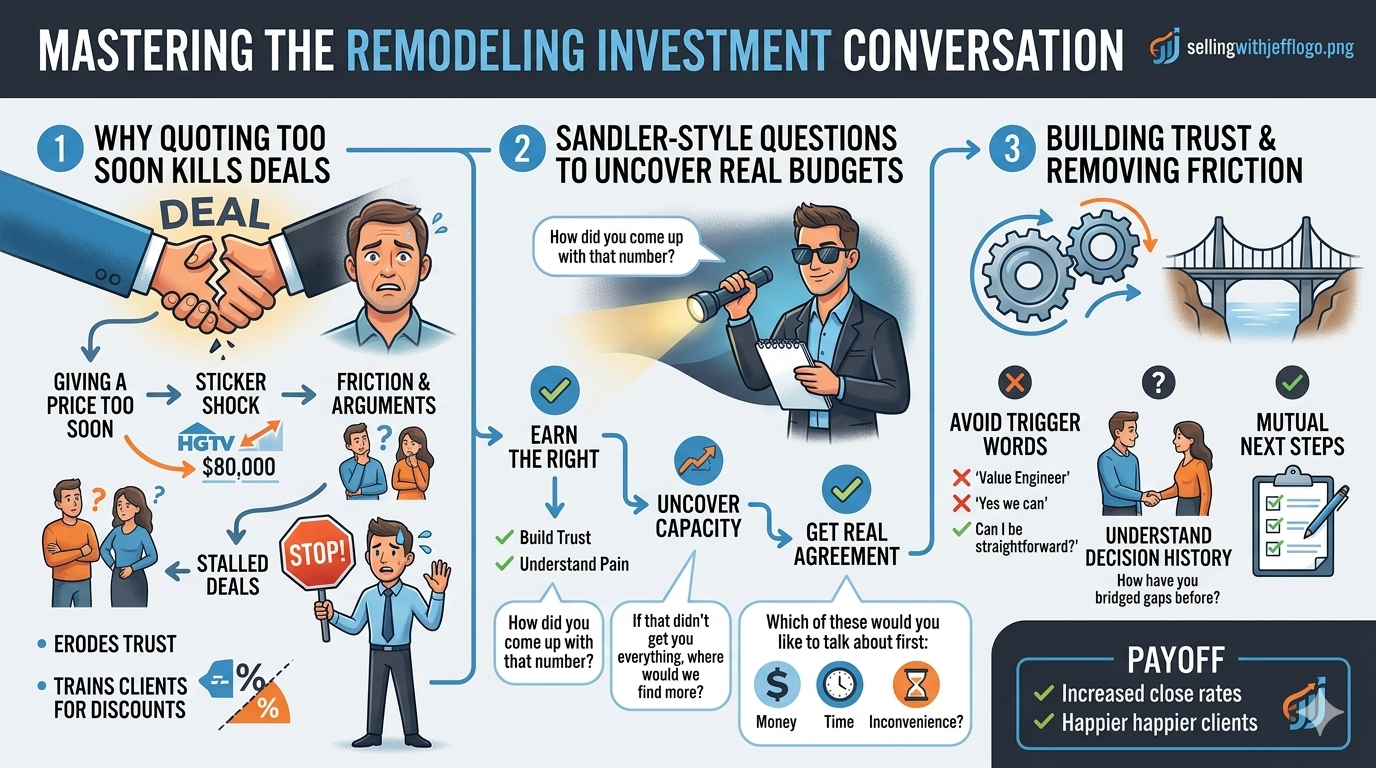
Stop Giving Remodeling Prices Too Soon

Why giving prices too soon kills remodeling deals

Remodeling budget conversations work best when you stop “giving a price” and instead uncover what the homeowner is truly willing and able to invest. When you quote numbers before trust, pain, and priorities are clear, you create sticker shock, friction, and stalled deals instead of confident decisions.

Read More

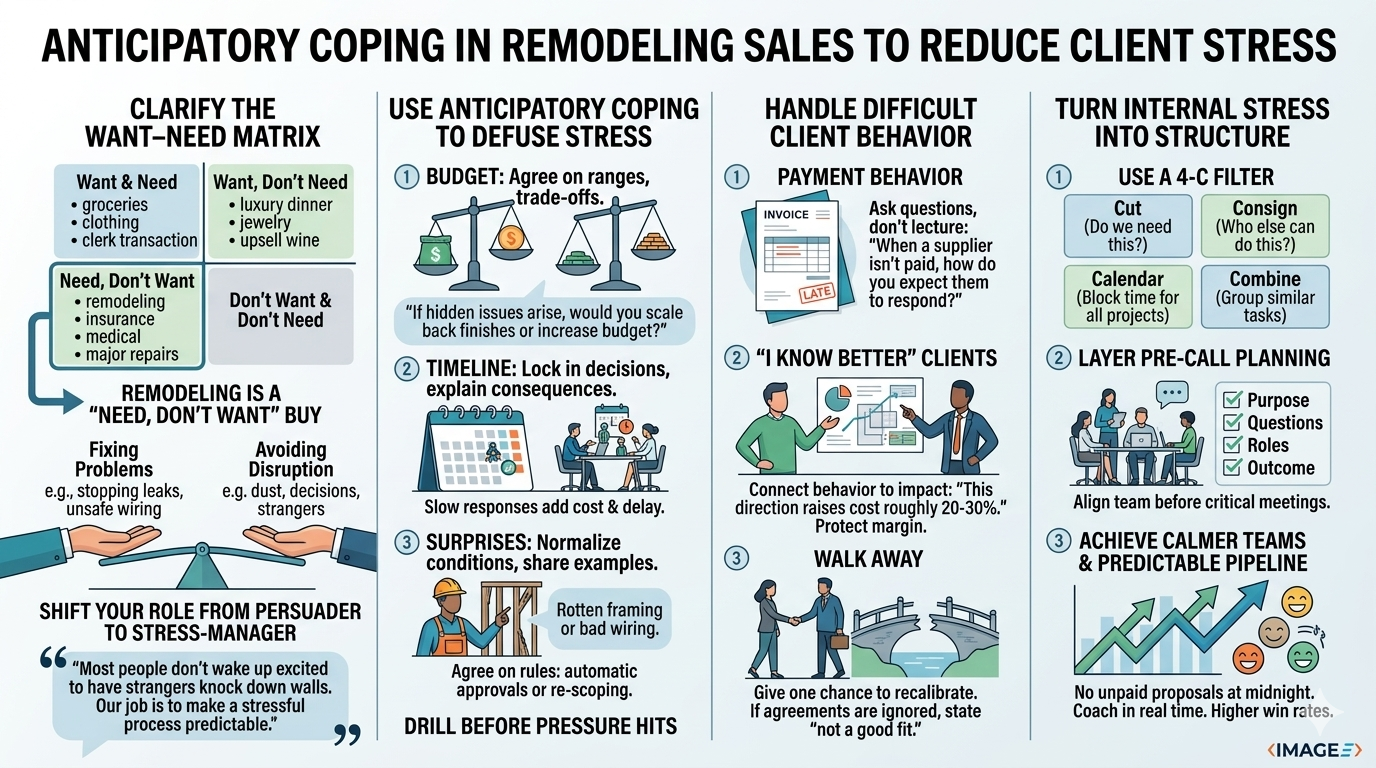
Anticipatory Coping in Remodeling Sales to Reduce Client Stress

Clarify the want‑need matrix so you sell the way homeowners actually buy

The want‑need matrix explains why remodeling feels stressful and why you must sell differently than retail or luxury purchases. Remodeling is usually a “need, don’t want” buy: homeowners must fix problems but don’t enjoy dust, decisions, or disruption. When you accept this, your job shifts from persuader to stress‑manager.

Read More

Stop Awkward Budget Calls in Remodeling Sales

Turn silent budget calls into confident money conversations

The fastest way to fix awkward price conversations is to change how you give a ballpark, not just what number you say. For remodelers, that means anchoring high with “up to” pricing, tying budget to clear pain points, and using questions to qualify instead of defending your number.

Read More