Selling with Jeff

Posts about:

SVIC

Stop Selling the Way You Buy in Budget Talks

Here’s a polished cinematic conference-room visual with the requested navy-forward palette, dramatic side lighting, subtle decision-framework overlay,

The hidden problem: you sell the way you buy

Your supportive buy cycle is the pattern of how you personally research, compare, and decide big purchases, and it quietly bleeds into how you sell. When you shop around, avoid budget talk, or need “three bids,” you unconsciously validate the same behavior in your prospects.
Read More

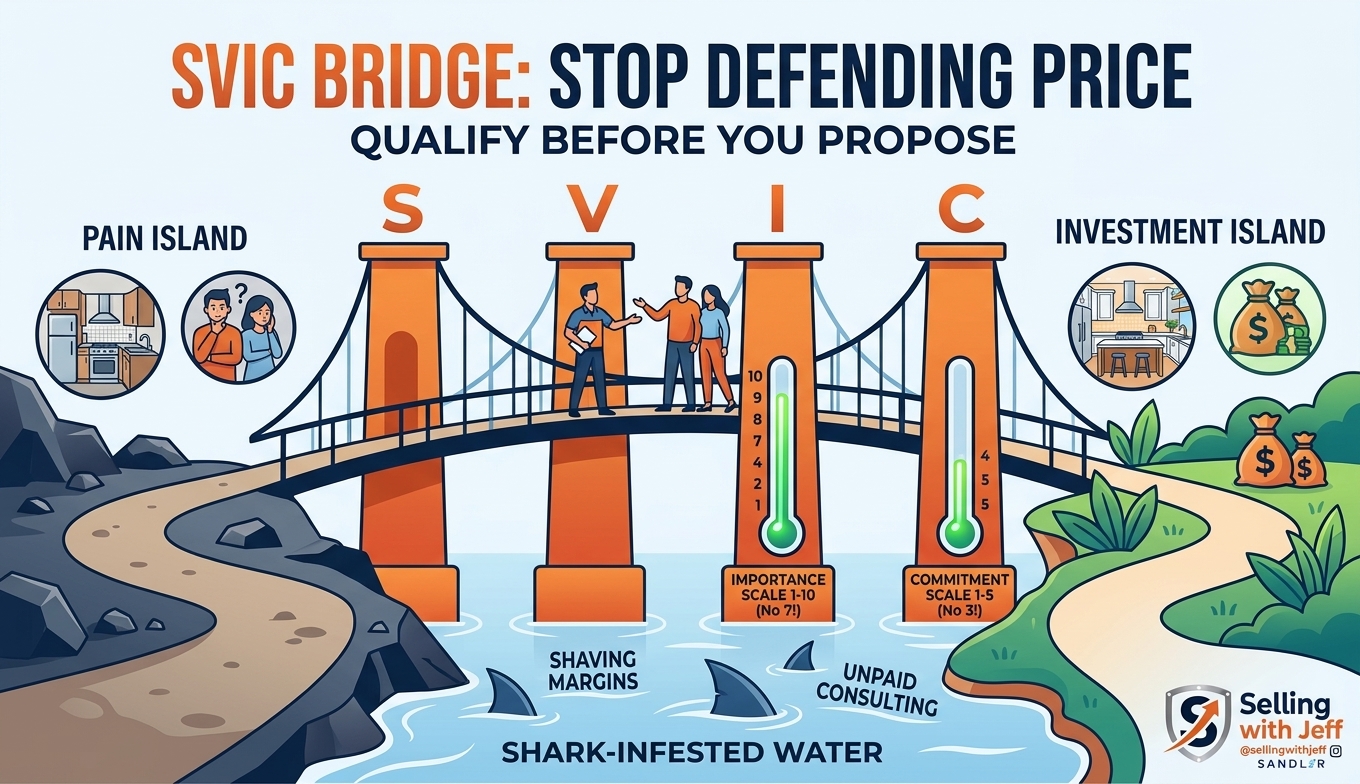
Remodeling Budget Talks: Use SVIC to Stop Defending Price

Spot the real problem in your budget conversations

To run effective remodeling budget talks, summarize the pain, confirm urgency, and get a clear commitment before you touch numbers. That means using a structured importance scale and a commitment scale so the client sells themselves on taking action—or disqualifies themselves—before you ever build a proposal.

Read More

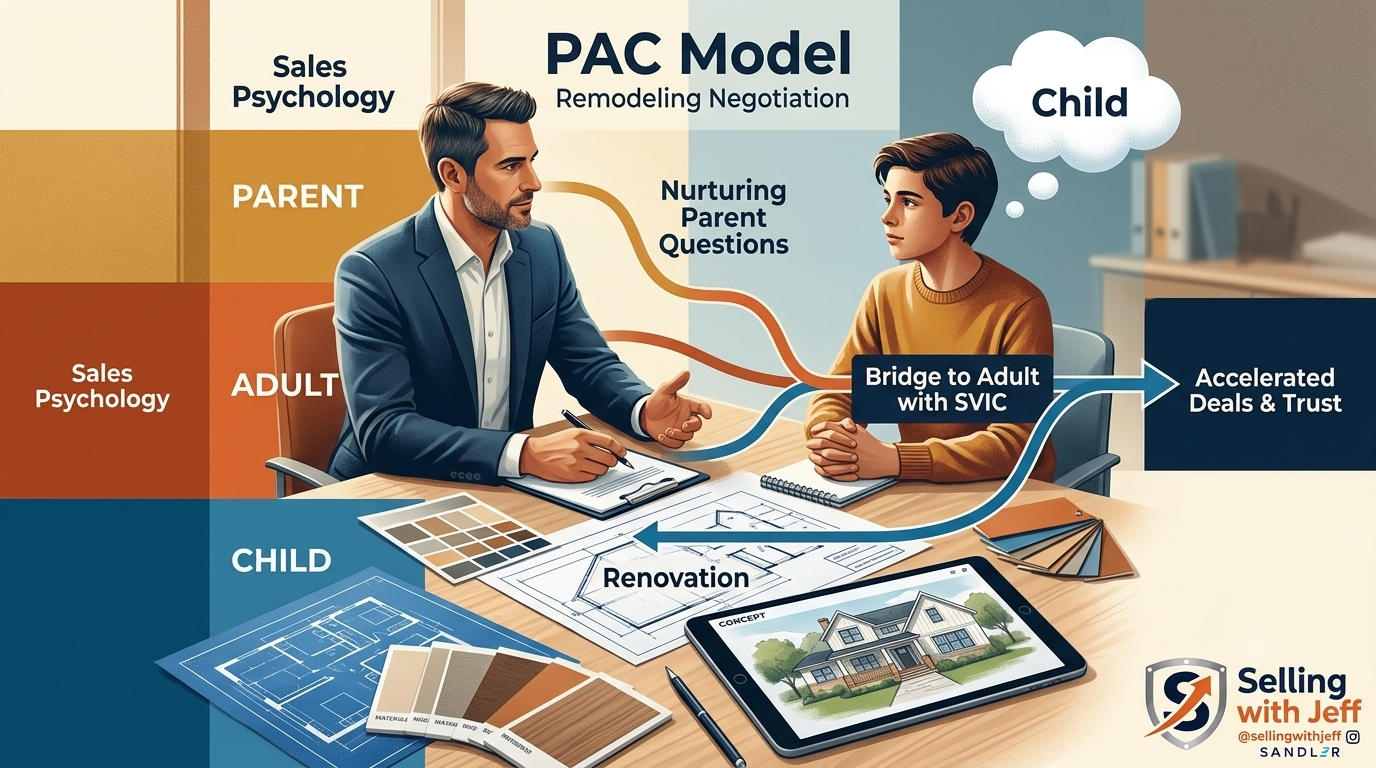
Sales Psychology: Using PAC to Control Buyer Decisions

Why sales psychology and the PAC model matter in real deals

Sales psychology using the Parent-Adult-Child (PAC) model helps you predict buyer behavior, keep control of conversations, and avoid slow, painful "maybes." By noticing which ego state a buyer is in—and choosing your own response deliberately—you shorten sales cycles, protect margins, and build more genuine trust.

Read More

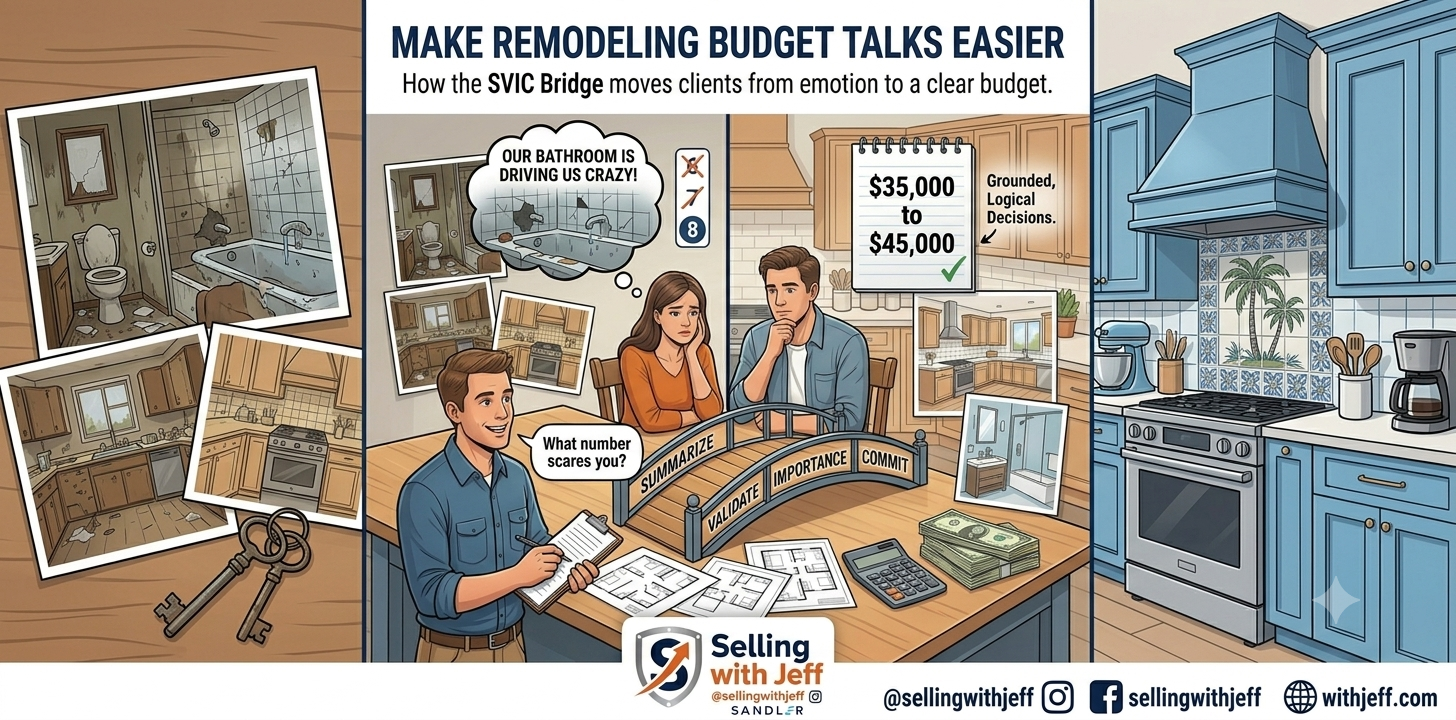
SVIC Bridge: Make Remodeling Budget Talks Easier

What the SVIC bridge really does between pain and budget

The SVIC bridge is a short, structured conversation that moves a prospect from emotional “pain talk” into a calm, logical budget discussion. You summarize the problems, confirm you understood, measure importance, and test commitment before you ever ask about money.

Read More

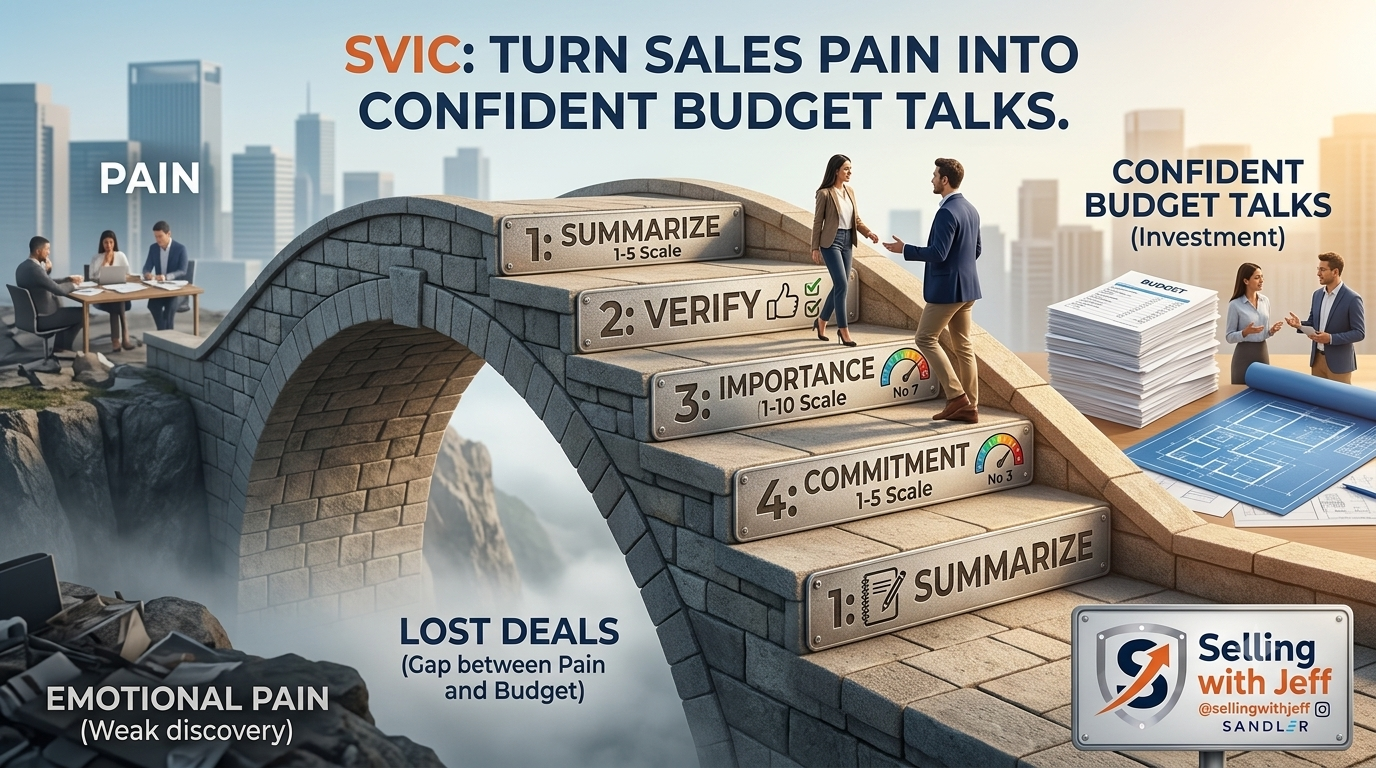
SVIC: Turn Sales Pain into Confident Budget Talks

Why reps lose deals between pain and budget

The SVIC pain‑to‑budget bridge is a simple sequence that moves a prospect from emotional pain into logical budget, so you stop losing deals in the gap between “this really hurts” and “we’re not sure about the price.” You use it after the pain step and before any real money talk.

Read More