Selling with Jeff

Posts about:

Budget (11)

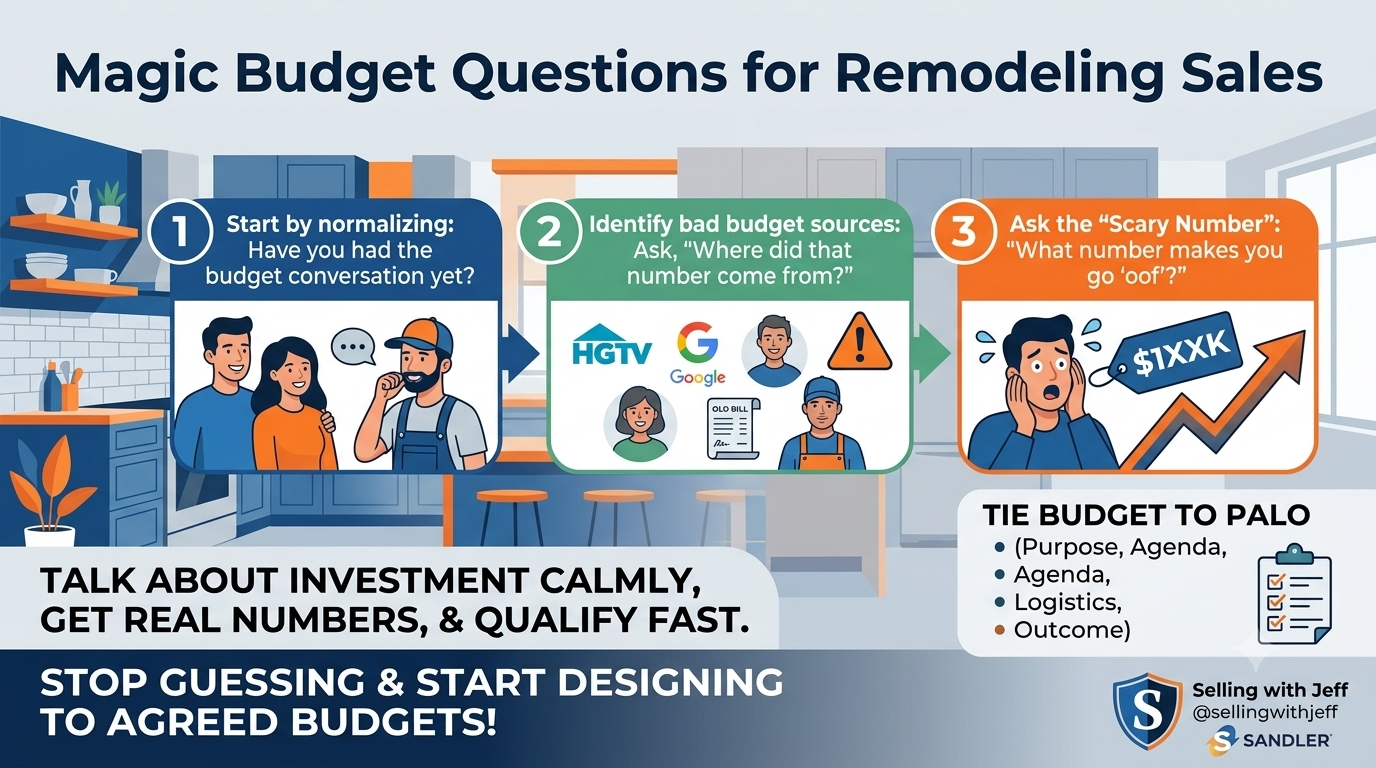
Magic Budget Questions for Remodeling Sales

Most remodelers hate talking about money, which means they guess at budget, under‑qualify, and waste weeks on designs the client can’t afford. This approach uses magic budget questions plus a simple PALO structure so you can talk about investment calmly, get real numbers, and qualify fast.

Read More

Contractor Evaluation Criteria Homeowners Actually Use

Turn vague contractor comparisons into a clear evaluation scorecard

A practical contractor evaluation criteria scorecard helps homeowners compare bids on more than price, so they weigh process, communication, and risk instead of chasing the lowest number. It also lets you guide the decision without pressure, because you’re teaching people how to buy—not just asking them to buy from you.

Read More

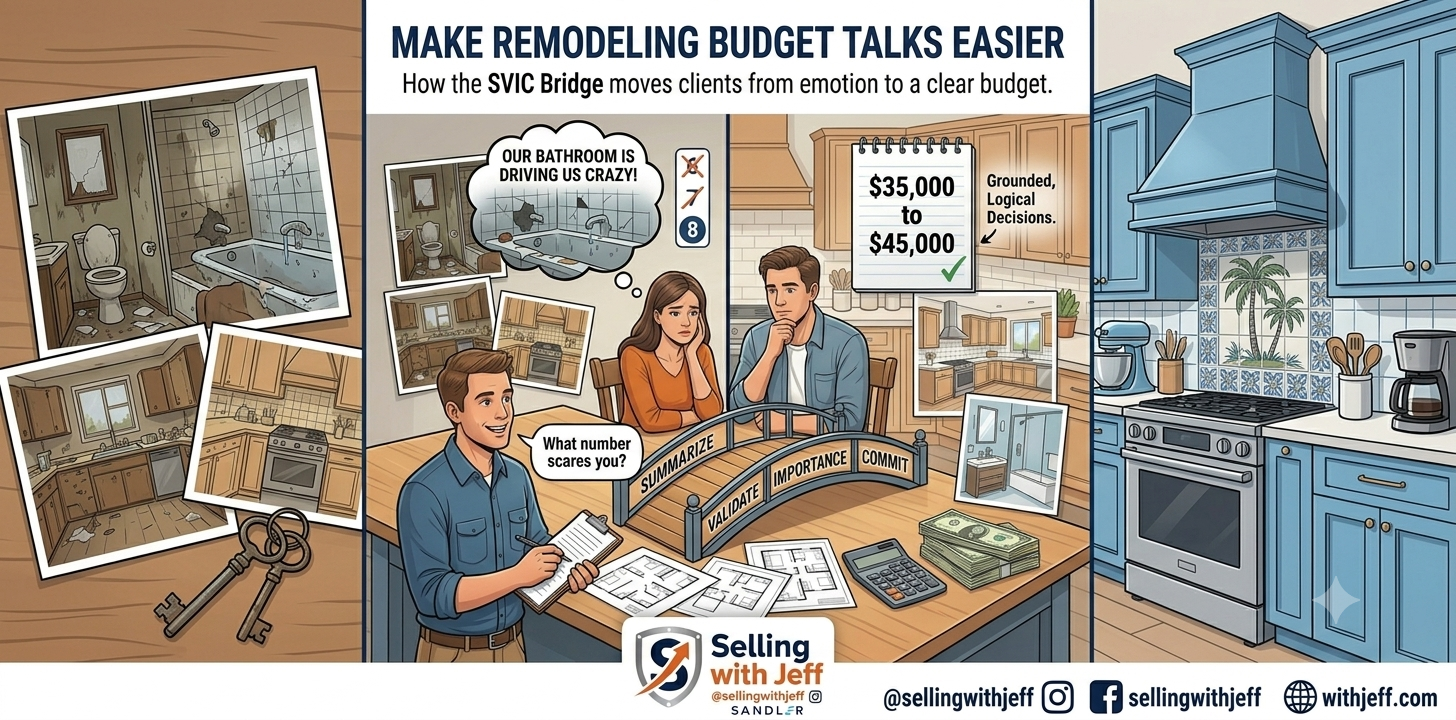
SVIC Bridge: Make Remodeling Budget Talks Easier

What the SVIC bridge really does between pain and budget

The SVIC bridge is a short, structured conversation that moves a prospect from emotional “pain talk” into a calm, logical budget discussion. You summarize the problems, confirm you understood, measure importance, and test commitment before you ever ask about money.

Read More

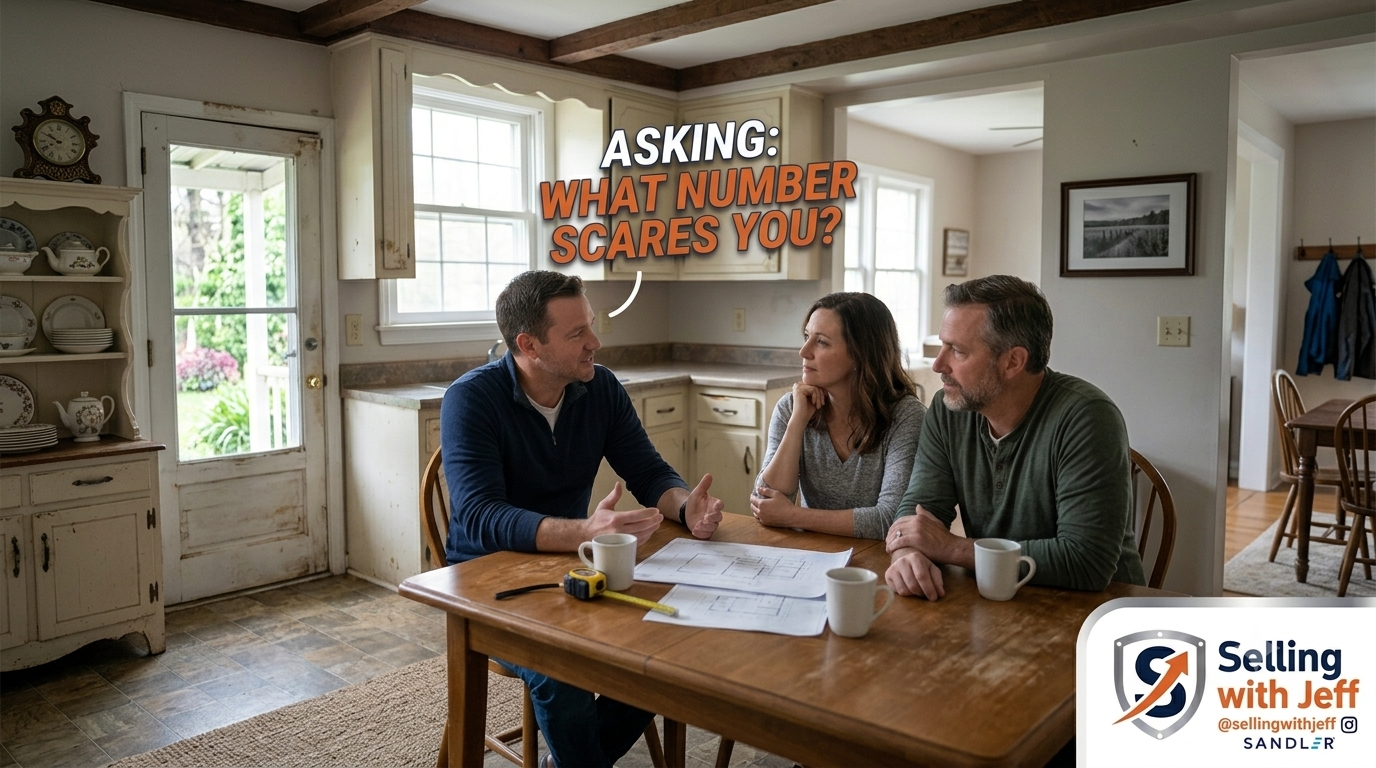
Use “What Number Scares You?” in Remodeling Budget Talks

Why traditional remodeling budget questions backfire

Remodeling budget conversations work best when you replace a direct “What’s your budget?” with the softer, disarming question, “What number scares you?” This shift helps homeowners talk honestly about money, reduces awkward silence, and gives you a realistic ceiling before you invest time in design.

Read More

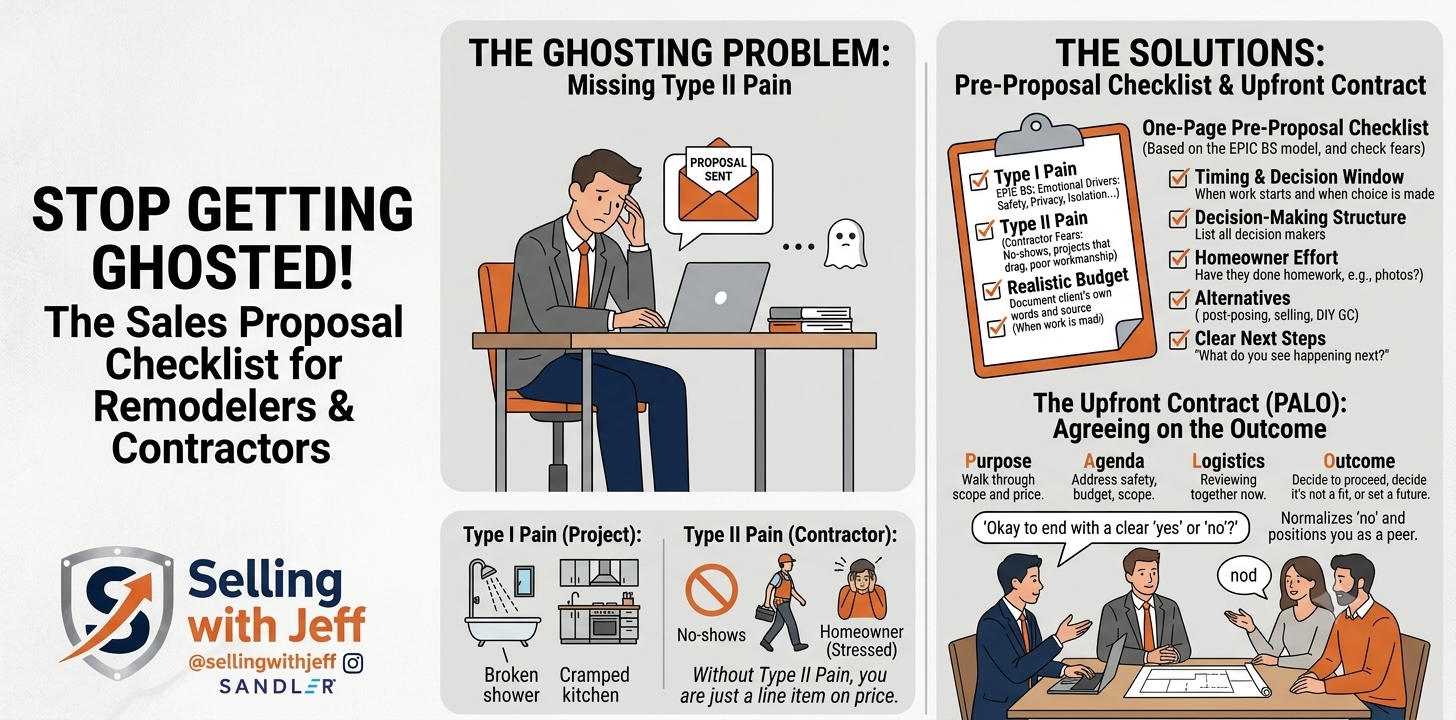
Sales Proposal Checklist to Stop Getting Ghosted

Define the real problem: ghosting, bad fits, and missing Type II pain

A sales proposal checklist helps remodelers and contractors qualify deals before investing time in detailed quotes. It focuses on uncovering emotional pain, realistic budget, decision process, and fit so you only write proposals for prospects likely to choose you instead of cheaper competitors.

Read More