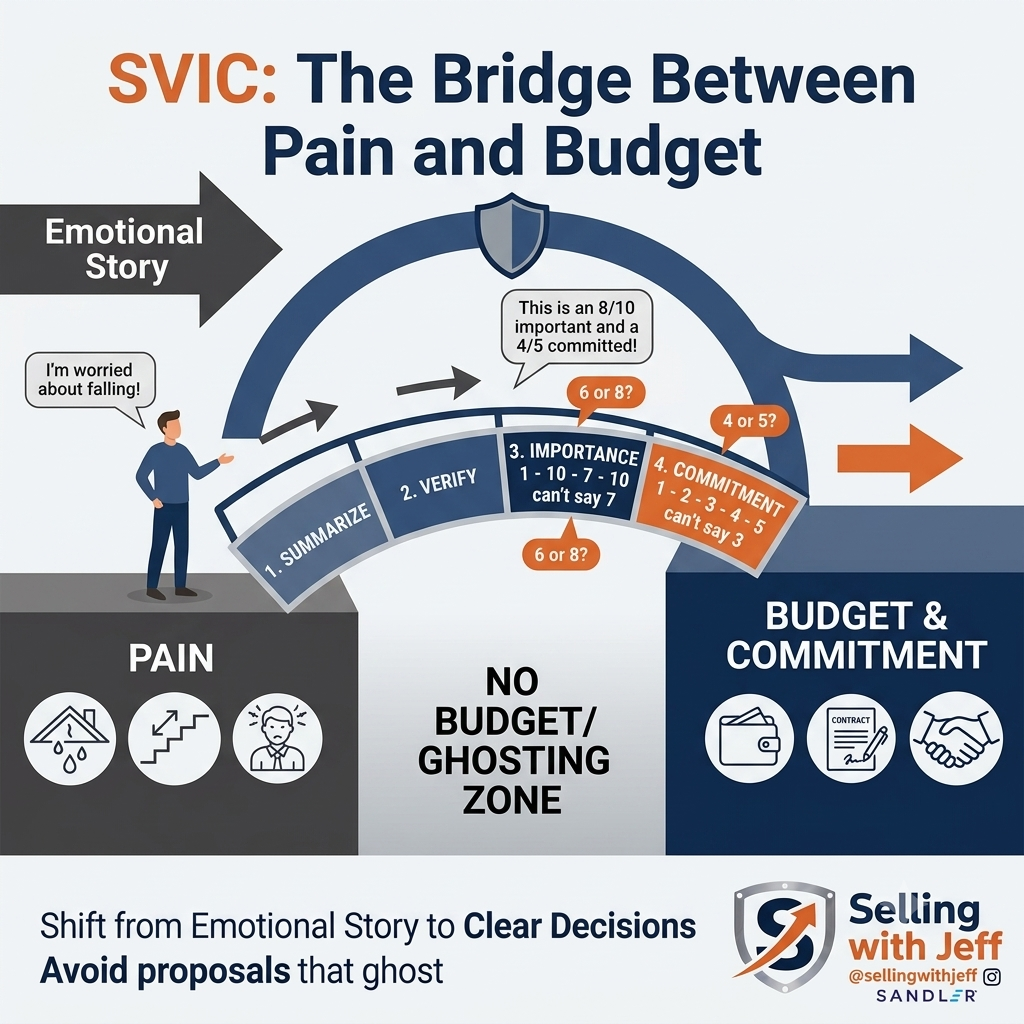

Why Homeowners Dodge the Budget Question
Effective remodeling budget conversations start long before you ask for a number. You earn the right to talk money by building trust, uncovering what hurts in the home, and agreeing on the meeting’s purpose and outcome. Then you can discuss ranges and priorities without triggering fear or defensive lowball numbers.
Most homeowners are not trying to be difficult when they hide their budget. Many have watched a contractor come in mysteriously just under the number they once shared, or heard horror stories on neighborhood apps about projects that ballooned in cost. One survey cited by Lowe’s found that 61% of homeowners say unclear project costs are a major challenge when working with pros, and 43% in an Angi study said their last project ran over the original estimate, often by 30% or more.Source
Layer on top of that the industry’s spotty reputation, and it is no surprise prospects fear that “whatever I say becomes the price.” As Sandler trainers often point out, the real test of your budget step is trust, not scripting.Source If the bonding, rapport, and meeting framework (PALO) are solid, money becomes just another part of the plan.
Use Pain and ‘What If You Do Nothing?’ to Raise Urgency
When a homeowner refuses to share a budget, the problem is usually upstream. Either they do not trust you yet, or the pain is not strong enough. That is why Sandler puts the pain step before budget. Until they feel the impact of doing nothing, “let’s just wait” will always look safer than writing a big check.
In the conversation above, the trainer uses his broken hot tub as an example. He can afford to fix it, but because the weather is still warm and no one needs it yet, his pain is low, so he chooses to do nothing. Homeowners treat siding, roofing, and windows the same way until you explore questions like, “What happens if you go through another winter like this?” or “Fast‑forward to February when the drafts are back—what does that look like?”
Questions such as “What happens if you do nothing?” and “Who else is affected if this drags on?” move the discussion from features to consequences. That deeper pain makes the later budget talk feel like solving a problem they can no longer ignore, not a pushy money grab.
Make Price the First Slide, Not the Last Surprise
By presentation time, a lot of remodelers go into “movie climax” mode and save the number for the final slide. The trouble is that prospects spend the whole time wondering about price instead of listening. As one Sandler coach puts it, all they hear is “wah‑wah‑wah” until you get to the dollars.Source
A better approach is to confirm pain, then share price up front. For example: “You told me the leaking siding is stressing you out and you don’t want another winter worrying about rot. Has anything changed since we met?… Okay. Before we get into the design, your project comes in around $45,000.” Then pause five seconds and ask, “What’s going through your mind?”
If the number is way off, you discover it before walking through 40 slides. If they say, “That’s higher than I hoped,” you can explore scope and material choices. Range anchoring can help here: one guide for contractors suggests sharing a realistic project range first, then asking if that lines up with what they had in mind.Source
Turn ‘We’ll Think About It’ into Real Decisions
“We need to think about it” is the worst possible outcome at the end of a proposal. In Sandler terms, it is usually our fault: either we missed something in pain, budget, or decision process, or we never took “think it over” off the table before presenting.
Use your PALO at the start of the meeting to define a clean outcome. After reviewing their pains, you might say, “Today I’ll show you how we solve each of these. If we miss, will you be candid and tell me where? And if we get it right, is there anything that would stop us from giving you a yes or no today?” Now a stall is breaking a promise, not a default option.
When they truly do need to talk it over with a spouse or consultant, schedule that follow‑up on the spot: “Can we put a 20‑minute call on for Thursday after you’ve talked?” If they refuse to commit to a next step, treat it as a polite no and free up your time for better‑qualified projects. Your job is not to close every lead; it is to collect clear decisions and cherry‑pick the right jobs for your company.