
Selling with Jeff

Posts about:

Remodeling (15)

Practice More Than You Perform in Remodeling Sales

Why sales pros must practice more than they perform

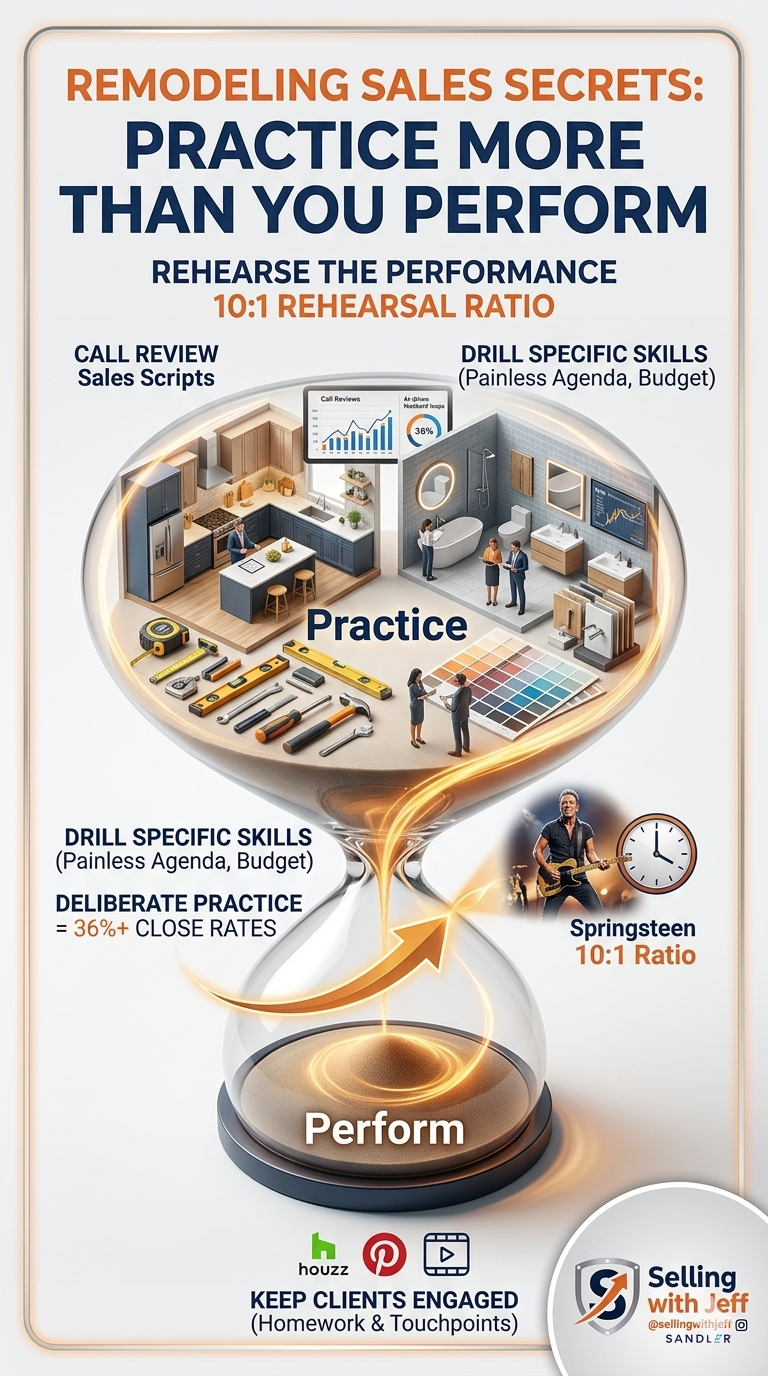
Practicing more than you perform in sales means treating selling like a performance craft: you rehearse key conversations, objections, and meeting openers dozens of times so the live call feels easy. Teams that practice deliberately often see double‑digit close‑rate gains without more leads or discounting.


Read More

Digging for Pain in Small Remodeling Jobs

Why digging for pain matters even on small remodeling jobs

When remodelers dig for pain in small projects, they uncover the real reasons a homeowner wants the work done and can decide quickly whether the job fits their process, capacity, and margin targets. Even on a $20–30K job, clear pain makes pricing, scope, and next steps faster and prevents time‑wasting “free consulting.”

Read More

Equal Business Stature: Stop Being a Free Bidding House

Why contractors lose deals (and margin) when they act like a quoting house

Equal business stature in sales means you and the client both qualify for each other’s time, follow a clear process, and make mutual decisions instead of you begging for the work. When you skip that balance, you become a free quoting house—and your win rates and margins show it.

Read More

Sandler Pain Step for Remodelers: Turn Emotion into Action

Define pain the Sandler way (without ever saying “pain” to homeowners)

The Sandler pain step helps remodelers uncover why a homeowner will actually invest tens or hundreds of thousands of dollars. In practice, “pain” means a compelling emotional reason to do something different—and it is a training word only. With clients, you talk about “what’s not working” or “what you were hoping we could help with,” never “your pain.”

Read More

Mastering Client Objections: Sales Tactics for Construction Professionals

The Importance of Setting Clear Expectations

In the construction industry, setting clear expectations from the outset can significantly reduce the likelihood of client objections. Clear communication about project timelines, costs, and deliverables ensures that both parties are on the same page, fostering trust and transparency. By establishing a clear defined future (CDF) during initial discussions, you create a roadmap that guides the client through the project lifecycle. This approach not only helps in managing client expectations but also in preempting potential objections before they arise.

Read More