Selling with Jeff

Posts about:

Remodeling (10)

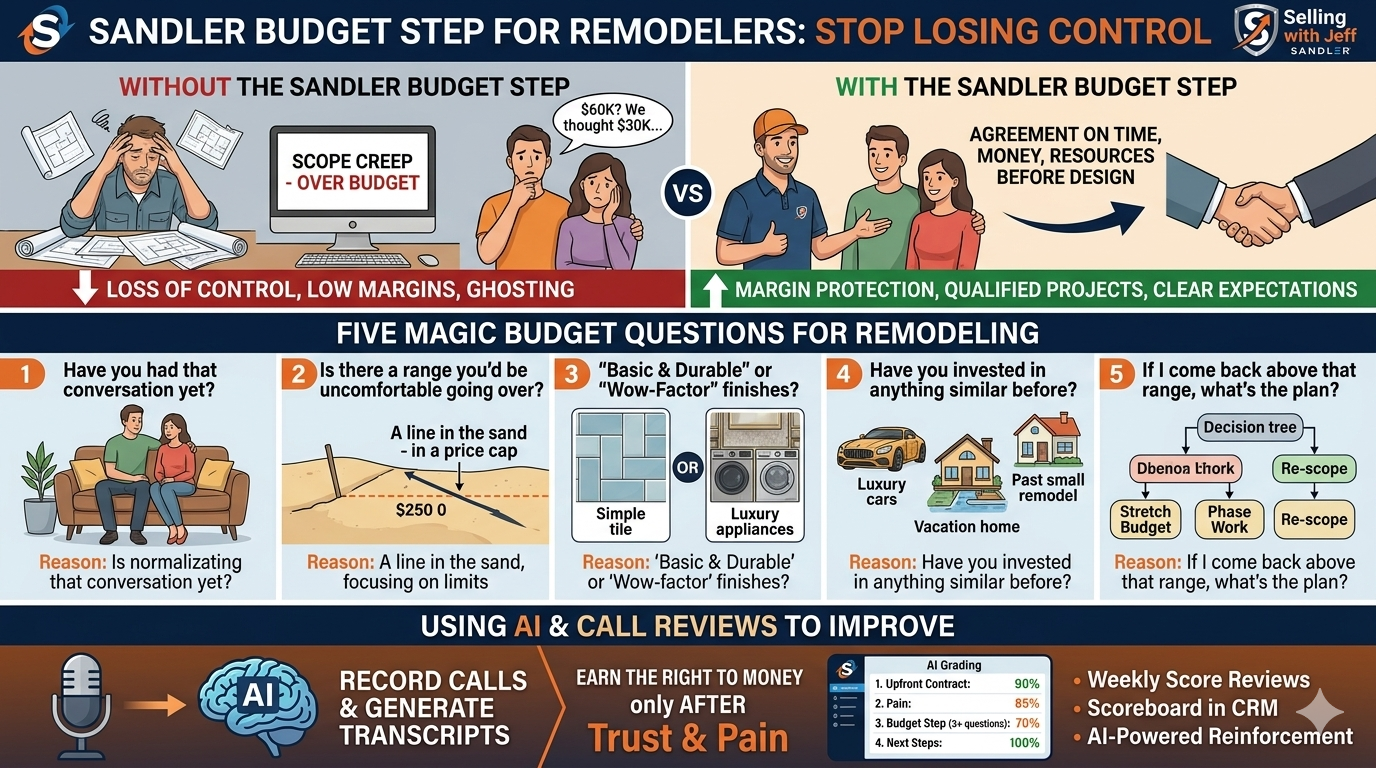
Sandler Budget Step for Remodelers: Stop Losing Control

Why homeowners hide budgets and why the Sandler budget step matters

A Sandler budget step works when you ask about money only after building trust and uncovering pain, then agree on time, money, and resources before you ever design or propose. In remodeling, that shift protects your margins, prevents scope creep, and stops you from building detailed estimates for projects that were never real.
Read More

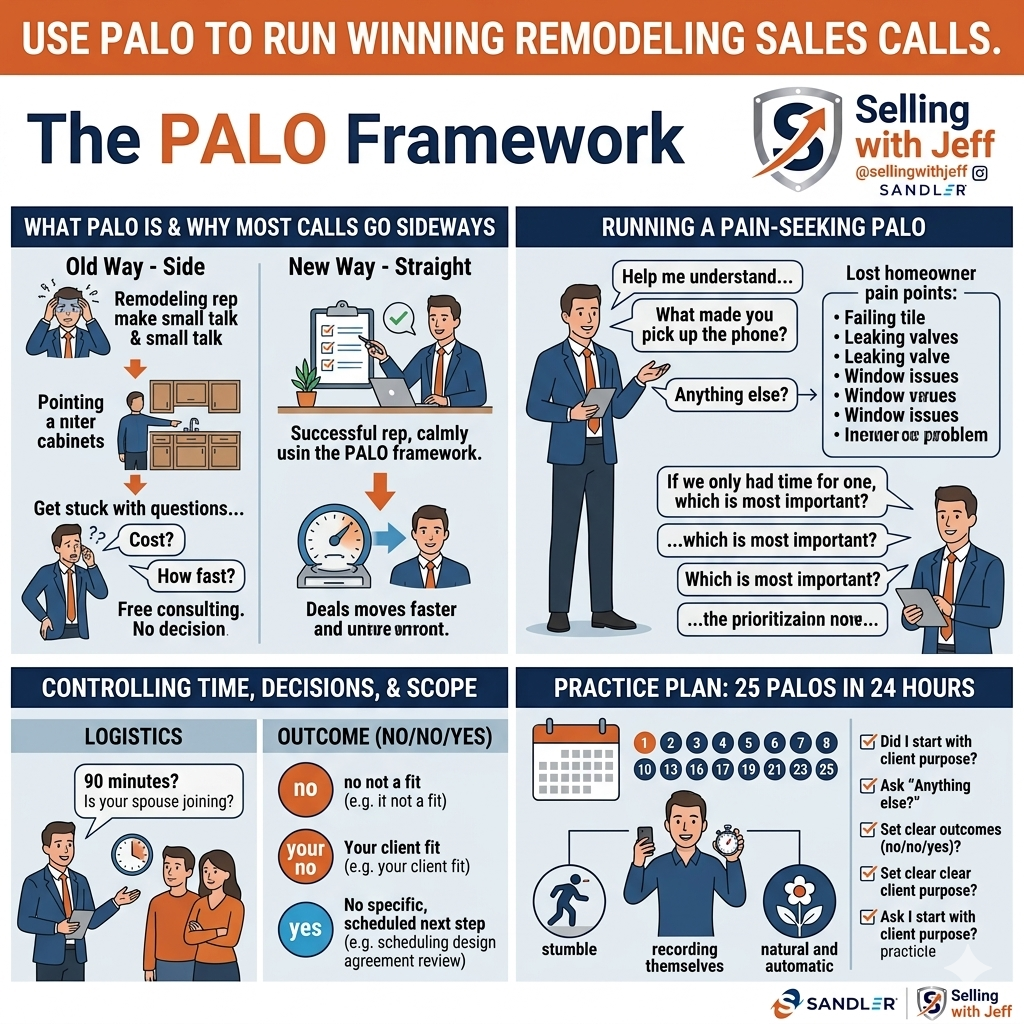
Use PALO to Run Winning Remodeling Sales Calls

What PALO is and why most remodeling sales calls go sideways

A PALO sales meeting framework is a short, upfront conversation where you and the homeowner agree on purpose, agenda, logistics, and outcome. In under a minute, you set adult‑to‑adult ground rules so you stop guessing, stop chasing, and know exactly what will (and won’t) happen after the call.

Read More

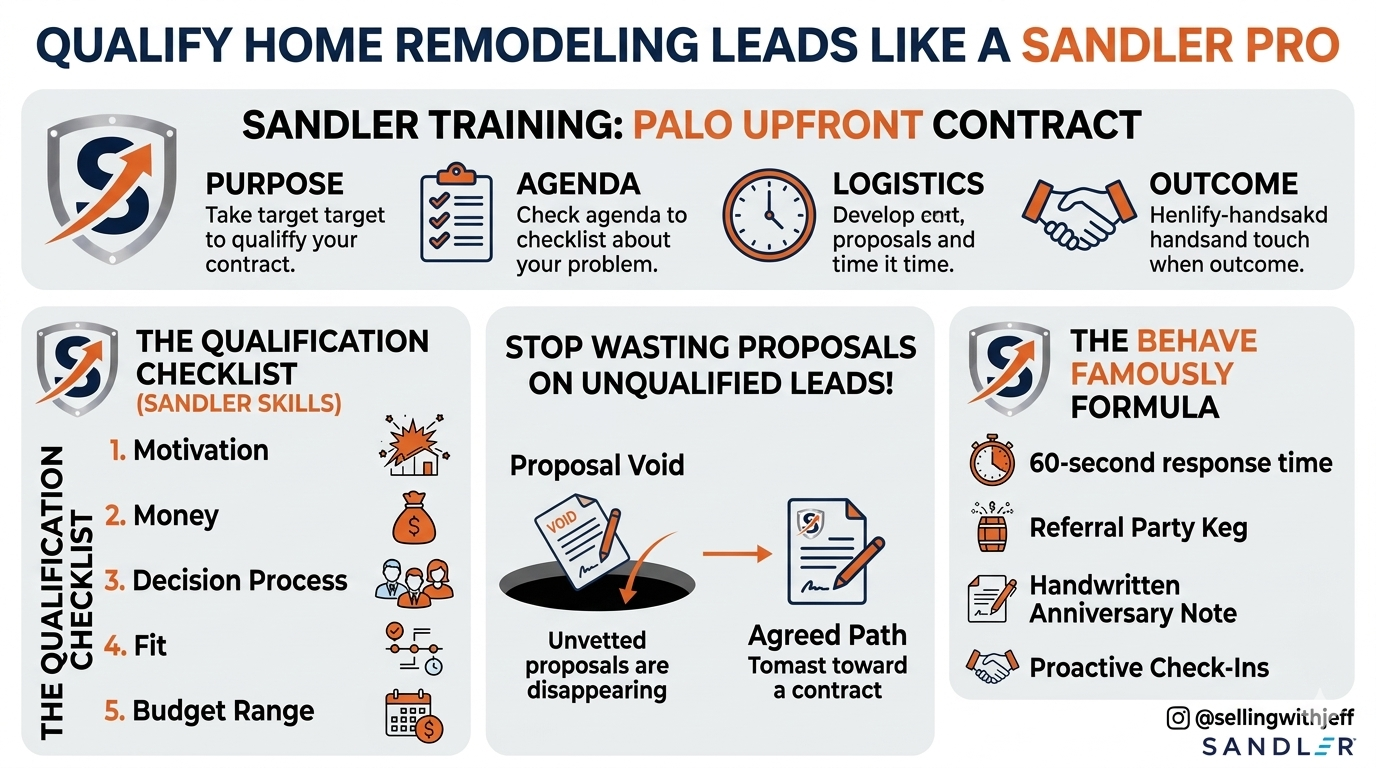
Qualify Home Remodeling Leads Like a Sandler Pro

Start every remodeling conversation with a clear PALO upfront contract

A PALO upfront contract is a brief agreement at the start of a sales conversation about purpose, agenda, logistics, and outcome. In 40–60 seconds you align expectations, reduce pressure, and agree on what will happen at the end of the meeting—including the possibility of a clear “no.”

Read More

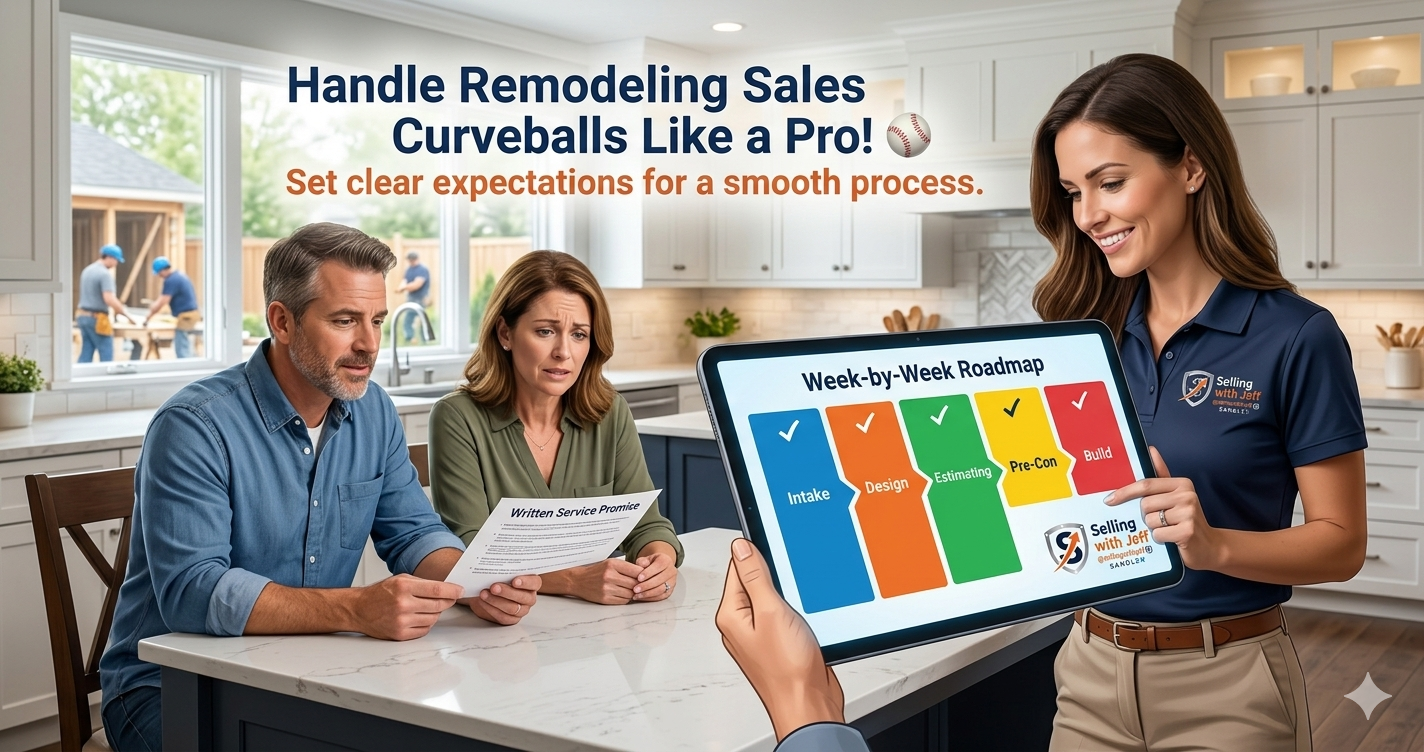
Handle Remodeling Sales Curveballs Like a Pro

Set clear expectations so busy homeowners never feel ignored

The best way to keep overwhelmed homeowners calm during a remodel is to set clear expectations about your sales and project process before they sign. In practice, that means explaining timelines, handoffs, communication rhythms, and what “busy season” really looks like for your team in plain language.

Read More

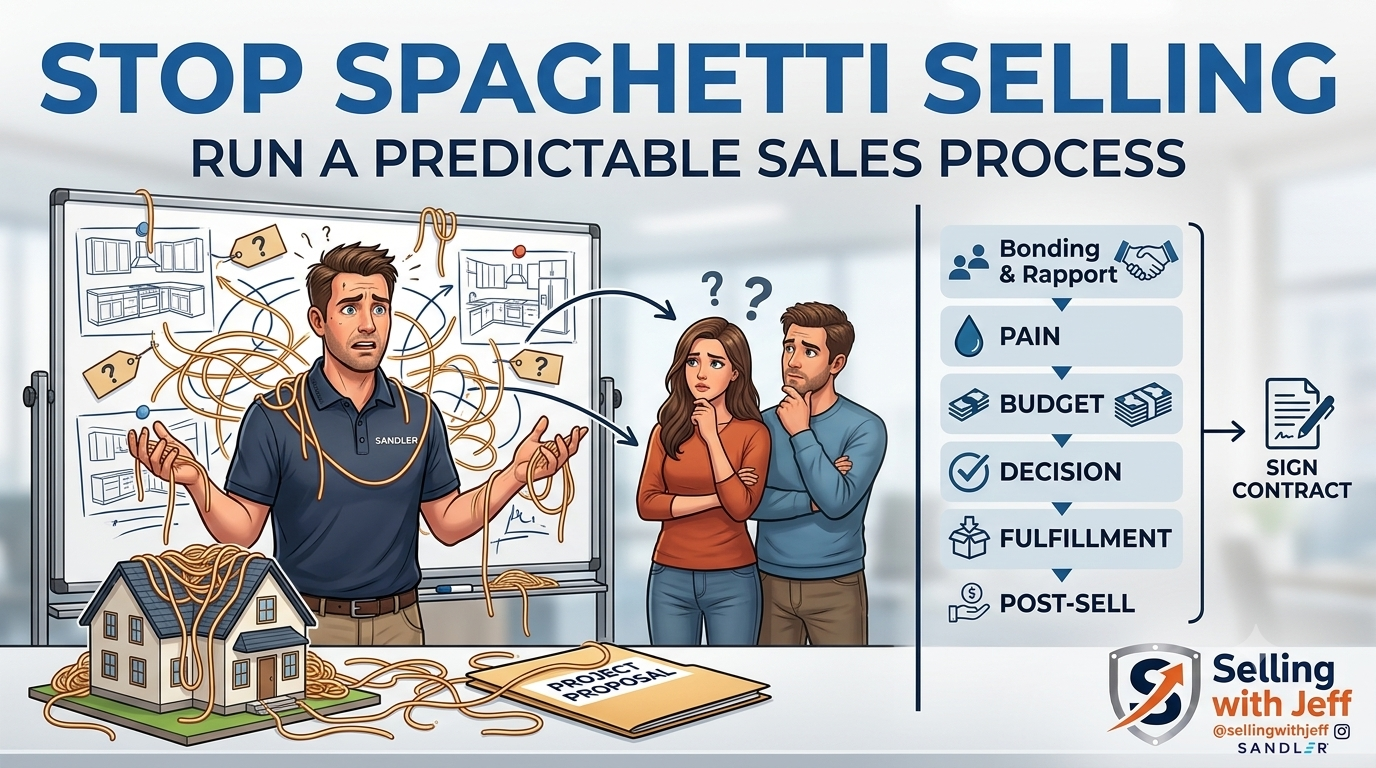
Stop Spaghetti Selling in Design‑Build Remodeling

Why design‑build remodelers must stop ‘spaghetti selling’

Spaghetti selling is when a remodeler throws out ideas, drawings, and prices hoping something sticks, instead of running a clear sales process. It feels helpful in the moment, but it chews up time, confuses homeowners, erodes trust, and leaves you chasing “think it overs” with no real control of the deal.

Read More