
The Importance Of Understanding Client Pain Points In Sales Training
Posts about:
The Importance Of Understanding Client Pain Points In Sales Training
Navigating the buyer's journey effectively requires a deep understanding of their pain points and a structured approach to addressing them. The Sandler Pain Funnel is an essential tool for sales professionals looking to master this journey. At its core, the Pain Funnel is designed to uncover the underlying issues that prospects face, moving beyond surface-level problems to reveal deeper, emotional pain points. This technique involves asking a series of strategic questions that guide the prospect to articulate their challenges, thereby creating a compelling reason for them to consider your solution.
Understanding buyer emotions is crucial for any sales professional aiming to close more deals. There are four primary buyer emotions that drive purchasing decisions: pain in the present, pain in the future, pleasure in the present, and pleasure in the future. Each of these emotions influences the buying process differently and requires a unique approach.
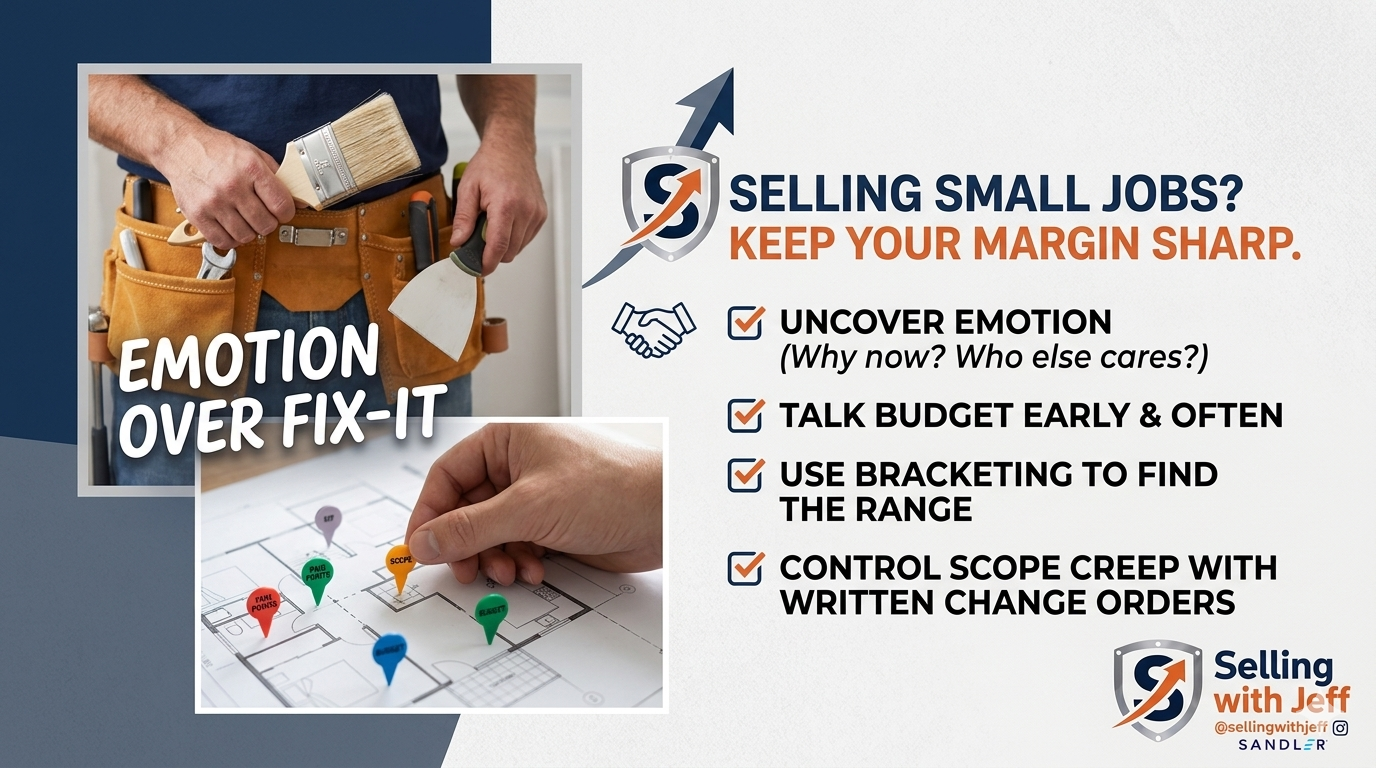
In the world of remodeling sales, understanding and utilizing the pain funnel is crucial. This technique is not just another sales tactic; it’s a structured approach to uncovering and addressing the real pain points of your clients. The pain funnel consists of a series of questions designed to delve deep into the client's issues, helping you understand the underlying problems that are driving their need for remodeling services. By mastering this technique, you can transform your sales approach from a generic pitch to a personalized consultation that speaks directly to the client’s needs.
Understanding the psychological foundations of the pain funnel is crucial for sales success. At its core, the pain funnel is designed to uncover the compelling emotional reasons that drive clients to make a change. These reasons are often deeply rooted in feelings of frustration, disappointment, or even fear. By tapping into these emotions, sales professionals can create a powerful connection with their prospects, making it easier to guide them towards a decision.