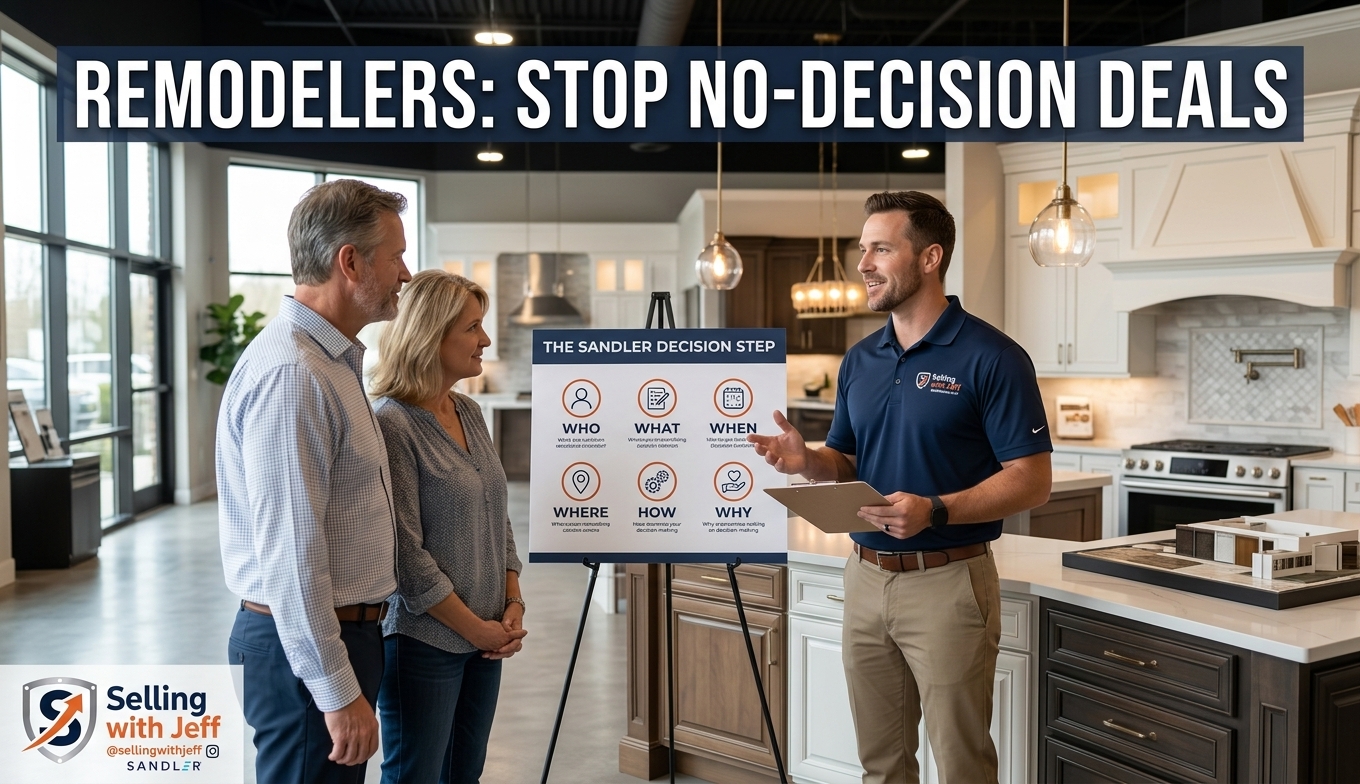
Remodeling Sales Presentation: Earn a Clear Yes or No
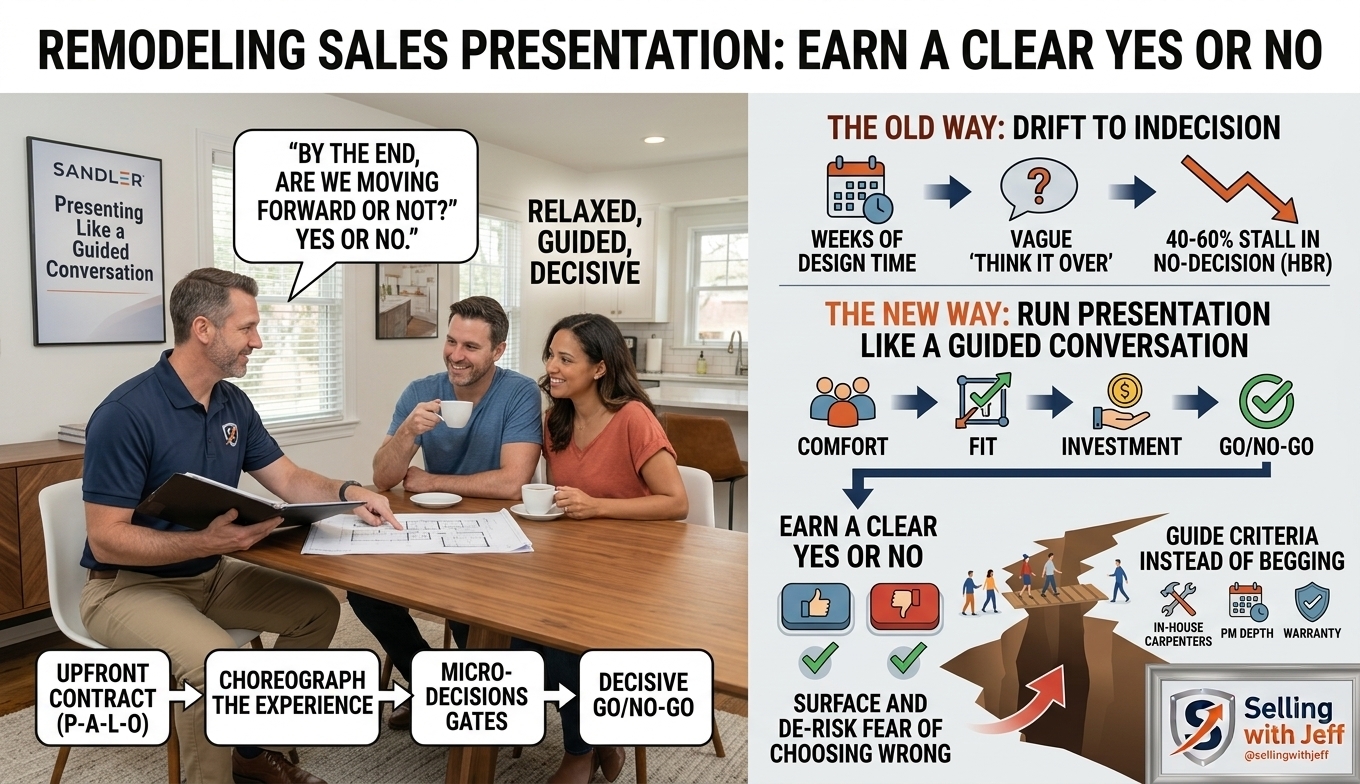
Redefining the Ultimate Close in Remodeling Sales
A high-converting remodeling sales presentation is a structured, in-person meeting where you and the homeowners agree upfront on purpose, agenda, timing, and decision, then walk through options together so the conversation ends in a clear yes or no instead of an open-ended “think it over.”
Your real pain isn’t bad drawings; it’s great presentations that drift into indecision. You invest weeks of design time, then walk out of the office with, “We just need to talk about it,” and a vague promise to follow up. In large studies of sales conversations, 40–60% of deals stall in no-decision rather than going to a competitor, according to Harvard Business Review.
Sandler reframes the “ultimate close” as the final micro-decision in a series, not a high-pressure moment where you talk faster and discount harder. Your job is to earn the right to ask, “Are we moving forward or not?” long before you ever slide a design agreement across the table.
Use Upfront Contracts to Earn the Final Decision
If your presentation meetings feel random, it’s because you’ve let the homeowner’s system run the show. A tight upfront contract—using Sandler’s P-A-L-O structure (Purpose, Agenda, Logistics, Outcome)—is how you take back control without sounding pushy. Sandler trainers define it as a 40–60 word mutual agreement about why you’re meeting and what decision you’ll make together (Sandler Training).
For a final presentation, that might sound like:
“I’m looking forward to walking through your design and investment options. We’ve set aside up to two hours so we’re not rushed. I’ll show you how the plan fits what you told us, answer questions, and by the end I’m assuming you’ll be comfortable telling me whether we’re moving forward together or not. Are you okay with that?”
Notice the tone: logical adult, delivered in a nurturing way. You’re clear that a decision is expected, but you make “no” a legitimate, safe outcome. That’s how you avoid the last-minute pressure vibe that prospects can smell a mile away.
Run the Presentation Meeting Like a Guided Conversation
The best remodelers don’t “perform” the presentation; they choreograph an experience that keeps the homeowners talking. In your transcript, the team does a short office tour, offers coffee, then sits down and asks, “What are you really hoping to see or hear today?” That’s not small talk—it’s deliberate control.
Think of the meeting as a sequence of micro-decisions you guide:
- Comfort: “Does the agenda and timing we laid out still work for you?”
- Fit: “Based on what you’re seeing, does this design still feel like it solves the problems we discussed?”
- Investment: “Given the range we’re showing, is this still a project you want to invest in?”
- Go/No-Go: “Are we moving forward together, or is this a ‘not now’?”
Sandler trainers report that when remodelers treat each step as a decision gate, they stop burning design hours on people who were never going to commit anyway (Sandler Decision Step).
Handle No-Decision and Competing Bids Without Pressure
Even with a solid process, some homeowners will wobble at the edge of the chasm. Research on B2B and complex sales shows 40–60% of opportunities can still die in no-decision if you don’t address their fear of choosing wrong (HBR). Your job isn’t to overpower that fear; it’s to surface and de-risk it.
When you hear, “We might wait until next year,” stay in nurturing-parent and logical-adult mode:
“Totally fair. This is an important decision. If we imagined you did move ahead now and we fast-forward six months to the end of the project, what would ‘worst-case’ look like? What would have to go wrong for you to say, ‘We never should have done this’?”
They’ll tell you the real fears: surprise change orders, blown schedules, disruption. Then you can contrast that with “best-case” and connect the dots to your process, team, and communication standards.
When they’re comparing multiple bids, you guide their criteria instead of begging for “last look.” Ask what they’ll be comparing, then add two or three decision points they may miss—such as in-house carpenters, project management depth, or warranty. That’s how you teach them how to buy from you.
As Stephen M.R. Covey argues in The SPEED of Trust, higher trust reduces friction and speeds decisions. A disciplined Sandler presentation—upfront contracts, clear gates, honest yes/no outcomes—is how you earn that trust and turn “ultimate closes” into calm, adult conversations instead of Hail Mary pitches.