Sandler Decision Step: Stop Losing Deals to No-Decision

Why the Sandler Decision Step Stops ‘Think-It-Over’ Deals
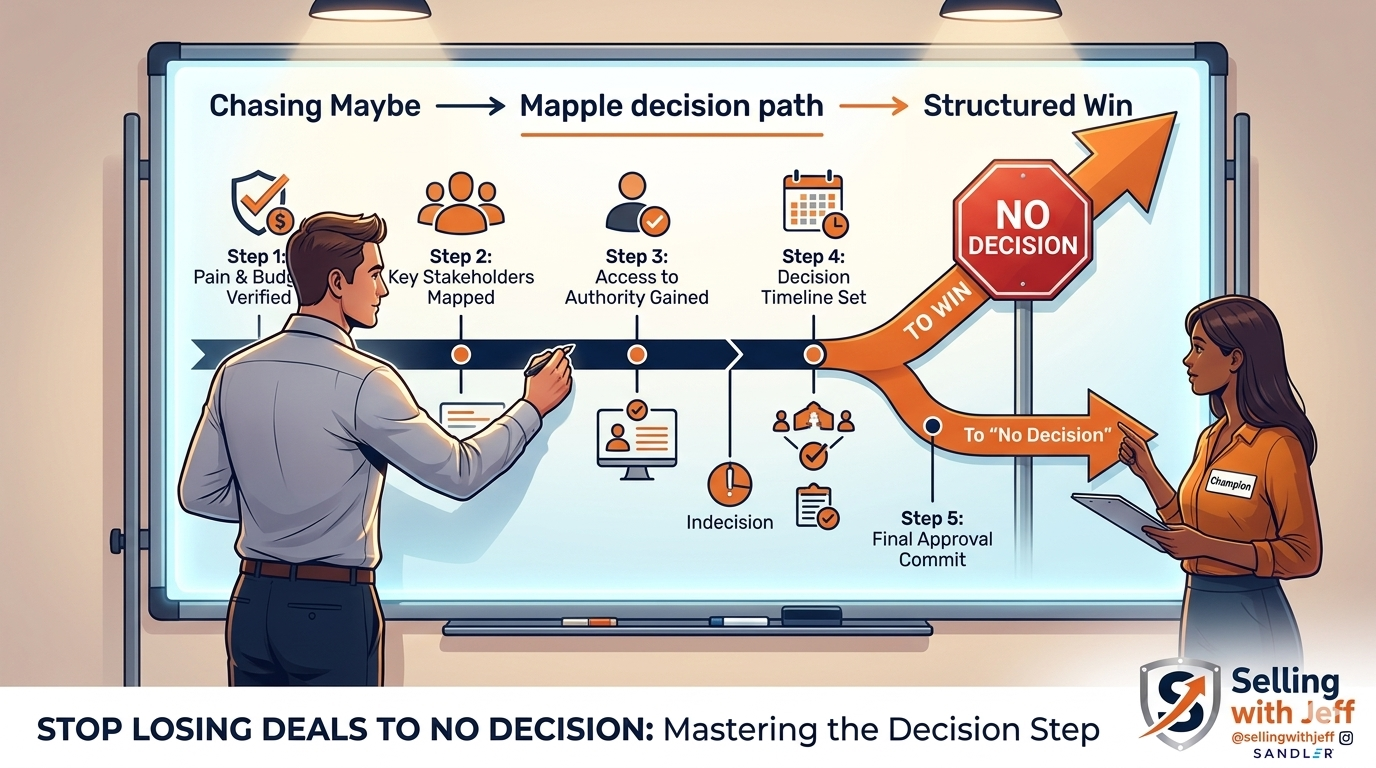
The Sandler Decision Step is the part of your sales process where you get crystal clear on who decides, how they decide, and when the decision will be made. When you treat decision clarity as a hard qualification gate, you dramatically reduce stalled, “let us think about it” opportunities.
If you’re a design-build remodeler or contractor, you’ve probably lived this movie: you’ve done great discovery, teased out emotional pain, and even had a transparent budget talk. Then the deal drifts. You hear, “We just need to talk about it,” or, worse, a surprise stakeholder appears at the eleventh hour—an out‑of‑state parent funding the project, a best‑friend interior designer, or a silent spouse who suddenly vetoes everything.
Sandler trainers routinely see teams lose 20–40% of their pipeline to “no decision” because they never truly qualified the decision step. Research on complex buying shows that modern buying groups often include eight or more stakeholders, all with different concerns, which is why deals stall without clear decision maps (Sandler Training).
In remodeling, the numbers are smaller, but the dynamics are just as tricky. A couple may sound aligned in front of you, but they actually decide around the Sunday dinner table—with input from adult kids and a neighbor who remodeled last year. If you don’t understand where, when, and with whom those conversations happen, you can’t guide the project and you can’t forecast your pipeline.
The goal of the decision step is simple: before you invest time in detailed design or proposals, you confirm that the prospect is willing, able, and comfortable making a decision that ends in a clear “yes” or “no.” No decision, no sale—and that’s a good thing when you surface it early.
How to Uncover Decision-Makers, Influencers, and Executors
The most practical way to think about household buying roles is the DIE model: Decision‑makers, Influencers, and Executors. In a remodeling sale, one person can move between these roles as the project progresses, so you must keep checking, not just ask “Who decides?” once and move on.
Decision‑makers are the people who can actually say “yes” to money and scope. In a design‑build kitchen remodel, that might be both spouses, or a spouse and an out‑of‑state parent underwriting the project. Influencers are anyone whose opinion will sway the decision: best‑friend designers, adult children, a trusted realtor. Executors are the people who will do the legwork: selecting fixtures, attending design meetings, and coordinating on-site access.
Most salespeople stop at, “Will anyone else be involved in the decision?” That’s where surprises like the 40‑year‑old client who still needs mom’s approval come from. Instead, use investigative‑reporter questions that cover who, what, when, where, how, and why:
- Why now? “You’ve lived with this layout for ten years. Why remodel now instead of moving or waiting?”
- What criteria? “When you’re looking at three design proposals, what will your top three decision criteria be?”
- Where and when? “Where do you typically make big decisions like this—as a family meeting on Sundays, or one‑on‑one? When do you need everything decided by?”
- How? “How do you two usually make decisions together? How often do you agree or disagree? Who’s the tiebreaker?”
Notice you’re not leading with “Who else needs to be here?” You’re mapping the process, then the people. When a homeowner says, “Oh, my best friend is an interior designer; I’ll run things by her,” you’ve just uncovered a powerful influencer you must plan for before you present.
This level of questioning also protects you from misreading the room. In many homes, one partner is more vocal during meetings. It’s tempting to assume they’re the decision‑maker. But you hear clues—“I’ll see what he thinks”—that tell you someone else holds the real veto. Asking, “When you’ve done big projects in the past, how did the final decision get made?” surfaces that dynamic without turning you into a marriage counselor.
The payoff is huge. Sandler research and third‑party call analytics show that deals where sellers clarify next steps and decision criteria early are far more likely to close (Sandler; Gong‑referenced data). You stop chasing ghosts and start spending time with clients who can actually move.
Using Questions, Stories, and Upfront Contracts to Drive Decisions
Once you’ve mapped the decision landscape, you still need a structure to keep decisions moving instead of letting projects drift. That’s where upfront contracts and simple language patterns like “my biggest fear” become powerful, human tools.
An upfront contract is a short agreement about time, agenda, and possible outcomes for a meeting. At the decision step, you expand that idea: you outline the phases of your process, the decisions required at each phase, and what happens if those decisions aren’t made.
For example, at the end of a good‑fit visit you might say:
“Today we’ve talked about your goals and pain points. The next step, if we’re a fit, is a paid design agreement. My biggest fear is that we move into design without being clear on how the final yes or no will be made. Would it be okay if I asked a few questions about how you two make decisions like this, so we don’t waste your time or money?”
That one phrase—“my biggest fear”—is disarming. It gives you permission to protect both the client’s investment and yours. You can use it again in the room when one partner is steamrolling the other: “You’ve shared great ideas, and my biggest fear is that I’m only hearing from one of you. Herb, you’ve been quiet—what’s important to you so I don’t miss anything?”
Stories also help prospects see the cost of fuzzy decision processes. You might share, “We once got to the final design review and a client’s best friend, an interior designer, walked in for the first time. The whole project stalled. That’s why we now ask early who else might weigh in, so we can include them before you invest in detailed plans.”
Finally, use upfront contracts to bookend every meeting, not just the first one. Open with, “Here’s what we’ll cover and what decisions we need from you today.” Close with, “Between now and our next meeting, here are the three things we need you to decide. Next time we’ll confirm those and, if everything still looks right, we’ll be ready to move into construction documents.” This constant clarity reduces client anxiety and keeps your team from doing unpaid rework.
Applying the Decision Step to Design-Build and Remodeling Scenarios
For design‑build firms, the real leverage of the decision step shows up in the messy middle: converting design agreements to construction and keeping projects from going off the rails when more voices join the conversation. Let’s look at three common scenarios and how to handle them.
1. The design‑only drop‑off. Many firms charge a modest flat fee for concept design, then a percentage of project value for full selections and construction documents. It’s common to see 20–30% of clients stall between phase one and phase two. That isn’t just “client flakiness”; it’s often a decision problem.
Solve it by setting expectations at every phase, not just at the initial sale. At the start of concept design, walk through the whole journey: “We’re at step one of ten. Today’s decision is to approve concept direction. After that comes detailed selections, trade walks, and a budget confirmation meeting before construction. At each step we’ll be clear about what we need from you and what you can expect from us.”
Then, before you leave any meeting, use a future‑decision question: “If we come back with concepts that fit your wish list and target investment, what would happen next?” If they can’t describe a clear path—who signs, what they need to see, when they’ll decide—you know you have more work to do in the decision step.
2. The “everything is a top priority” client. When a homeowner insists every item is a must‑have but won’t raise the budget, you’re facing a disguised decision block. Instead of arguing line items, guide them into categories: must‑have, nice‑to‑have, and wish list. Explain, “If everything is a must‑have, the math won’t work. My job is to help you align the project with the budget you’re comfortable investing.”
Offer explicit choices: do they want to adjust scope, phase the work, or delay the project until they can invest more? Laying out pros and cons—more disruption now but done once versus fewer trades now but two rounds of dust later—helps them make a grown‑up decision. If they still can’t or won’t decide, disqualifying them respectfully is not only acceptable; it’s smart.
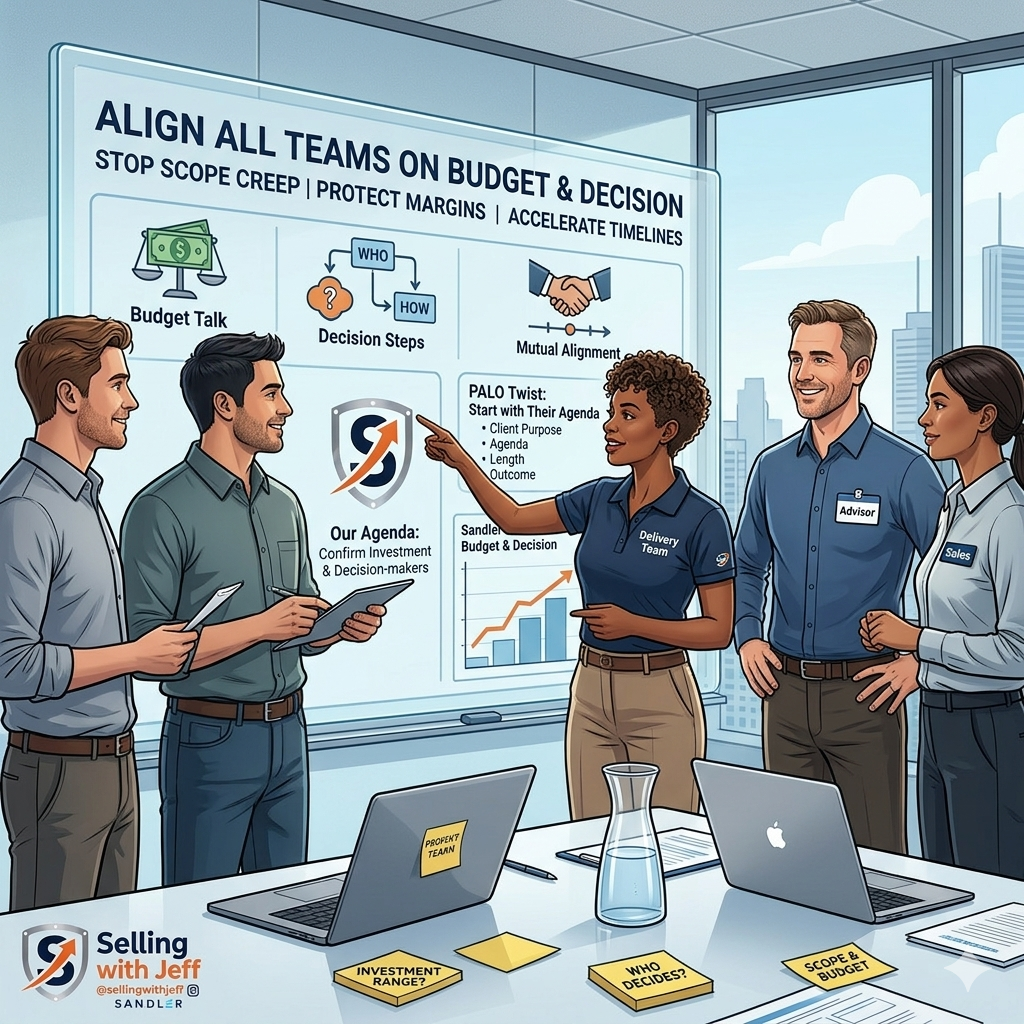
3. The internal handoff problem. In many firms, a salesperson does a great job with bonding, pain, and budget, then hands off to a design team that unknowingly reopens closed questions or skips expectation‑setting. Clients get confused, feel unheard, and start second‑guessing the project.
Here, the decision step is as much internal as external. Build simple checklists for each meeting that force your team to reconfirm where the client is in the journey, what decisions are needed next, and who needs to be in the room. For example, your designers might have to tick off: “Restated today’s purpose and agenda,” “Confirmed no new stakeholders have joined,” “Agreed on three decisions due before next meeting.”
That discipline creates continuity. It also keeps you from having the same blurry conversation three times and pulling senior people back in to fix projects that drifted. Over a year, tightening the decision step by even a small margin can mean dozens more projects moving from design to construction without drama.
When you treat the Sandler Decision Step as non‑negotiable—right alongside pain and budget—you stop chasing maybes. You qualify for willingness, ability, and comfort to decide. And you protect what matters most in a design‑build business: your time, your margin, and your clients’ trust.