Stop Losing Deals to No Decision
Why deals stall at the decision step
Most stalled opportunities don’t die on price or product; they die in the sales decision process. When reps don’t know who decides, how they decide, and when, deals drift into "no decision." Fixing this means treating decision clarity as a hard qualification gate, not a nice‑to‑have.
You can hear the impact in the conversation you just read: strong interest, real pain, clear budget – and still, a risk of spinning cycles with someone who can’t say yes. This isn’t unusual. Sandler trainers routinely see teams losing 20–40% of their pipeline to indefinite "think it over" outcomes because decision wasn’t qualified early and often. In other words, good selling work is being wasted in the final stretch.
Research on complex B2B deals shows why. Modern buying committees often include eight or more stakeholders, each with different concerns, from technical feasibility to political risk. As described in Sandler’s guidance on the Decision Step, top performers slow down long enough to identify the exact decision that must be made, who owns it, and what criteria they’ll use to say yes or no (Sandler Training).
When you skip this work, you end up where many reps live today: chasing proposals that feel promising but are actually unqualified. The fix is a repeatable, respectful way to clarify decision dynamics on every opportunity.
How to uncover the true sales decision process
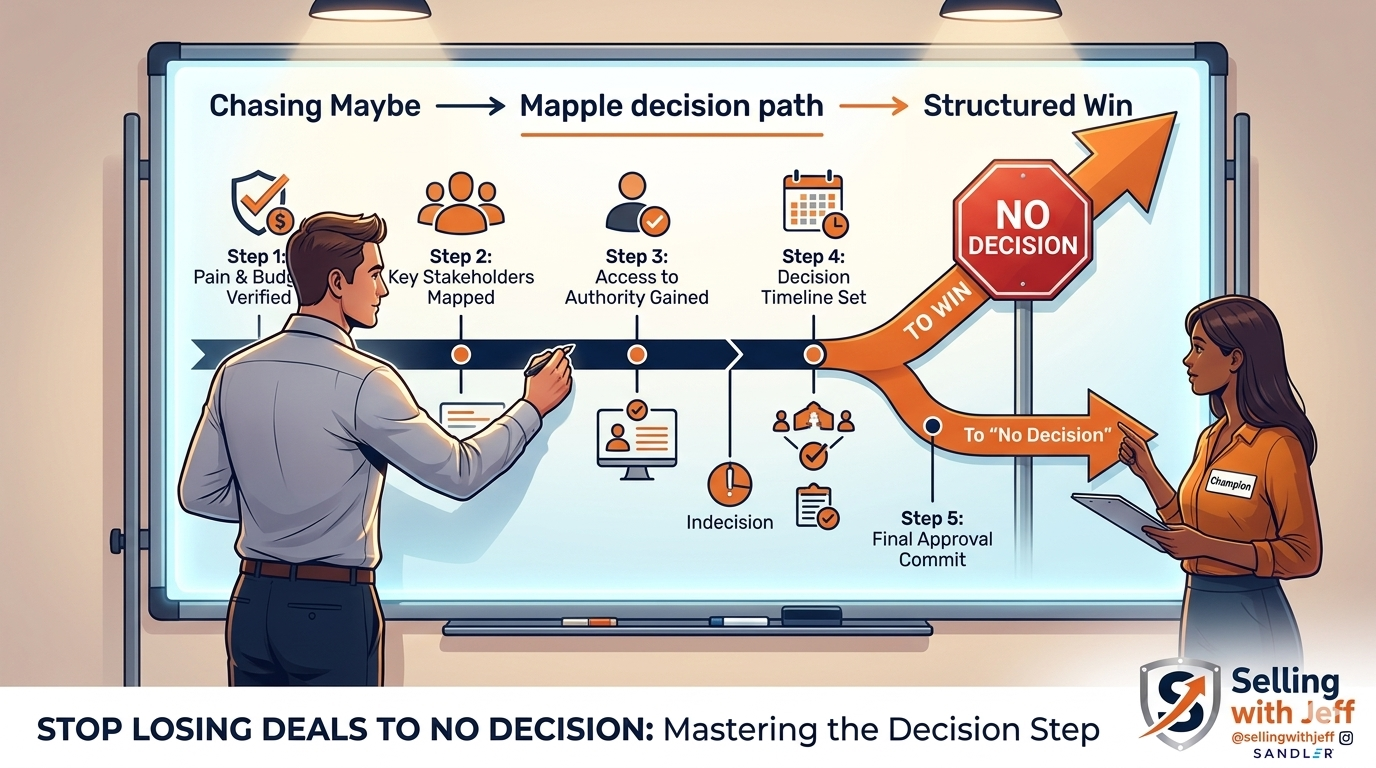
Uncovering a real decision path starts with process, not politics. Instead of asking, "Who’s the decision maker?", map out how the decision will unfold – then layer in the people at each step. This feels collaborative to buyers and gives you a much clearer view of risk.
A practical sequence, adapted from current enterprise-sales best practices, looks like this (Sandler Insight):
- "What specific decision are you hoping to make after this conversation?"
- "What has to happen between today and that decision being made?"
- "Where does this typically get approved – finance, leadership, a committee?"
- "When do you need this live and producing results?"
- "How do similar decisions usually get evaluated here?"
- "Why is that process set up that way? Has something burned you in the past?"
Notice how those questions hit who, what, where, when, how, and why – the exact framework discussed in your training session. They also surface hidden constraints: informal influencers, veto power, risk tolerance, and internal politics. One Sandler article notes that opportunities are not truly qualified until you’re clear on pain, budget, and decision – and most reps overestimate how much clarity they really have on that third leg (Sandler Article).
The practical test is simple: if you cannot diagram the buyer’s decision on a one‑page timeline – with names, steps, and dates – you do not yet understand their process.
Winning access to real decision makers without breaking rapport
Even when you understand the process, getting access to authority is its own skill. Champions may insist they "have full authority" while quietly planning to run everything past the CFO, founder, or partner. Your job is to respect that relationship while still protecting your time.
Start by changing the question. Instead of bluntly asking, "Are you the decision maker?", use softer, collaborative language:
- "So nobody has veto power over a decision you make here?"
- "Does anybody else need to be at this meeting for it to be productive?"
- "Who else will weigh in before this is approved, even informally?"
That last question, used consistently, is a quiet game‑changer. As Sandler trainers point out, simply asking, "Does anybody else need to be at this meeting?" often surfaces additional buyers without triggering status anxiety (Sandler Article). About half the time, your contact will volunteer a name: "You know what, we should invite Leslie." Now you have a path to multi‑threading.
When contacts resist bringing others in, don’t argue. Reframe access as risk reduction:
"My concern is that if we don’t involve your CFO now, they might raise issues later that slow you down. Can we do a short working session with them so we protect your timeline?"
That’s leadership language. It positions you as an ally in getting their internal win, not as a salesperson trying to go over their head.
Turning clear decisions into shorter, cleaner sales cycles
Clarity on decision isn’t just about getting to yes; it’s about getting to yes or no quickly. A fast, clean no is more valuable than a six‑month maybe that never closes. When you qualify decision rigorously, you win back time, protect your forecast, and focus coaching where it matters.
You can operationalize this in three practical ways:
- Deal reviews anchored on decision. In pipeline meetings, don’t accept "They’re interested" as evidence of progress. Ask reps to articulate: the exact decision being made, all stakeholders, the approval path, and the target date. If they can’t, the deal moves back to discovery.
- Stage exits tied to buyer commitments. A deal should not move into "proposal" or "commit" unless the rep has confirmed pain, budget, and decision – including access to the people who can say no. This mirrors Sandler’s three hard qualification steps and keeps your CRM honest.
- Coaching reps to disqualify. Celebrate smart walk‑aways where reps discover they’re talking to someone who truly cannot decide – and then reset the conversation to include real authority. This reinforces the Sandler rule: never accept a no from someone who doesn’t have the authority to give it.
For an enterprise sales leader, this discipline shows up in the numbers. Win rates rise because you’re presenting only to well‑qualified opportunities. Sales cycles shorten because you’re not revisiting proposals every time a new stakeholder appears late in the game. And reps gain confidence because they know exactly what "done" looks like in the decision step.
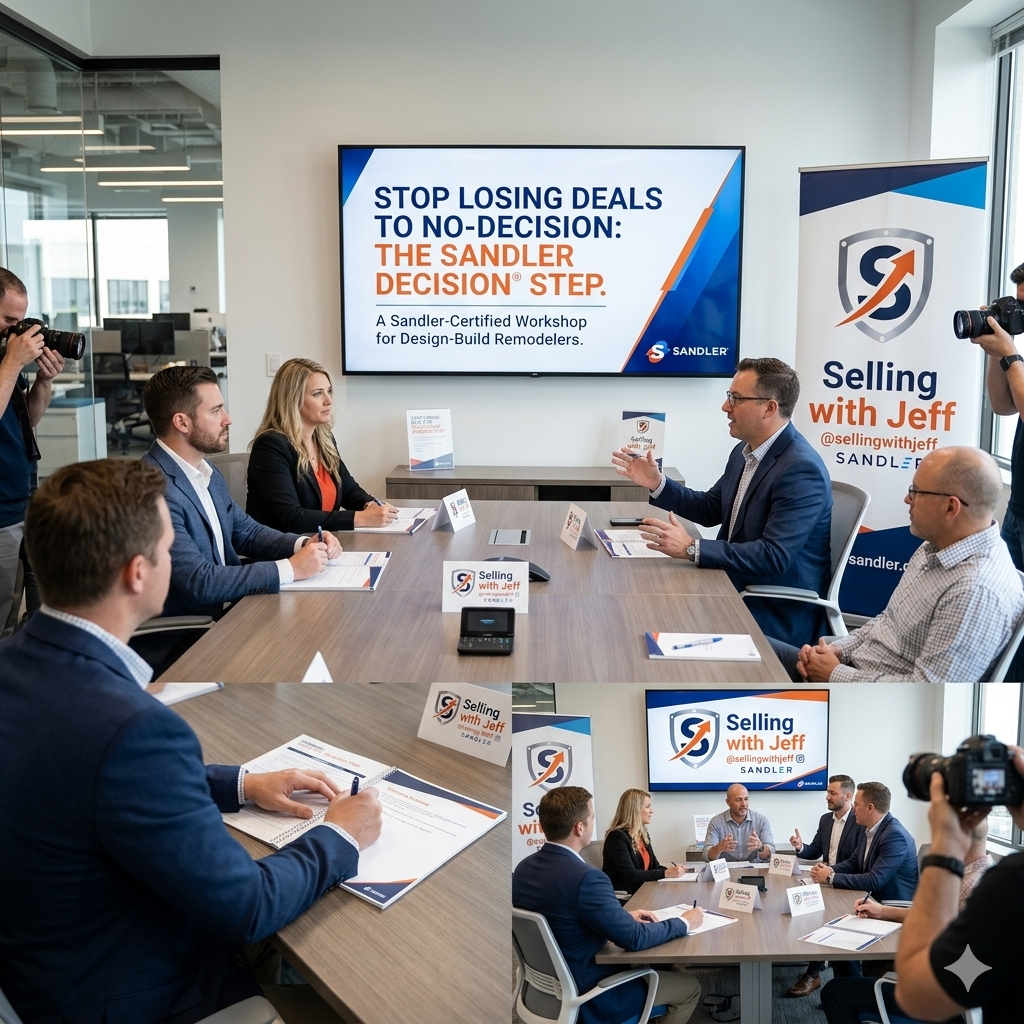
The trivia and breakout conversations you saw were more than icebreakers; they were a live demo of what happens when teams get intentional about decision. When you combine that human, conversational style with a structured qualification framework, you stop losing deals to "no decision" and start winning on purpose.