Remodeling Sales: Handle “Just Give Me a Price”
Many remodelers lose control of great opportunities the moment a prospect says, “Just give me a number,” or goes silent after promising to “get back to you Monday.” This article shows how to protect your time and your margins using a clear, repeatable approach.
Why “Just Give Me a Price” Puts You in a No‑Win Trap
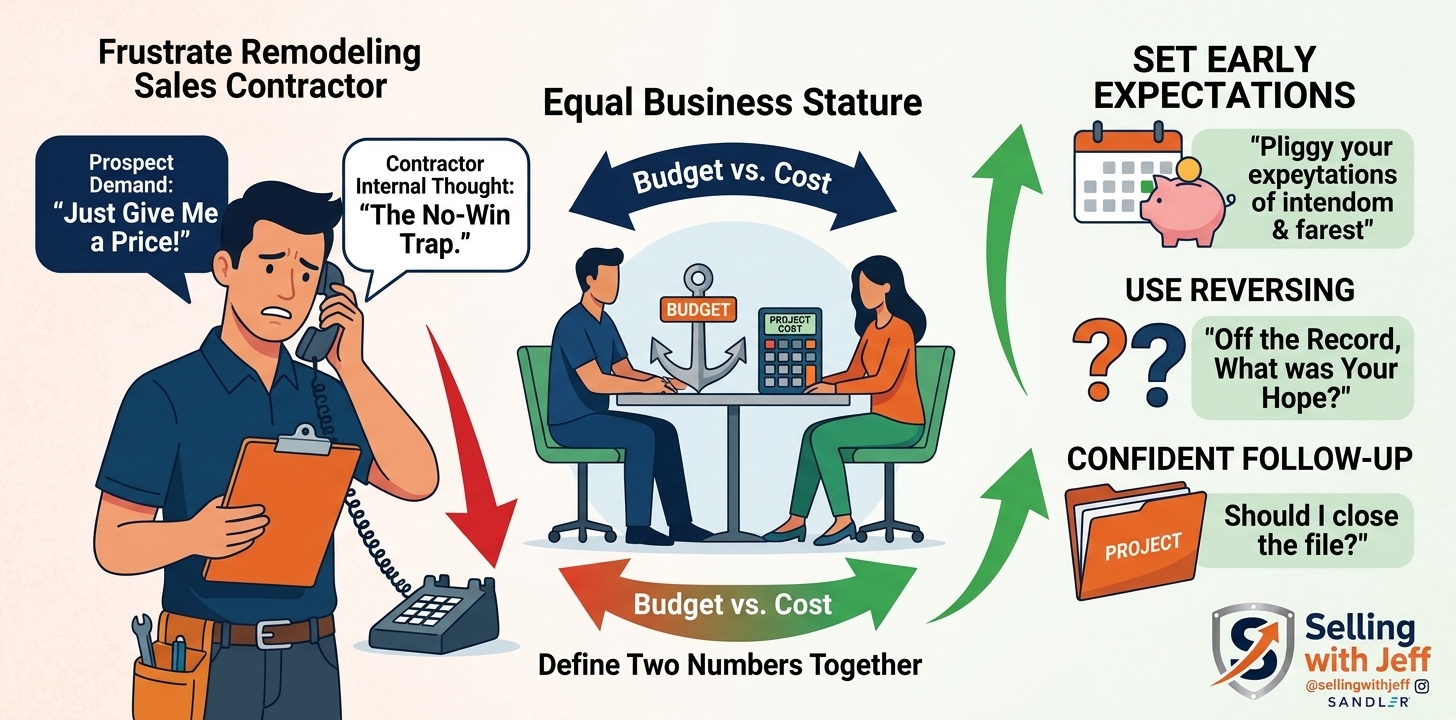
When a homeowner demands a price before sharing their remodeling budget, you are in a no‑win situation. If you give a number, they judge you on an uninformed guess. If you refuse, they label you evasive. The only way out is to reset the conversation, not argue about the question.
In the source call, Addie’s prospect refused to share a range, warned about “unscrupulous contractors,” then claimed his budget was “unlimited.” That is not an adult‑to‑adult business conversation; it is a control game. Similar homeowner behavior is common because many have been burned before. As one contractor quoted in a LinkedIn post on phone pricing notes, homeowners asking for a price upfront are usually trying to avoid bait‑and‑switch, not to trap you (Pedro Mejia).
Your goal is equal business stature: two adults deciding together whether to work as a team. That means clearly stating that there are two numbers to discover — what they are comfortable investing and what the project will actually cost — and you cannot responsibly answer the second until you know the first.
Set Budget Expectations Early Without Sounding Pushy
The best place to prevent a budget argument is on the lead or intake call. Briefly explain your process and plant the expectation that budget is a normal, required part of designing the right project, not an interrogation about their bank account.
One practical framing: “There are two questions we have to answer. First, what level of investment you are comfortable with. Second, what the project really costs. Question two takes homework — design, supplier quotes, site visits. Before we do that work together, we need a general range so we can design toward it.” Sales research on budget qualification shows buyers share more freely when budget is positioned as planning, not gatekeeping (QUOTA Training).
You can also use third‑party stories and rough anchors: “Clients doing a full kitchen here in town usually invest somewhere between X and Y, depending on scope. Where would you like this to land for you?” Even when you dislike the project, practicing this framing on “safe” leads builds the habit for the ones you really want.
Use Reversing and the Three Cs to Level the Conversation
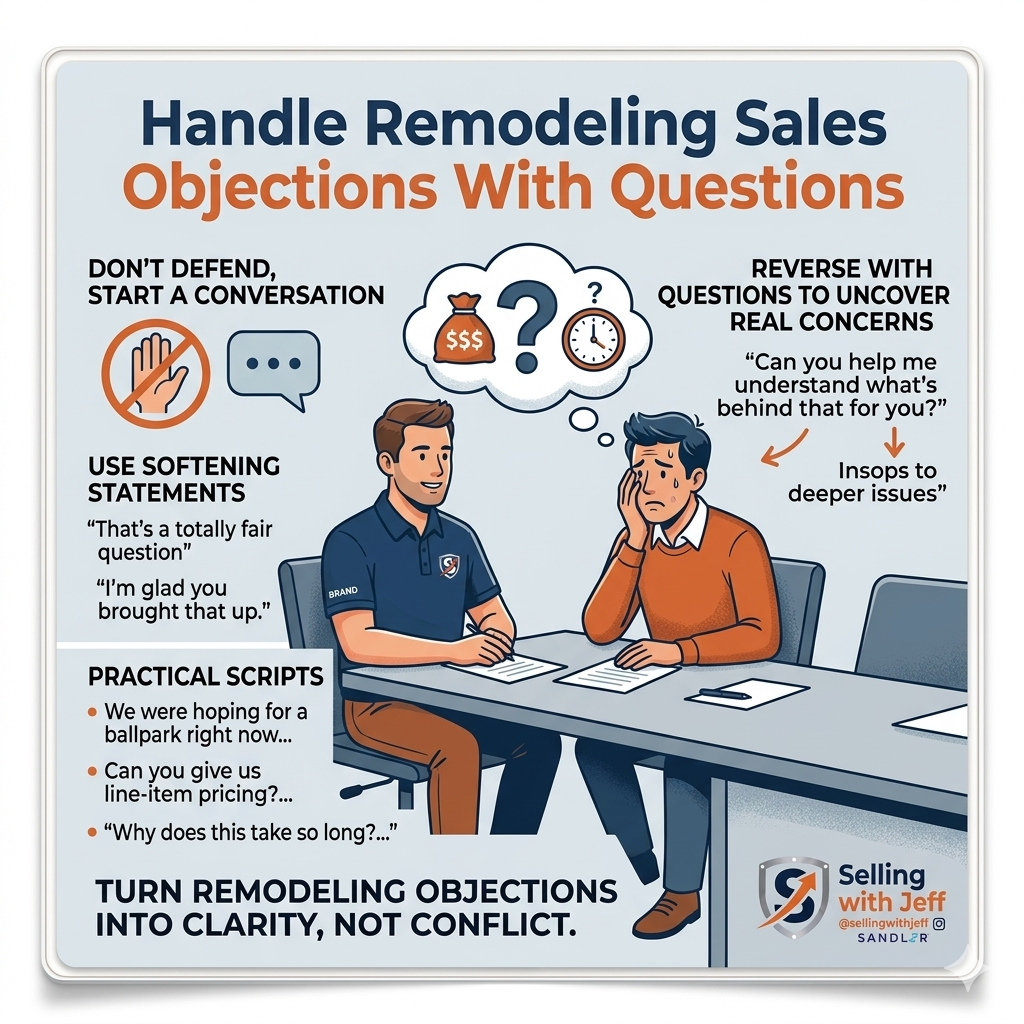
When a prospect presses, “Why won’t you just give me a price?” directly answering keeps you stuck in their frame. Sandler’s reversing teaches you to answer a question with a question, so you uncover intent before you respond. A simple version: “Fair question. Off the record, what were you hoping the price would be?”
To avoid sounding combative, pair reversing with the three Cs: compliment, cooperation, and commonality. For example: “I really appreciate how carefully you are thinking about this (compliment). Can I make a suggestion? (cooperation). Many of our best clients felt the same way at first (commonality). Would it be okay if we talked for 15 minutes, you ask me anything you like, I ask a few questions, and then we both decide if it makes sense to keep going?” This aligns with Sandler’s guidance to clarify the real question behind a prospect’s words before answering it (Sandler).
Follow Up Confidently When Good Prospects Go Quiet
Ron’s story — a large historic restoration where the owner promised a Monday answer, then delayed for “one more bid” and went silent — is not full ghosting, but it feels the same from your side. You need closure without sounding desperate.
A short, direct message works best: “You mentioned you would have a decision by Monday. I have not heard back, and I do not want to bother you if plans have changed. Should I keep this open in my project folder, or is it better to close it for now?” Variations like, “Are you still interested in this project?” or “Should I go ahead and close the file?” often flush out a clear yes, no, or new timeline.
Lead‑management research suggests that qualification and follow‑up failures cause 67% of lost sales opportunities (Landbase). That is good news for disciplined remodelers: by setting expectations up front, using reversing to avoid question traps, and closing the loop confidently when prospects stall, you win more of the right jobs without chasing every maybe.