
Intro
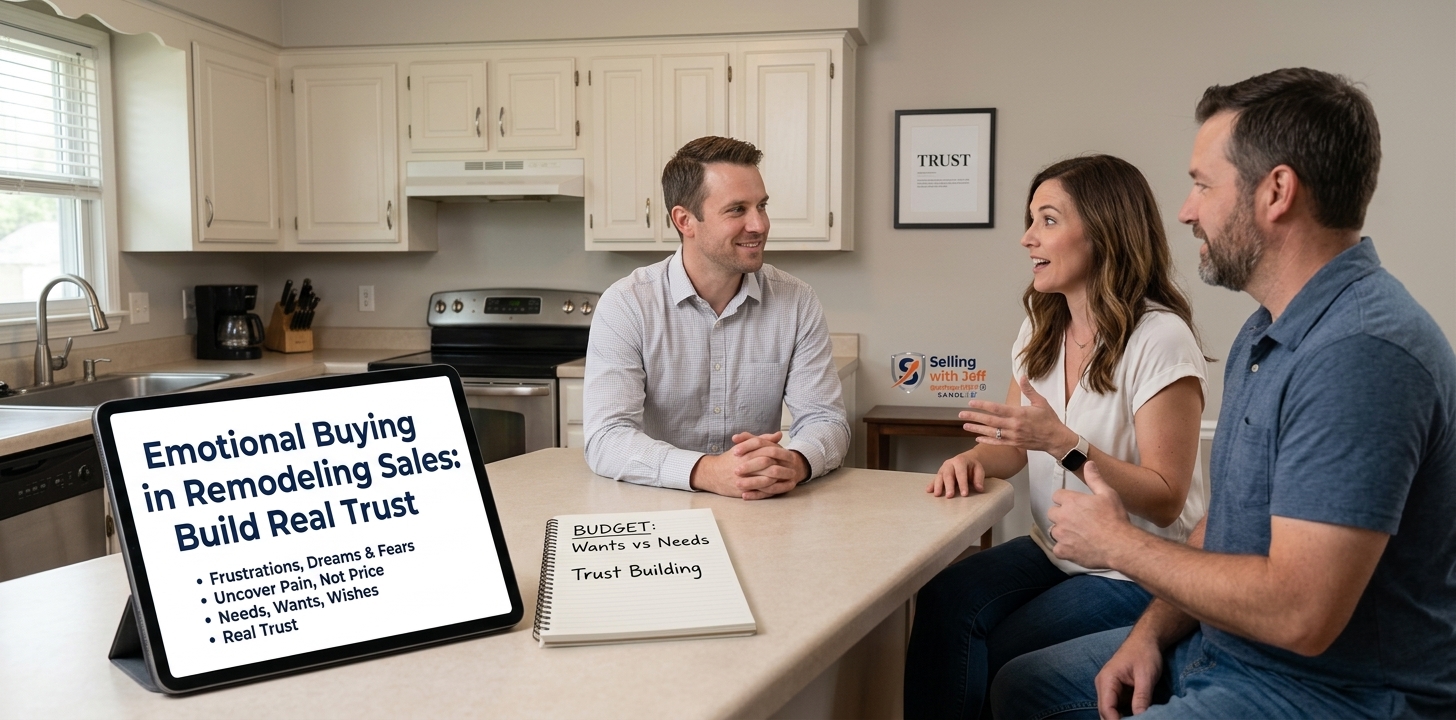
Remodelers rarely skip budget talks because they lack technique. They skip them because they’re tired of hearing “too expensive,” afraid the deal will blow up, and their nervous system quietly hits red alert. This post shows how to keep your cool so you can actually use the skills you already know.
Why Remodeling Budget Talks Trigger So Much Anxiety
In remodeling, remodeling budget conversations feel risky because your emotional brain reacts to price pressure before your logical brain can respond. To move past anxiety, you need to expect that early emotional spike, notice it, and have a plan so it doesn’t hijack the rest of the meeting.
Neuroscience work building on Benjamin Libet’s research shows that your brain commits to actions about 350 milliseconds before you’re consciously aware of deciding, as summarized in this overview of Libet’s experiments. That’s why you can hear, “Our budget is $150,000,” and find yourself defending your price before you’ve even thought, “Stay calm and ask questions.”
In one real example, a remodeler heard $150K for a whole‑house remodel that would realistically cost far more. Instead of asking, “How did you land on that number?” he dove into justifying his pricing. The instant emotional jolt (“Are you crazy?”) closed the gate on his skills. The goal isn’t to eliminate that jolt; it’s to recognize it and keep access to your questions.
Reframe Rejection: Want Early Nos, Not Late Surprises
When sales cycles are long and you’re hearing “no” a lot, it’s easy to treat every budget talk as a threat. That fear makes you delay money conversations and turn the final presentation into a nerve‑wracking reveal. Ironically, this increases the odds of a painful “We need to think about it” at the very end.
Research on buyer behavior suggests that roughly 95% of purchase decisions are driven by emotion first and only later justified with logic, as explained in this brain‑science sales article. Homeowners feel “safe” or “unsafe” with your price before they finish listening to your explanation.
To reduce fear, deliberately reframe your goal: you’re not trying to avoid no; you’re trying to get to the right decision faster. A fast no after a clear budget talk saves you weeks of unpaid design work and follow‑up. A slow no at the end wastes time, clogs your pipeline, and eats morale.
Open Every Meeting with a Simple Budget Script
Anxiety loves ambiguity. A simple, repeatable opening script makes budget talks feel more like brushing your teeth and less like walking into an ambush. Think of it as setting the agenda and decision criteria before anyone sees a drawing.
Here’s a structure you can adapt:
“Thanks for making the time today. The purpose of this meeting is to review your project, walk through the investment, and decide together whether it makes sense to move forward. Before we dive in, has anything changed with your budget, timing, or who’s involved since we last spoke?”
Then lead with money instead of saving it for the end: “Based on everything we discussed, the total investment for this project is $412,000.” Say it, hold eye contact, and stay silent for around five seconds. That pause feels long, but it forces the homeowners to react so you can deal with their real response.
On complex projects, chunk price to match pains. For example, review the new kitchen layout, tie it to their Sunday‑dinner pain (“no room for Dad at the island”), and then give the kitchen investment before moving to baths or additions. This mirrors advice in remodeling buyer‑psychology guidance: meet emotional needs section by section instead of dumping one giant number at the end.
Train Your Nervous System So Budget Talks Feel Routine
You can’t white‑knuckle your way through budget fear forever. You need habits that teach your nervous system that these conversations are normal and safe. That way, when a client pushes back, you stay in “curious adult” mode instead of flipping to fight, flight, or freeze.
First, rehearse your opening out loud before meetings—on a walk, in the car, or with a teammate. Many experienced trainers still practice their up‑front contracts daily; repetition makes the words automatic so emotion has less room to interfere.
Second, visualize success right before you log onto Zoom or walk into the house. Picture the meeting ending 15 minutes after a clear decision—handshakes, signatures, or even a clean no that frees you up. It’s difficult for your body to stay in panic mode while your brain is rehearsing a calm, successful outcome.
Finally, watch your body when you hear a tough number or objection. Notice the urge to defend, then buy yourself a breath and ask a question instead (“Help me understand how you came up with that budget”). With practice, these small shifts keep the emotional spike from slamming the gate on your skills—and turn budget night into a predictable step, not a dreaded event.