
Remodelers rarely lose projects just because of price or design. More often, the deal dies because the buyer never fully trusted you, a hidden decision maker surfaced late, or your style clashed with theirs. DISC selling gives you a simple way to prevent that by matching how you sell to how each person buys.
Understand DISC so remodeling prospects trust you faster
DISC selling for remodelers means adjusting how you talk, listen, and present so each buyer feels understood and safe to tell you the truth. By reading four basic behavior styles and flexing your approach, you build DISC sales trust faster and protect deals from late-stage surprises.
DISC groups behavior into four primary styles: Dominance (D), Influence (I), Steadiness (S), and Conscientiousness (C). Ds want to win and move quickly; Is want energy and connection; Ss want harmony and low risk; Cs want details and accuracy. Most people are a blend of two styles, but one usually leads in stressful decisions—like signing a $150,000 kitchen remodel contract.
In one Sandler client study, teams that consciously adapted their approach to buyers’ DISC styles improved opportunity win rates by 15–20% over two quarters compared to teams that didn’t adapt (Sandler). For a remodeling company closing 8 of 20 proposals a month, that kind of lift can mean one or two extra signed projects monthly without any more leads.
Think of a dominant D homeowner who says, “Just give me the bottom line—how much and how long?” If you respond with a 45‑minute slideshow of options and backstory, you lose them. Contrast that with a C‑style engineer who wants every line item explained; rushing that buyer to “just trust you” will spike their anxiety and stall the deal.
Spot each buyer’s DISC style in your first remodeling meeting
You don’t need a formal assessment to use DISC. Start with two questions you can answer in the first five minutes: Is this person more focused on tasks or on people? Is their pace fast or measured? (DISC Assess explains this framework in depth.) The answers point you toward a likely D, I, S, or C.
For example, a task‑focused, fast‑paced prospect who opens with, “We’ve talked to three contractors; tell me why you’re different,” is probably a D. A people‑focused, fast‑paced buyer who tells stories about their kids and vacations before you’ve sat down is likely an I. A people‑focused, slower‑paced spouse asking, “How will this disrupt our routines?” leans S. A task‑focused, slow‑paced architect who circles every number on your estimate is almost certainly a C.
One remodeling owner I coached started noting his guess at each buyer’s style at the top of his notes: “D/I couple,” “S/C engineer,” and so on. Within a month, he adjusted his meetings: tighter agendas and clear options for Ds, more stories and visuals for Is, extra reassurance and timelines for Ss, and detailed scopes and specs for Cs. His close rate on multi‑call design‑build projects jumped from roughly 30% to about 40% in a single quarter.
Use connect questions and the Platinum Rule to build rapport
Trust doesn’t come from small talk about the weather. It comes from asking smart questions about four areas: the buyer, the home, the marketplace, and the broader industry. These “connect questions” show genuine curiosity and give you the context to recommend the right project, not just the biggest one.
Buyer questions might be: “How did you end up in this home?” or “What matters most to you personally about this remodel?” Home questions could be: “How long do you see yourselves staying here?” or “What’s not working about this kitchen day‑to‑day?” Marketplace questions include: “What are homes like yours selling for in this neighborhood?” Industry questions might be: “What have you heard about current lead times or material volatility?”
The Platinum Rule says you should communicate with others the way they prefer to be communicated with, not the way you prefer. A high‑D GC might want a blunt, bullet‑point email; an S‑style homeowner might need a short call first to feel comfortable before seeing numbers. One MSP sales guide even recommends treating the discovery call as a short conversation where you talk dramatically less than the prospect (MSP Marketing Edge). The same principle applies in remodeling: design your questions so they talk 70–80% of the time while you listen and probe.
On a 60‑minute design consultation, that might mean you talk for only 15–20 minutes, using that time to frame questions and summarize what you’ve heard. Clients consistently report feeling “heard” in those meetings—and they’re far more likely to trust your budget ranges and push back less on the final number.
Apply DISC to multi‑stakeholder decisions and late‑stage vetoes
Many remodelers have felt the pain of a deal that seemed “done” until a hidden decision maker appears—a spouse, a parent funding the project, or a CFO on a commercial job. By the time they surface, they’re nervous, skeptical, and often a different DISC style than your original champion.
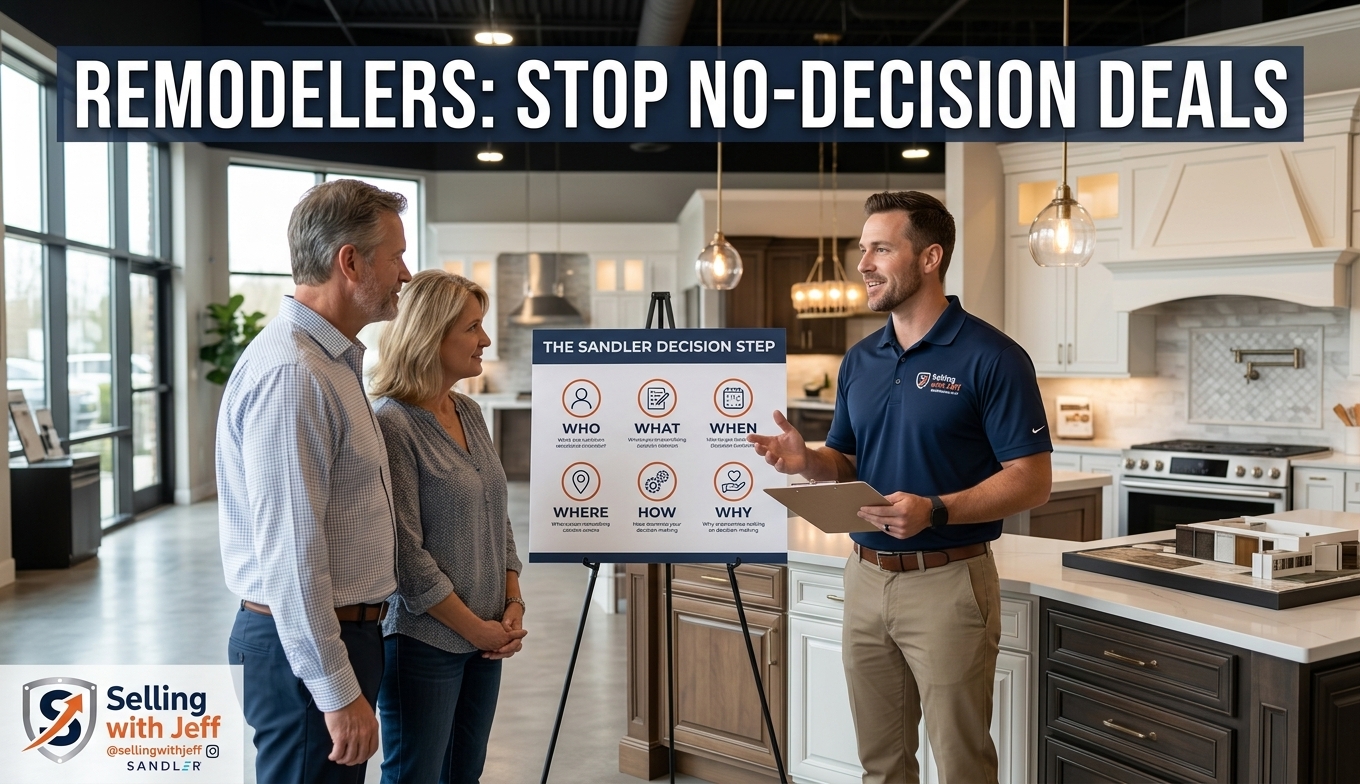
Your first defense is better decision‑step questions early: “When you get a proposal like this, what happens next?” “Who else usually weighs in before you sign?” “Where have projects like this gotten derailed in the past, and who slowed them down?” Those questions, pulled straight from Sandler field coaching, invite your contact to tell stories instead of giving polished, corporate answers.
Once you know who can veto the project, ask to meet them and adjust to their style. If the unseen spouse is a C‑style accountant, bring a clear scope, options with pros and cons, and transparent allowances. If the executive sponsor is a D, open with a one‑page summary: investment, timeline, and risk plan; save design details for later. Closed mouths don’t get fed—if you don’t ask for access, you almost never get it.
One design‑build firm I worked with began ending every proposal review with, “Who’s most likely to slow this down or say ‘time out,’ and why?” That simple DISC‑aware question flushed out veto players earlier and led to short, targeted conversations with them. Over six months, they cut their “last‑minute no” rate nearly in half while keeping margins strong.