Selling with Jeff

Posts by:

Jeff Borovitz

Four Levels of Pain: Close More Remodeling Deals

Understand pain: the most powerful sales emotion

The Sandler “pain step” helps remodelers find a homeowner’s compelling emotional reason to make a change, then connect their project and price to that emotion so decisions happen faster and ghosting drops. In other words, you move from “nice design” conversations to clear, confident yes-or-no decisions.

Read More

Sales Proposal Checklist to Stop Getting Ghosted

Define the real problem: ghosting, bad fits, and missing Type II pain

A sales proposal checklist helps remodelers and contractors qualify deals before investing time in detailed quotes. It focuses on uncovering emotional pain, realistic budget, decision process, and fit so you only write proposals for prospects likely to choose you instead of cheaper competitors.

Read More

SVIC: The Bridge Between Pain and Budget

What SVIC Is and Why Your Deals Stall Without It

The SVIC sales framework is a four‑step checkpoint between the pain step and budget: Summarize, Verify, Importance, Commitment. Used correctly, it shifts the buyer from emotional story‑telling into clear decisions about fixing the problem, so you stop writing proposals for people who were never going to move forward.

Read More

Stop Over‑Designing with Needs, Wants, Wishes

What ‘Needs, Wants, and Wishes’ Really Mean in Remodeling Design

The needs, wants, and wishes framework helps remodeling designers turn emotional client stories into clear design priorities. “Needs” are non‑negotiables the project must include, “wants” are features clients value and will fund, and “wishes” are nice‑to‑have ideas that only belong in the plan if the budget allows.

Read More

Sales Questioning Tactics Every Remodeler Should Use

Use dummy‑up questions to uncover what homeowners really mean

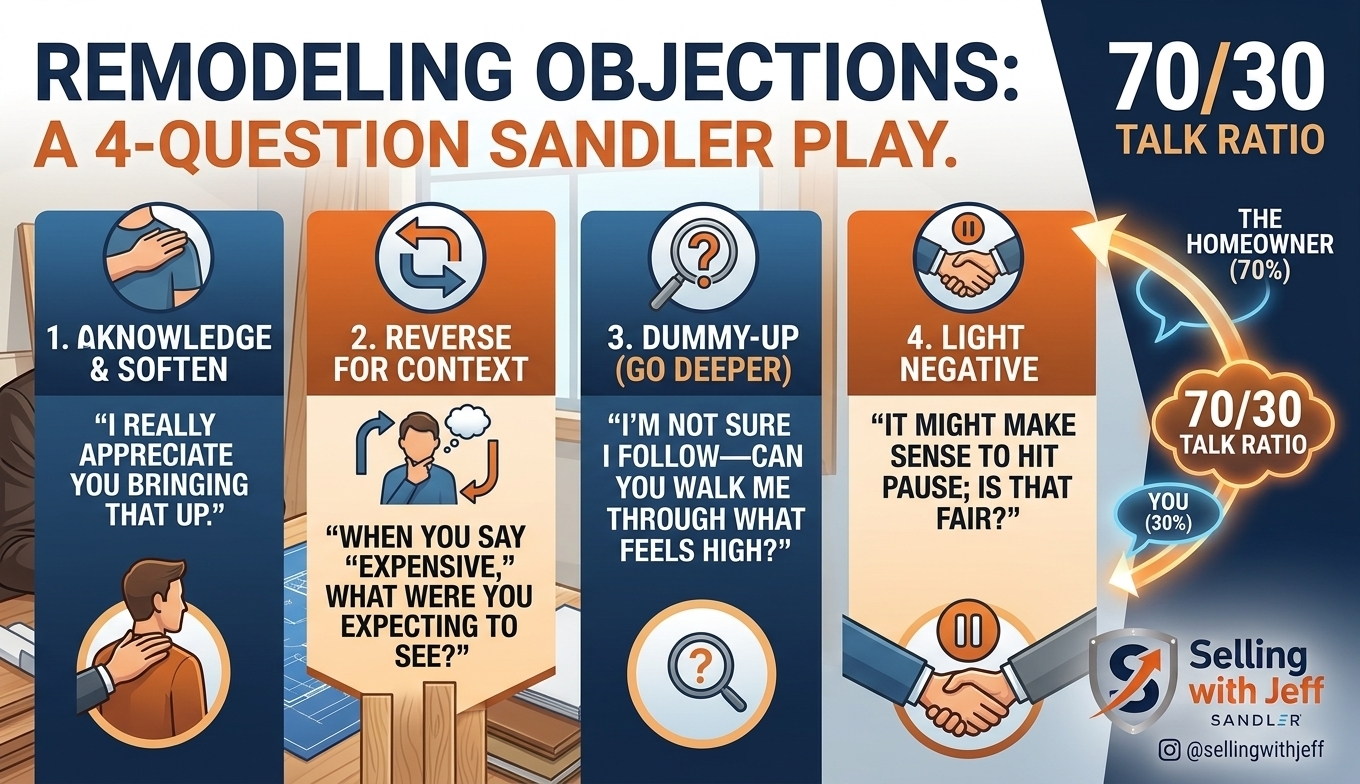
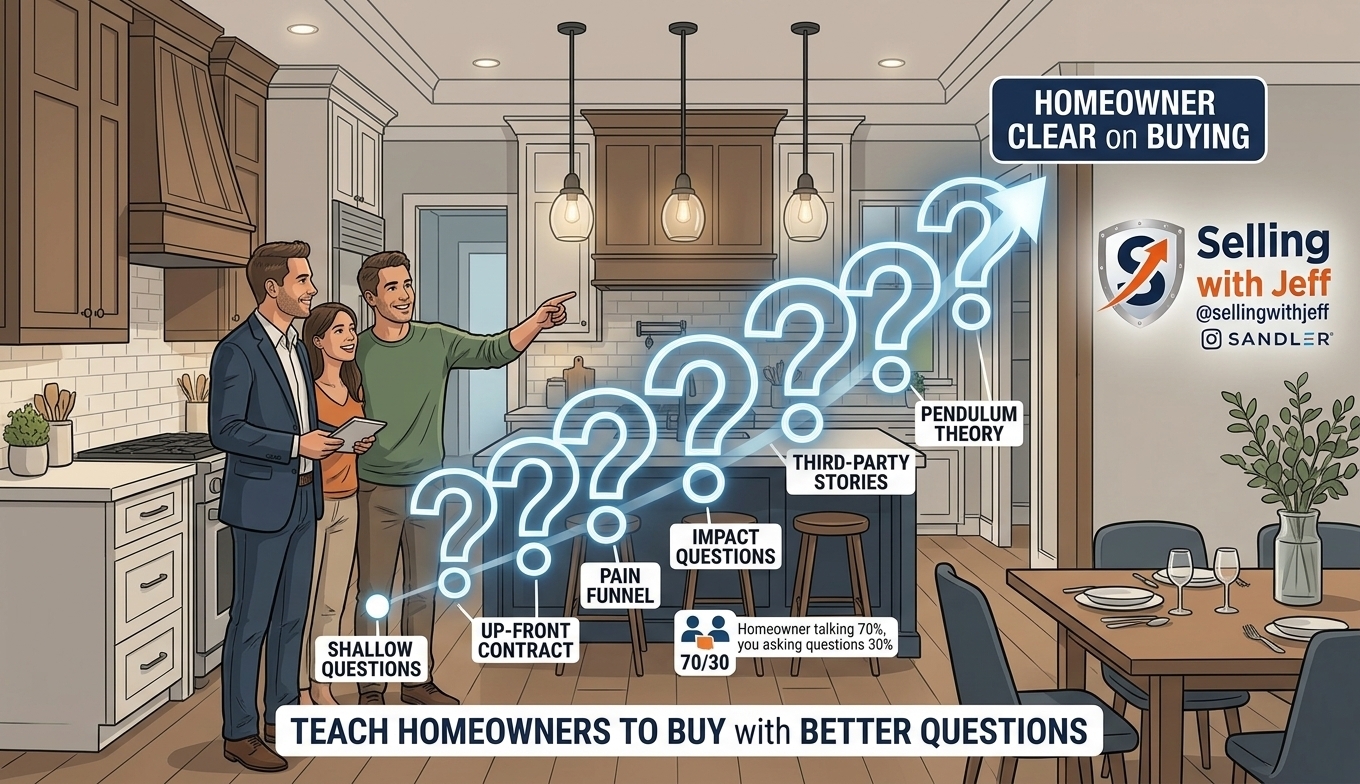
Sales questioning strategies help remodeling pros get past surface answers and into what homeowners actually care about. Dummy‑up questions sound unsure on purpose—“I’m not sure I followed…”—so prospects rush in to clarify. That extra detail reveals real priorities, hidden concerns, and what “too big” or “too expensive” means to them.

Read More