Selling with Jeff

Posts about:

Sandler Method (4)

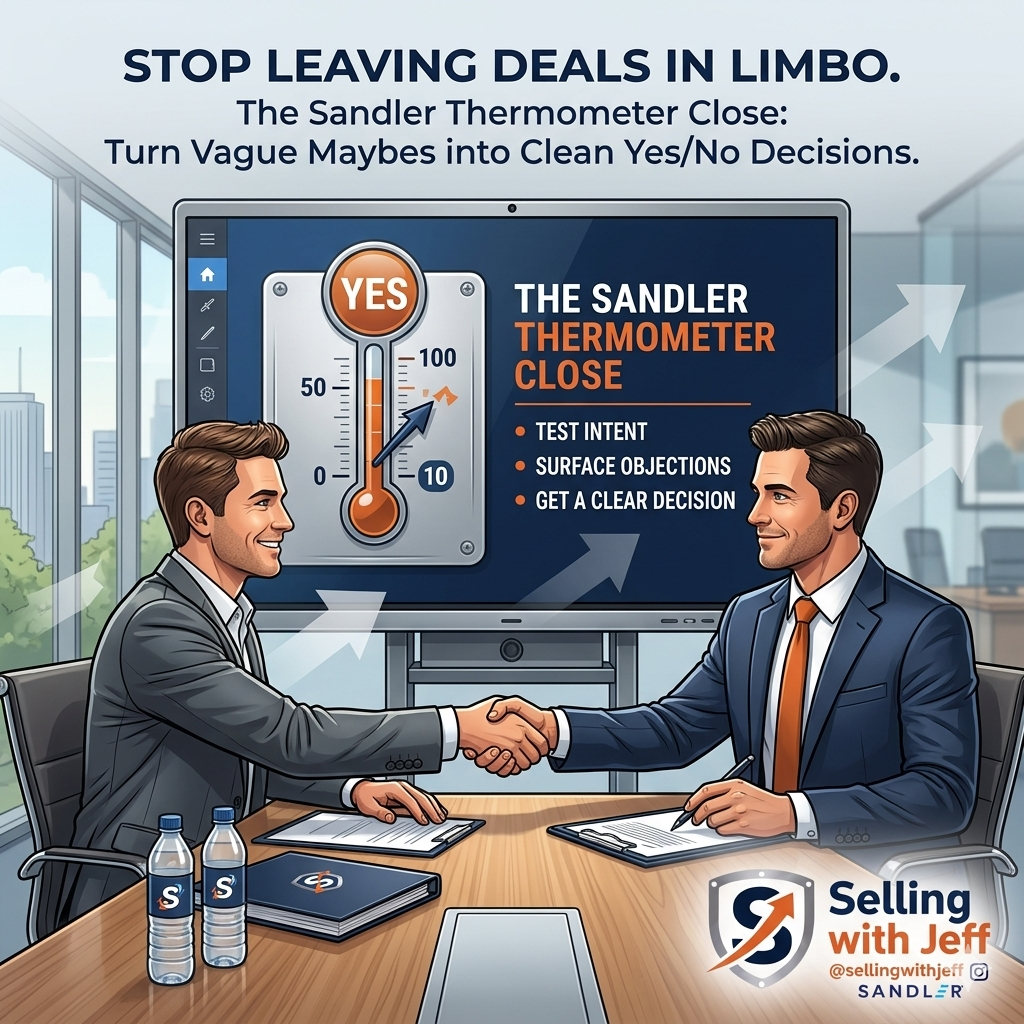
Sandler Thermometer Close: Stop Leaving Deals in Limbo

Why qualified deals still die in the presentation room

The fastest way to lose a great opportunity is to do a long presentation without a clear decision at the end. The Sandler thermometer close fixes this by turning your presentation into a controlled conversation that ends in a clean yes or no, instead of a vague “let us think about it.”


Read More

Underpromise, Overdeliver: A Builder’s Sales Advantage

Build trust first by underpromising and overdelivering

A trust-first sales process means you underpromise and overdeliver on every commitment: times, quotes, and next steps. Builders protect credibility by giving realistic deadlines, hitting them consistently, and avoiding ballpark prices that later move. That simple discipline separates you from “every other builder” and keeps you out of the trust graveyard.

Read More

Designers as Budget Stewards: Sandler Selling Without Selling

Why designers are really selling (and why that feels uncomfortable)

Designers sell every day, even if they never present a contract. Sandler sales for designers means guiding decisions, uncovering what really matters, and helping clients trade money for outcomes they care about—without pressure, jargon, or ego. You’re not closing a deal; you’re leading a decision.

Read More

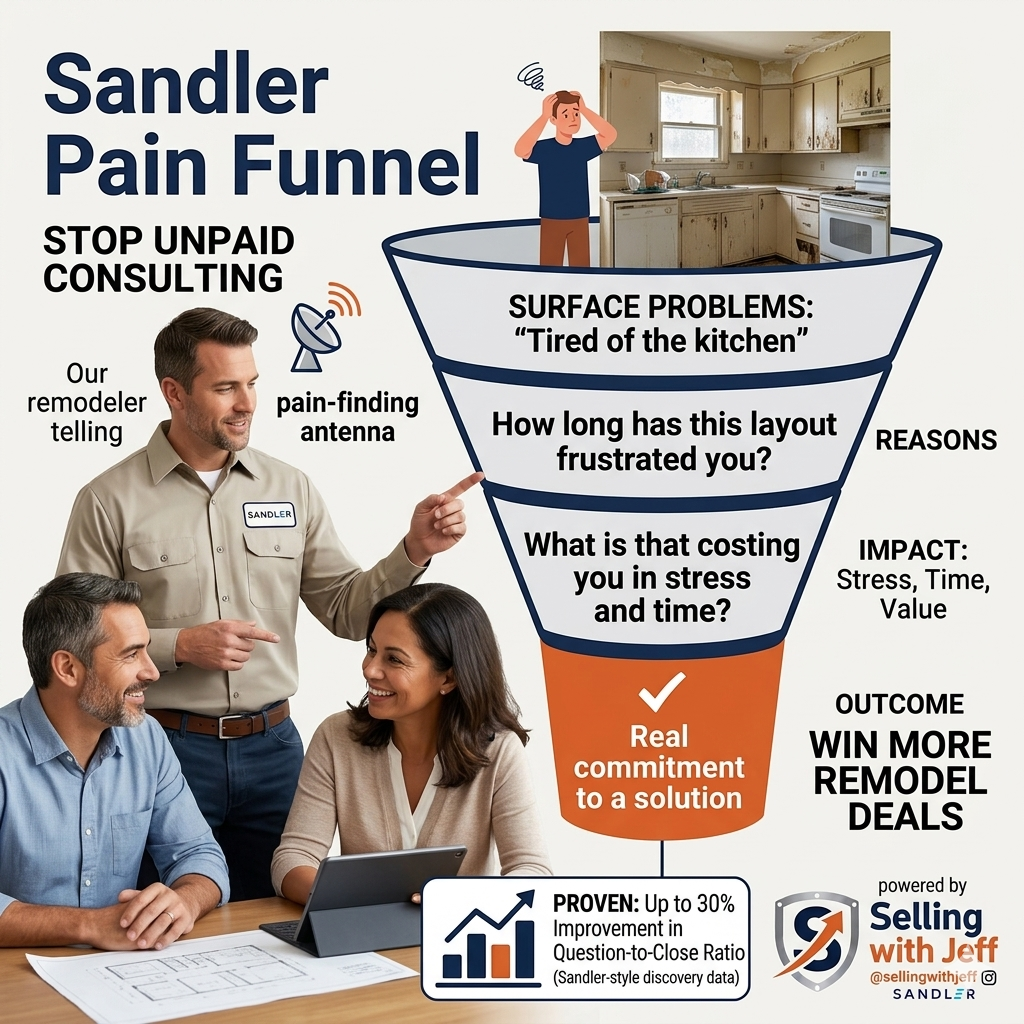
Use the Sandler Pain Funnel to Win More Remodel Deals

Why remodelers need the Sandler pain funnel now

The Sandler pain funnel is a structured sequence of questions that helps remodelers uncover a homeowner’s real emotional and financial concerns so they can decide if they should change, change now, and change with you. Used correctly, it shortens cycles, improves close rates, and keeps you out of price-only comparisons.

Read More

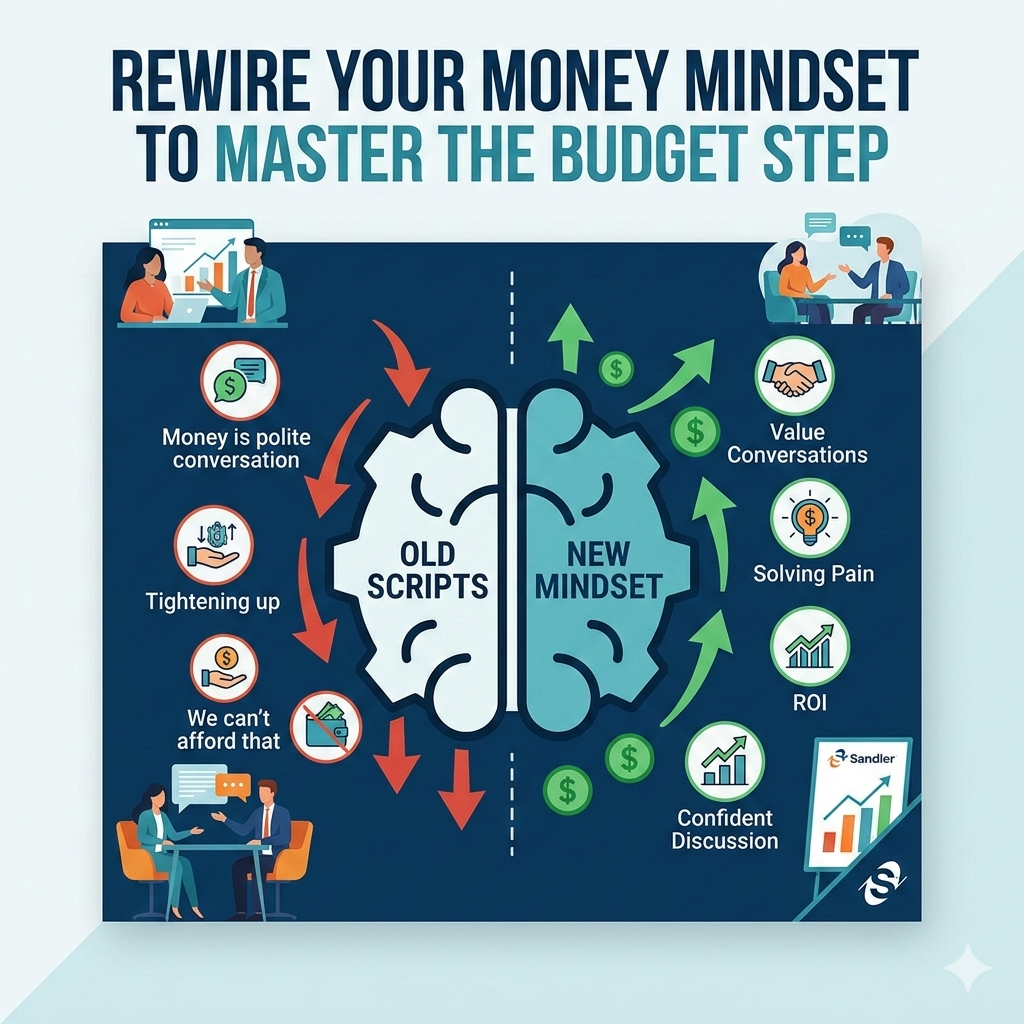
Sandler Budget Step: Mastering Money Conversations in Sales

Why Salespeople Struggle with the Sandler Budget Step

A Sandler budget step works when you confidently ask about money after uncovering pain, then agree on time, money, and resources before you propose. The goal isn’t to push price. It’s to confirm fit, avoid ghosts and “think‑it‑overs,” and stop building proposals for opportunities that were never real.

Read More