
Selling with Jeff

Posts about:

Questioning (8)

Sandler Questioning to Make Clients Remember and Commit

Why Clients Remember 80% of What They Say

Effective Sandler questioning techniques get clients talking so they remember and own key decisions. People typically remember around 20% of what you tell them and up to 80% of what they say themselves. When you ask questions instead of lecturing, clients repeat expectations in their own words, which locks the agreement in their memory.
Read More

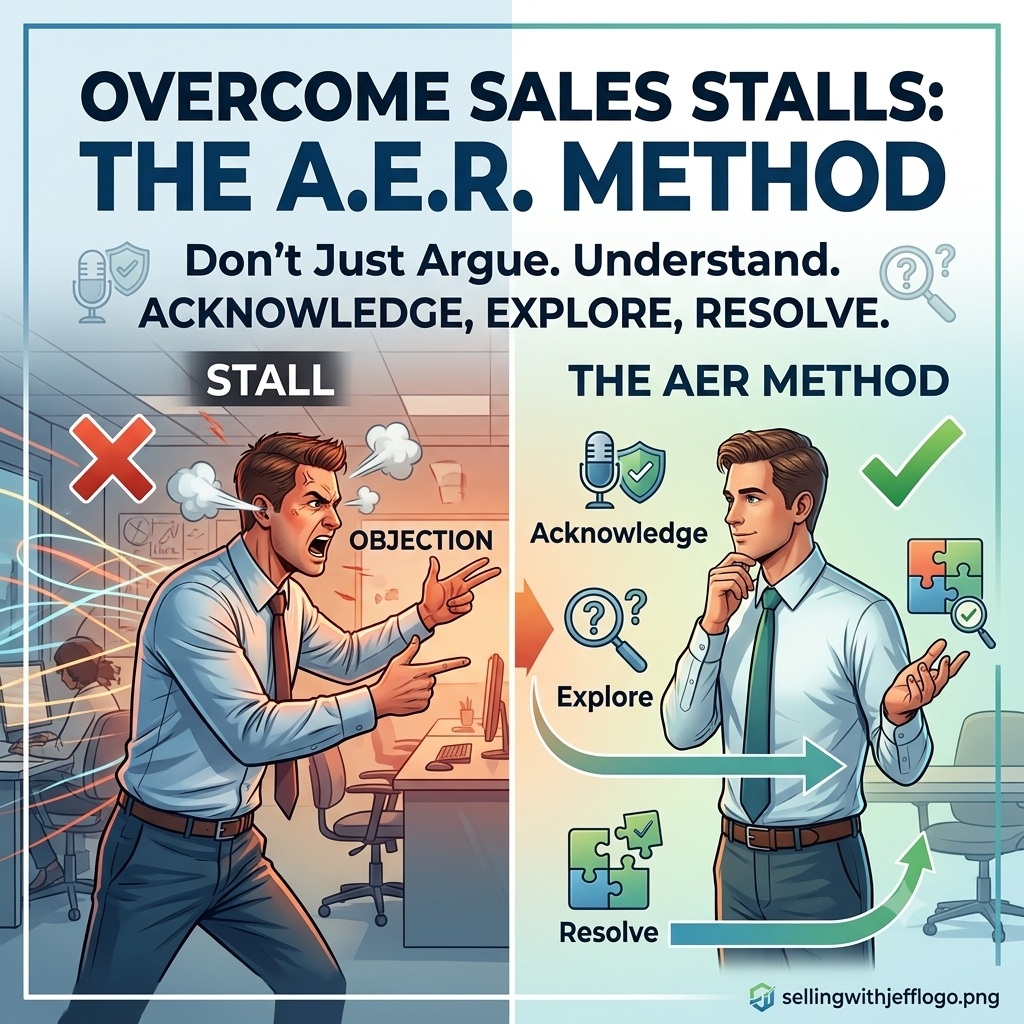
Handle Sales Stalls with the Acknowledge–Explore–Resolve Method

Acknowledge stalls and objections without creating resistance

When a buyer pushes back, don’t rush to defend your offer; start by acknowledging the objection and lowering resistance. Top Sandler trainers emphasize that most objections are really uncertainty, not final decisions, so your job is to make it safe for the prospect to keep talking instead of shutting down.

Read More

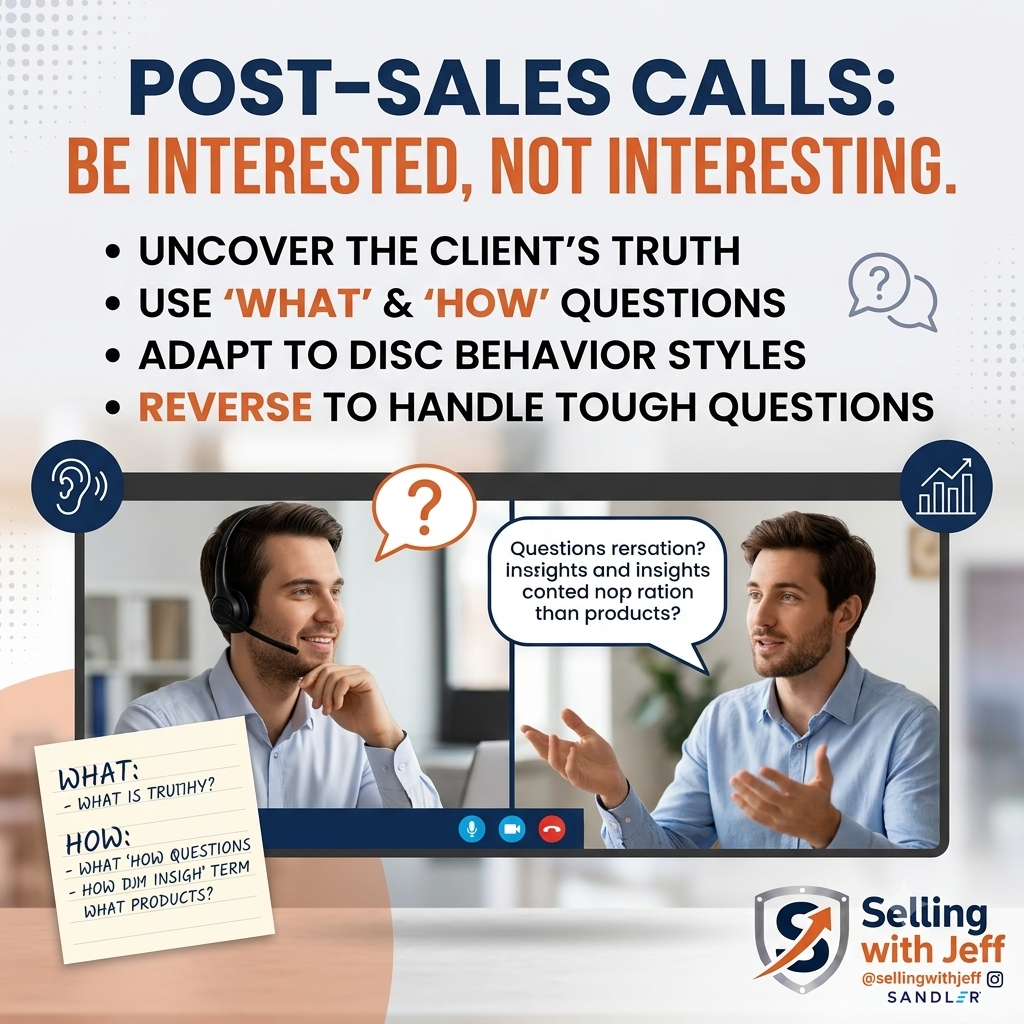
Be Interested, Not Interesting in Post‑Sales Calls

Why “be interested, not interesting” transforms post‑sales

Being interested, not interesting in post‑sales means you focus less on talking about your product and more on asking questions that uncover how things really work for the client. That shift reduces defensiveness, exposes hidden fears like job security, and gives you the information you need to protect adoption, renewals, and expansion.

Read More

Remodeling Sales: Sell Like a House Doctor

Why remodeling is a “need, don’t want” sale (and why that matters)

Remodeling is a classic “need, don’t want” purchase: homeowners rarely want the disruption, dust, or noise, but they need safety, usability, and dignity in their homes. Great remodeling salespeople act like a house doctor, diagnosing what hurts today instead of pitching luxury upgrades.

Read More

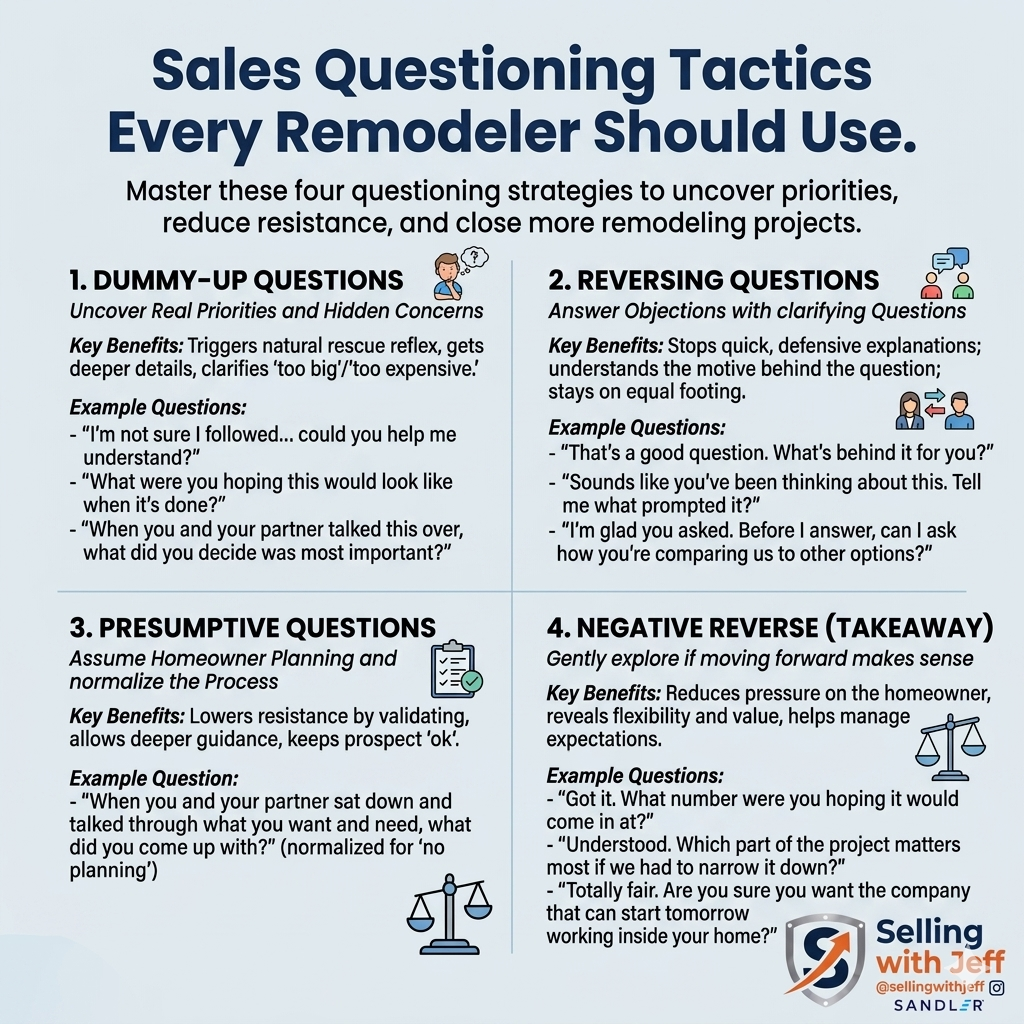
Sales Questioning Tactics Every Remodeler Should Use

Use dummy‑up questions to uncover what homeowners really mean

Sales questioning strategies help remodeling pros get past surface answers and into what homeowners actually care about. Dummy‑up questions sound unsure on purpose—“I’m not sure I followed…”—so prospects rush in to clarify. That extra detail reveals real priorities, hidden concerns, and what “too big” or “too expensive” means to them.

Read More