
The hidden problem: you sell the way you buy
Your supportive buy cycle is the pattern of how you personally research, compare, and decide big purchases, and it quietly bleeds into how you sell. When you shop around, avoid budget talk, or need “three bids,” you unconsciously validate the same behavior in your prospects.
You’ve felt that internal tug-of-war. A homeowner says, “We’re talking to two other firms and collecting bids,” and your gut whispers, “Danger.” But the way you buy things screams, “That’s smart. I’d do the same.” So you nod along, praise their diligence, and slide straight into their buying system instead of running your selling system.
The cost is real. You burn design hours for people who were never committed, clog your pipeline with “think it over”s, and end up discounting just to win a race you never should have entered. This isn’t a pricing problem; it’s a supportive buy cycle problem.
Spot supportive buy cycle behaviors in real remodeling deals
Supportive buy cycle shows up in small, predictable moves. You:
- Praise clients for “getting three bids” instead of questioning what they hope that will accomplish.
- Soften budget questions because you personally hate talking about money.
- Say, “Take your time,” when you’d never want your own project stuck in limbo for six months.
- Do unpaid design work because you’d want a free drawing before you decided.
Here’s a concrete example. A couple wants a major kitchen overhaul. They tell you they’re “just gathering ideas” and haven’t agreed on a budget. Because that’s exactly how you’d approach a six-figure project, you dive into concepts, not commitments. Two months and three revisions later, they pick your cleanest layout and another contractor’s cheaper price.
Notice what happened. You didn’t lose to a better competitor; you lost to your own buying habits. Your supportive buy cycle made it emotionally hard to challenge theirs.
Use the SVIC bridge to move from pain talk to budget
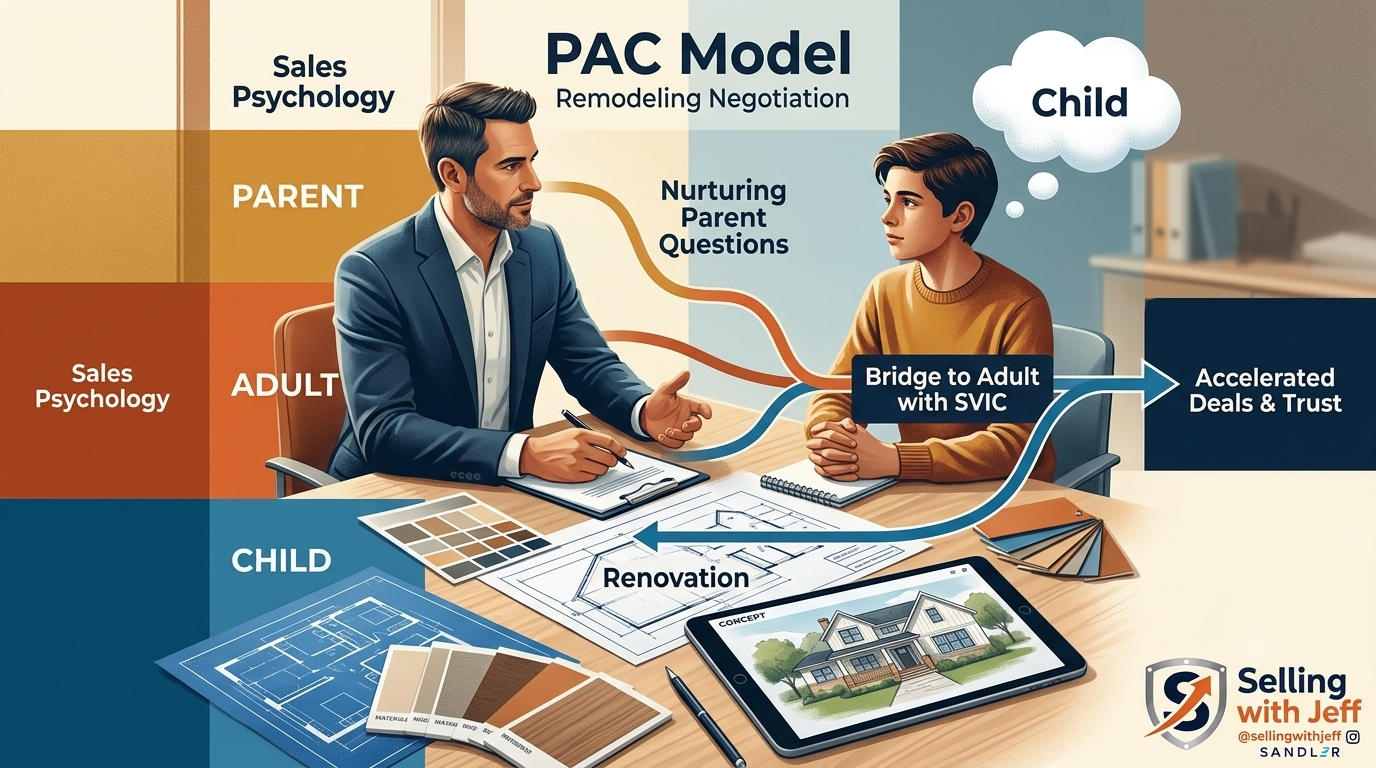
SVIC is the short bridge that moves a client from emotional Pain Island to logical Investment Island: Summarize, Validate, Importance, Commitment. It’s how you shift them from Child (feelings and stories) into Adult (calm decisions) before a single dollar gets mentioned.
Done well, SVIC sounds like this:
- Summarize – “Let me make sure I’ve got this. The layout doesn’t work for your family, storage is a mess, and you’re embarrassed to host.”
- Validate – “Did I miss anything important?”
- Importance (1–10, no 7) – “On a 1–10 scale, how important is it to fix this before next year?”
- Commitment (1–5, no 3) – “On a 1–5 scale, how committed are you to doing this project now?”
Those last two questions force analytical answers. You are literally walking them into Adult mode so you can have an adult-to-adult money conversation. Research on buyer psychology shows most decisions start emotionally and are justified logically later; Parent–Adult–Child work from transactional analysis and modern sales psychology backs this up (source, source).
Now when you ask, “Have the two of you talked about what you hope this will cost?” you’re talking to an Adult, not a scared Child. That’s how you avoid defensive jokes, budget dodges, and “You tell us what it costs” pushbacks.
Reset your own buy cycle so you can sell with discipline
You can’t run SVIC with conviction if your own buy cycle is still running the show. The fix is to deliberately change how you buy, so your nervous system stops screaming when you ask clients to decide differently than you would.
Start with a quick audit. List your last five big personal purchases: car, home project, vacation, tech, anything over a meaningful dollar amount. For each, write how many options you shopped, how long you took to decide, and whether you led with budget or avoided it. You’ll see your patterns fast.
Then set new personal rules:
- “For big purchases, I’ll narrow to two options, not five.”
- “My spouse and I will agree on a budget range before we meet any vendor.”
- “If the problem is a 9/10, we won’t drag the decision out for months.”
Finally, bring that discipline back into your sales calls. When a prospect says, “We’re getting three bids,” you acknowledge without agreeing: “Totally get wanting to be careful. Can I ask what you’re hoping the other bids will tell you that we can’t sort out together today?” That’s how you stay in your selling system—and stop letting your buy cycle run your deals.