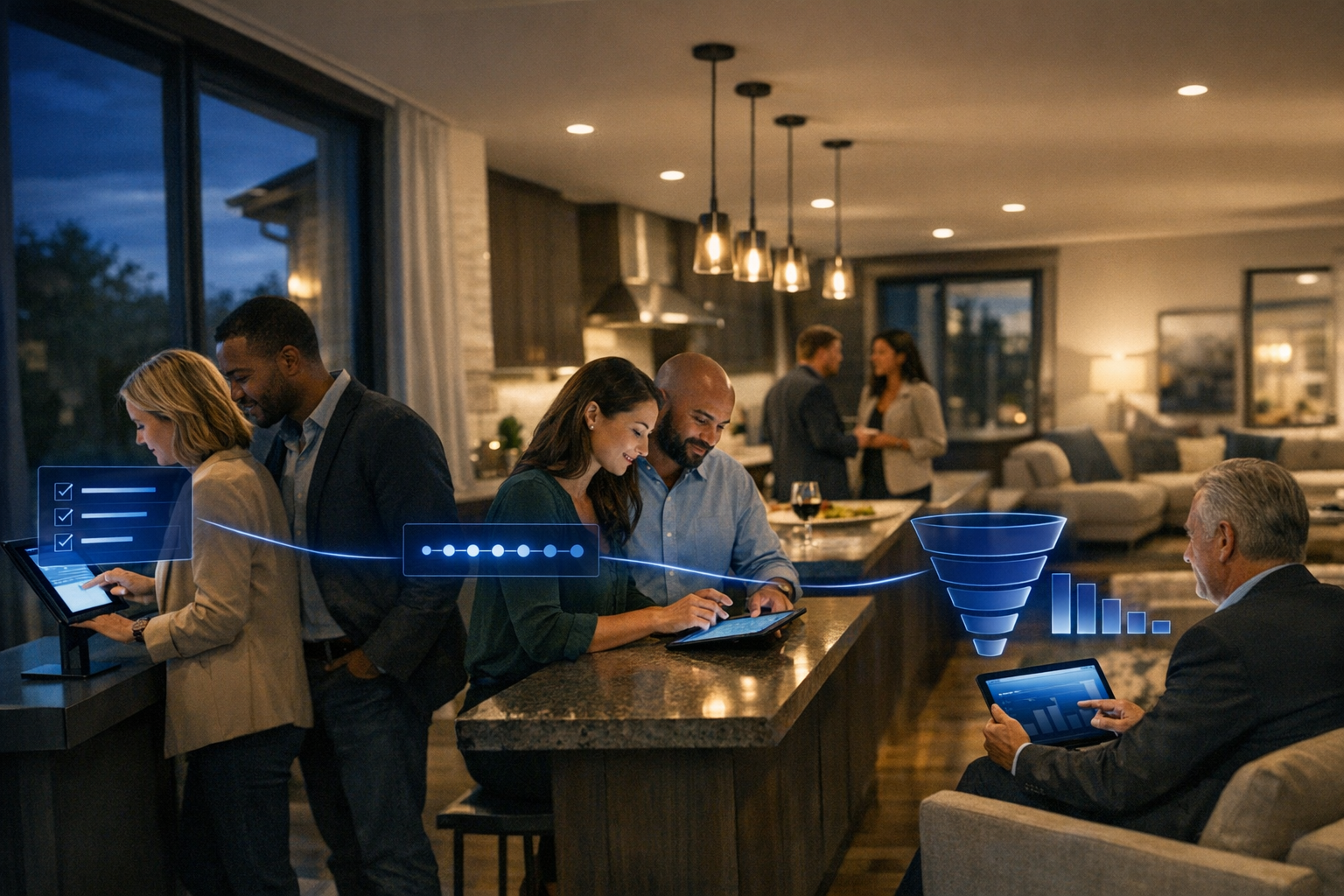
You’ve stood on a beautiful lot or in a model home, had a bunch of pleasant conversations, and gone back to the office with…three half-readable email addresses and zero clear next steps. That’s the core problem: no structure. The event felt busy, but your pipeline didn’t get stronger.
Separate Marketing from Selling at Your Builder Open Houses
At a custom home event, your only job is open house lead capture: collect contact info, gauge real interest, and secure permission for a follow-up call. Treat it as marketing, not selling, so you sort serious custom-home prospects from curious neighbors without burning hours on conversations that go nowhere.
Most builders blur the line. They try to run the full Sandler submarine in the cul-de-sac: pain, budget, decision, everything. Wrong room. At an open house you don’t have the privacy, time, or emotional safety for a deep Sandler Pain Funnel. Your objective is simple: identify who should get a real sales conversation later and who is just a friendly neighbor or future referrer.
So set the expectation up front, like an upfront contract: “Tonight isn’t about designing your home on the spot. It’s about seeing the community, asking high-level questions, and—if it makes sense—setting a longer call where we can really dig in.” That one paragraph protects you from getting trapped in 45-minute driveway consults.
Design a Feedback Form That Actually Qualifies Custom Home Leads
A feedback form is not a glorified sign-in sheet. It’s your quiet qualification engine. A modern playbook on open house lead capture shows that, with 20 visitors, a casual clipboard might capture 6 usable leads (~30%), while a structured station and short form can capture 17 (~85%) visitors as contacts.OpenHouseKiosk
Your form should be fast to complete and brutally purposeful. Ask visitors to rate the value of the event, then shift to the real goals: “How likely are you to pursue a custom home in the next 12 months?”; “May we email you updates on this community?”; “Would you like a builder to call you? If yes, add your phone number.” This turns a walk-through into structured data.
As one guide for agents points out, the right feedback form turns an open house into a market-research lab, not just a door-unlocking exercise.Saleswise You’re not begging for cards; you’re running a disciplined survey of who’s serious, who’s browsing, and what questions your future marketing should answer.
Use Sandler CAPS to Teach Visitors Who Your Best Clients Are
Most builders spend their presentation time talking about themselves: years in business, awards, craftsmanship. That’s background noise. Use the Sandler CAPS framework to teach visitors who your best clients are so they either self-identify—or think of someone they should refer.
CAPS stands for Characteristics, Alternatives, Pains, and Signs. For Characteristics, describe demographics and context: “Most of our custom-home clients are 50–70, have been dreaming about this for 10+ years, and want a low-maintenance home for the next chapter.” You’re painting a picture they can step into.
Then call out Alternatives and Pains: “They’ve toured resale homes and are tired of constant repairs. They’ve heard horror stories about ‘two guys and a truck’ taking twice as long and blowing budgets.” Finally, lay out the Signs: “If you’re already frustrated with what’s on the market and you’re not handy, those are smoke signals that a well-run custom build may be a better fit.” That’s Sandler marketing: structure that makes qualified people lean in.
Protect Your Time with Clear Follow-Up and Exit Gates
Event conversations still need Exit Gates—the checkpoints that keep you from letting happy ears run your calendar. Four objections you don’t “handle” are: no real pain, no money, refusal to follow your process, and unwillingness to act. Open houses surface all four if you’re paying attention.
If someone loves chatting but won’t write their email or phone on the form, they’re telling you they won’t follow your process. That’s an exit gate: enjoy the conversation, but don’t build a forecast around them. If a couple balks at your paid pre-construction planning fee, that’s another gate—they’re not your client right now, and that’s okay.
Protect your time with a simple script: “I’d love to go deeper on your project. Tonight I need to be available for everyone, so if you’ll jot your questions and phone number on the feedback form, I’ll call you tomorrow when we can really focus.” The ones who take that step have passed a gate; the rest were just visitors enjoying the view.