
What negative reverse selling is in remodeling sales
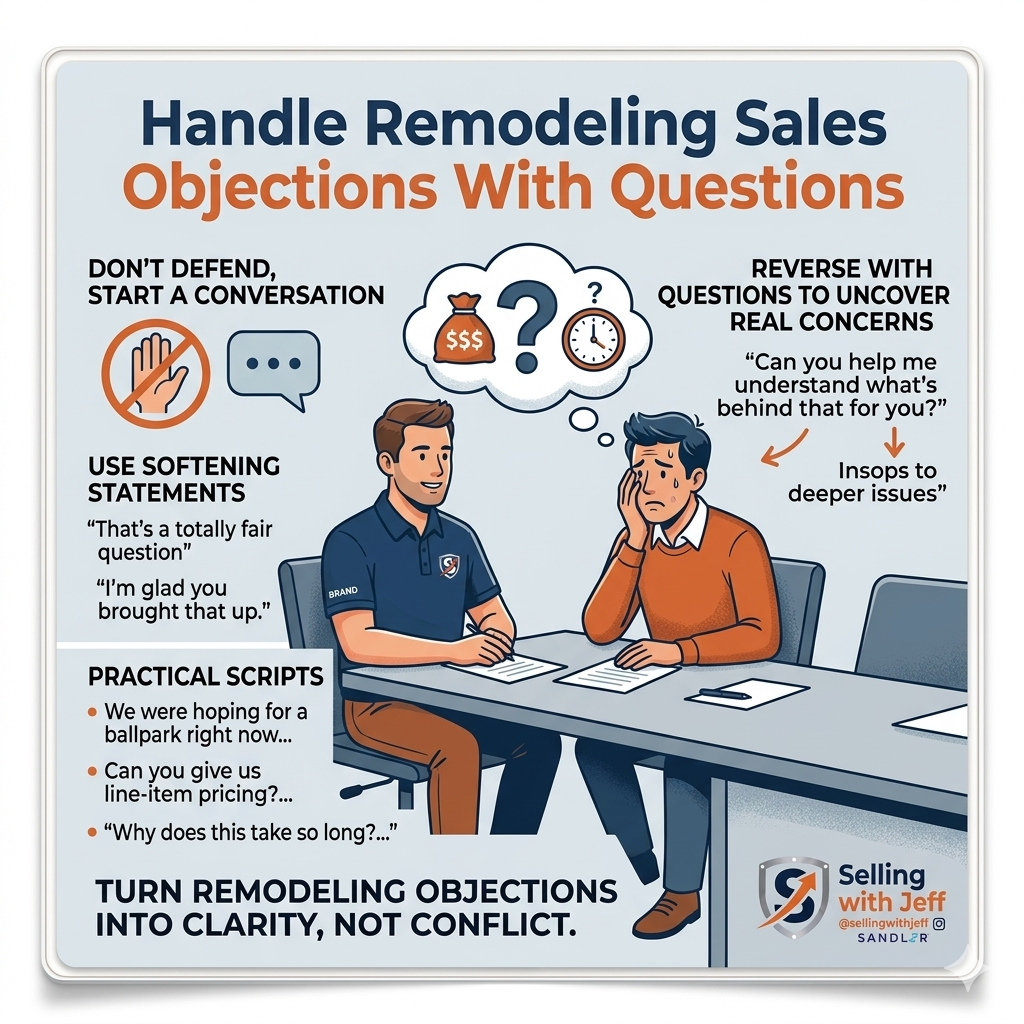
Negative reverse selling is a way to lower sales resistance by gently taking the option away and asking a question that makes the homeowner explain what they really want. Instead of pushing harder when they object, you lean back, ask a soft “takeaway” question, and let them convince themselves.
In remodeling, that might sound like, “You probably don’t want to invest in fixing this before the holidays, do you?” Said with a calm, caring tone, it lets the prospect either agree (“You’re right, not now”) or lean forward and correct you (“Actually, we do need it done before family arrives”). Either way, you get clarity without chasing.
Four Sandler questioning techniques every remodeler should know
Sandler training emphasizes four questioning tools that fit design-build sales perfectly: reversing, the dummy curve, presumptive questions, and negative reverse. The goal is simple: you talk about 30% of the time, the prospect talks 70%, and they do most of the emotional selling.
Reversing means answering a question with a question, as in classic Sandler guidance. Homeowner: “Can you start next month?” You: “Timing is important—what’s driving that date for you?” The dummy curve is “strategic humility”: acting a bit less like the expert so you keep asking simple, curious questions and avoid lecturing about products or design.
Presumptive questions assume they’ve done what you know they should have done: “You’ve already talked with your lender about a realistic budget, right?” Negative reverse combines a softening statement with a takeaway: “This might not be as big a priority as it sounded, is that fair?” Used well, it draws out the real stakes behind their project.
Using negative reverse on real remodeling objections
Common objections in remodeling—“It’s too expensive,” “You can’t start soon enough,” “We’re just gathering information,” or “I don’t like that design”—are perfect places to use negative reverse rather than defend and justify. Research on resistance shows people push back when they feel pressured; takeaway questions flip that dynamic.
On budget: “This came in higher than you expected. There’s probably no number we could bring that would feel comfortable right now, is there?” On timeline: “Sounds like our schedule is too late. You’d be okay finding out even later—after demo—what this really costs and how long it takes?” On “just looking”: “If nothing I share today changes your timing, that’s okay, right?” On design disagreements: “Maybe those pain points you mentioned—access, storage, safety—aren’t really that important to fix right now?” These questions are gentle nudges that invite honest answers.
Practicing questions without sounding pushy or manipulative
Negative reverse selling is a tool, not a weapon. The risk is sounding sarcastic or like you are playing mind games. Tone and intention matter more than the exact words; your voice must be warm and relaxed, or the same sentence will land as snark instead of safety. Sandler’s own material on negative reverse emphasizes softening and curiosity.
A simple practice routine: write down five objections you hear every week. For each, script one reversing question and one negative reverse question. Role-play them out loud with a teammate until they feel natural and kind. Track how many “no decision” or “ghosted” leads you turn into clear yes/no outcomes over the next 30 days. When you see that more clarity and fewer unpaid design consults show up, you’ll trust the technique—and use it more often.