Mastering Sales: Building Value and Trust to Overcome Price Objections
Understanding the Buyer’s Journey: The Foundation of Trust
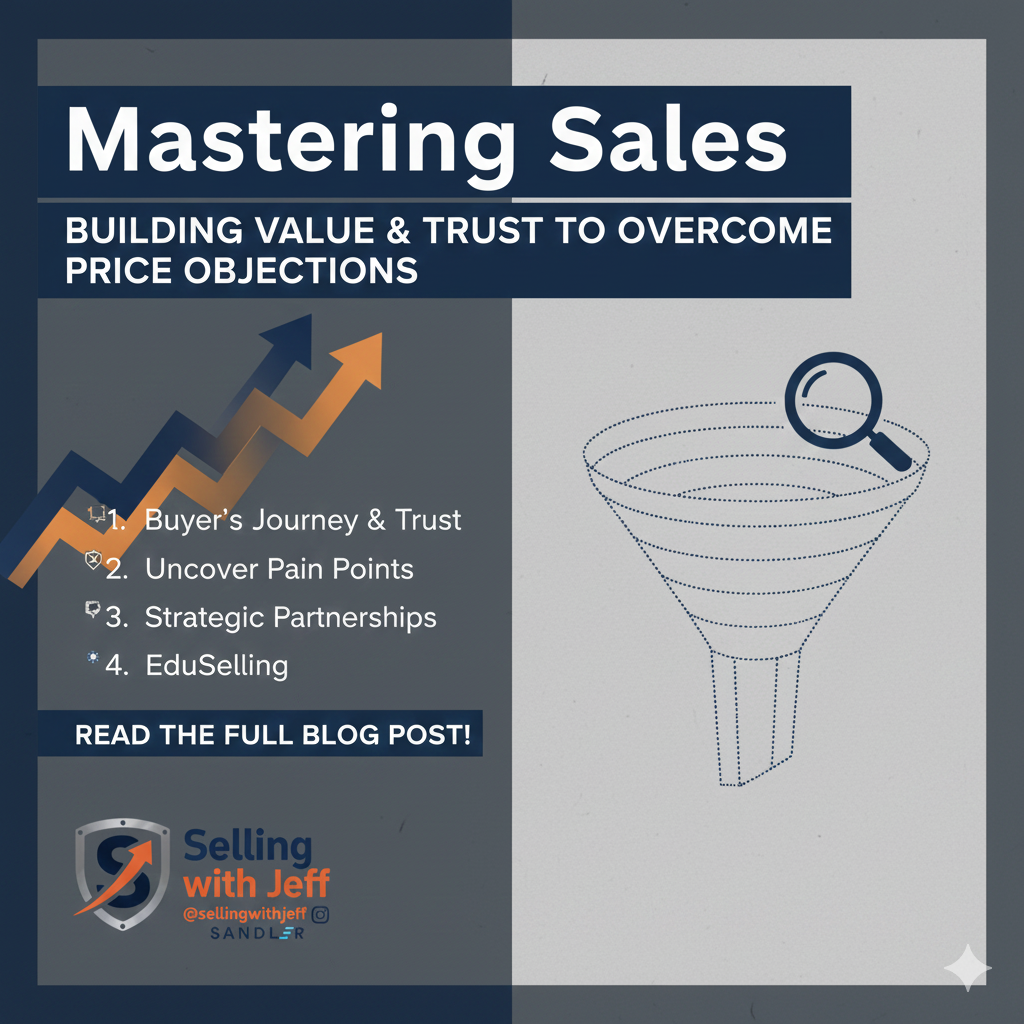
In the world of sales, understanding the buyer's journey is paramount. This journey is composed of three essential "whys": Why should I do something different? Why should I do it now? And why should I do it with you? Addressing these questions head-on lays the groundwork for trust and opens the door to deeper, more meaningful conversations with prospective clients.
By focusing on the buyer's journey, sales professionals can better navigate the complexities of modern sales processes. This involves recognizing the different stages a buyer goes through—from awareness to consideration, and finally, to decision-making. When you align your sales strategies with these stages, you not only build trust but also position yourself as a valuable partner who understands and addresses their unique needs and pain points.
Leveraging Questioning Techniques to Uncover True Pain Points
At the heart of every successful sales interaction is the ability to ask the right questions. Sandler Training emphasizes the importance of leveraging questioning techniques to uncover the true pain points of your prospects. This involves going beyond surface-level issues and diving deeper into the underlying problems that drive their decisions.
One effective technique is the use of the "pain funnel," a series of questions designed to guide prospects from general statements of dissatisfaction to specific, emotionally charged reasons for needing a solution. For example, if a prospect mentions that their current system is inefficient, you might ask, "Can you tell me more about how this inefficiency impacts your daily operations?" or "What would it mean for your business if this problem were resolved?" By doing so, you not only gather valuable information but also help the prospect articulate the urgency and importance of addressing their pain points.
Building Value Through Strategic Partnerships
In today's competitive landscape, building value often requires more than just a strong sales pitch. Strategic partnerships can play a crucial role in enhancing your value proposition. These partnerships, whether with high-end suppliers, complementary service providers, or industry influencers, can provide additional credibility and resources that set you apart from the competition.
For instance, partnering with a well-known supplier can give you access to exclusive products or services that your competitors can't offer. Similarly, aligning with an industry influencer can provide you with valuable endorsements and introductions to potential clients. By leveraging these strategic partnerships, you not only enhance your value proposition but also build a network of support that can help you navigate and overcome price objections.
EduSelling: Educating While Selling to Address Price Concerns
One of the most effective ways to overcome price objections is through a process known as EduSelling—educating while selling. This approach involves providing prospects with valuable information that helps them make informed decisions. It’s about teaching them how to buy from you while simultaneously demonstrating your expertise and value.
For example, when discussing pricing, you might explain the factors that contribute to your costs, such as the quality of materials, the expertise of your team, and the comprehensive after-sales support you provide. By doing so, you help prospects understand why your prices are higher than those of your competitors and why it’s worth investing in your solution. This not only addresses their price concerns but also reinforces your credibility and trustworthiness.
In conclusion, mastering sales and overcoming price objections require a multifaceted approach that builds value and trust. By understanding the buyer's journey, leveraging effective questioning techniques, forming strategic partnerships, and educating while selling, sales professionals can navigate objections with confidence and drive successful outcomes.