Custom Home Sales: Present Big Prices with Confidence
Open with price and anchor the full investment, not the base
Presenting high‑ticket custom home or major remodel proposals works best when you calmly lead with the full investment, then pause, instead of saving the number for the end. This grounds clients at the real cost, surfaces objections early, and keeps you in control of the conversation.
Most builders do the opposite. They walk clients through plans, selections, and process for an hour, then drop a seven‑figure number at the end. That’s when people freeze, shut down, or say, “We need to think about it.” In your group call, one salesperson described a two‑and‑a‑half‑hour meeting where the room went flat once they finally reached the options and pricing.
Flip that script. When you present, start with a simple cover page: project name, targeted start date, and all‑in price including options. If the complete package is $845,000 and the base scope is $690,000, say, “With everything we’ve designed together, you’re at about $845,000,” then pause for a full five seconds. That silence gives them space to react and tells you whether price is truly the issue.
Behavior research in remodeling sales shows that when you avoid clear money talks up front, deals stall far more often. One analysis of custom building programs found that skipping real budget conversations leads to pipelines full of “maybes” that never sign, even as construction costs climb 10–20% over a few years (Home Builder Marketers).
Once you’ve anchored the full investment, then contrast it with the lean version: “If you tell us to cross out every option and just do the base project, you’d be at about $690,000.” By grounding them first at the higher, more realistic number, you avoid dragging clients uphill from a low anchor they’ve already fallen in love with.
The sequence matters as much as the math. Clients tend to latch onto the first serious number they hear. If that number is a low “floor price” from a competitor, or your own stripped‑down base bid, you’ll spend the rest of the meeting justifying why reality costs more. If their first solid anchor is the full, honest investment tied to everything they said they wanted, then value discussions and trade‑offs make sense.
Finally, be disciplined about how you react when clients reference another builder’s lower figure. Instead of validating it (“That seems like a logical range”), get curious: “How did you feel about that price?” or “Was that a fixed number or a starting point they expect to go up from?” This keeps you from accidentally blessing a number that doesn’t even cover the job and protects your ability to present your own price with confidence.
Turn client words into proposals that feel personal, not generic
To win high‑end custom projects at a fair price, recap meetings with a short, emotional summary built from the client’s own words, not a generic “thanks for your time” email. People remember how you make them feel more than they remember your technical details.
In the call transcript, one builder used a simple AI‑assisted recap after a sales meeting and beat two competitors—even though his $5.6 million price was in the middle. The others sent one‑line follow‑ups. He sent a short, story‑driven document that opened with, “Eight years ago, you built your current home. Now you’ve found a lot that becomes your forever home,” and then quoted the clients directly about their fears around surprise costs.
That email did three things: it showed he listened, it proved he understood their emotional stakes, and it framed his higher, honest pricing as the solution to their biggest fear. The clients told the architect they preferred to work with him before they ever saw his number.
You can build a simple version of this without custom AI tools. Record your sales calls (with permission) and run the transcript through a summarizer. Pull out:
- Direct quotes about goals and fears (“We want an exceptional build, but my biggest fear is a big financial surprise”).
- A sentence or two about who they are and why this project matters (aging parents, newly widowed, forever home, kids coming back from college).
- A brief description of the design direction in plain language.
Then send a one‑page recap that opens with their story, not your process. Use a short line like, “You told us…” followed by the exact phrasing they used. Research from sales training programs built on Sandler methodology suggests buyers rarely argue with their own data, but they will argue with yours. Their words build trust faster than any slogan.
Reinforce this feeling in the proposal meeting. Before you dive into drawings, remind them of the three or four problems they asked you to solve—dark, choppy rooms; poor flow; aging in place; fear of budget creep. Then, as you go through the design, show exactly how each part of the plan solves one problem, and check in: “Do you agree this addresses what you told us?” Every “yes” moves them closer to saying yes to the whole project.
This approach doesn’t just close more initial contracts; it also improves design‑to‑construction conversion. Internal data from one remodeling program showed design‑to‑build conversion jumping from around the 70% range up to the low 90s once teams connected design decisions explicitly back to pains and recapped them clearly (Sandler Remodeling Study).
Use options, budget talks, and psychology to protect margins
Elite builders protect margins by using structured budget conversations, clearly priced options, and a calm, Adult‑to‑Adult tone instead of free design, fuzzy numbers, and defensive justifications when clients mention cheaper bids.
Start long before the formal proposal. A “magic budget” conversation—where you explore how they chose their number, how firm it is, and whether there’s any stretch—keeps you out of unpaid design for people who can never say yes. One training article notes that when builders skip deep budget talks, projects routinely come in 10–20% over what clients expected, and many simply walk away (Magic Budget Questions for Custom Home Builders).
Charge for preconstruction, and treat that fee as a filter. In the transcript, one builder’s conversion from design to construction climbed from roughly 70% to over 90% once he stopped doing free pre‑con and started disqualifying poor‑fit prospects earlier. By the time someone pays you for design and planning, you should already have alignment on a realistic range and on how you’ll handle changes along the way.
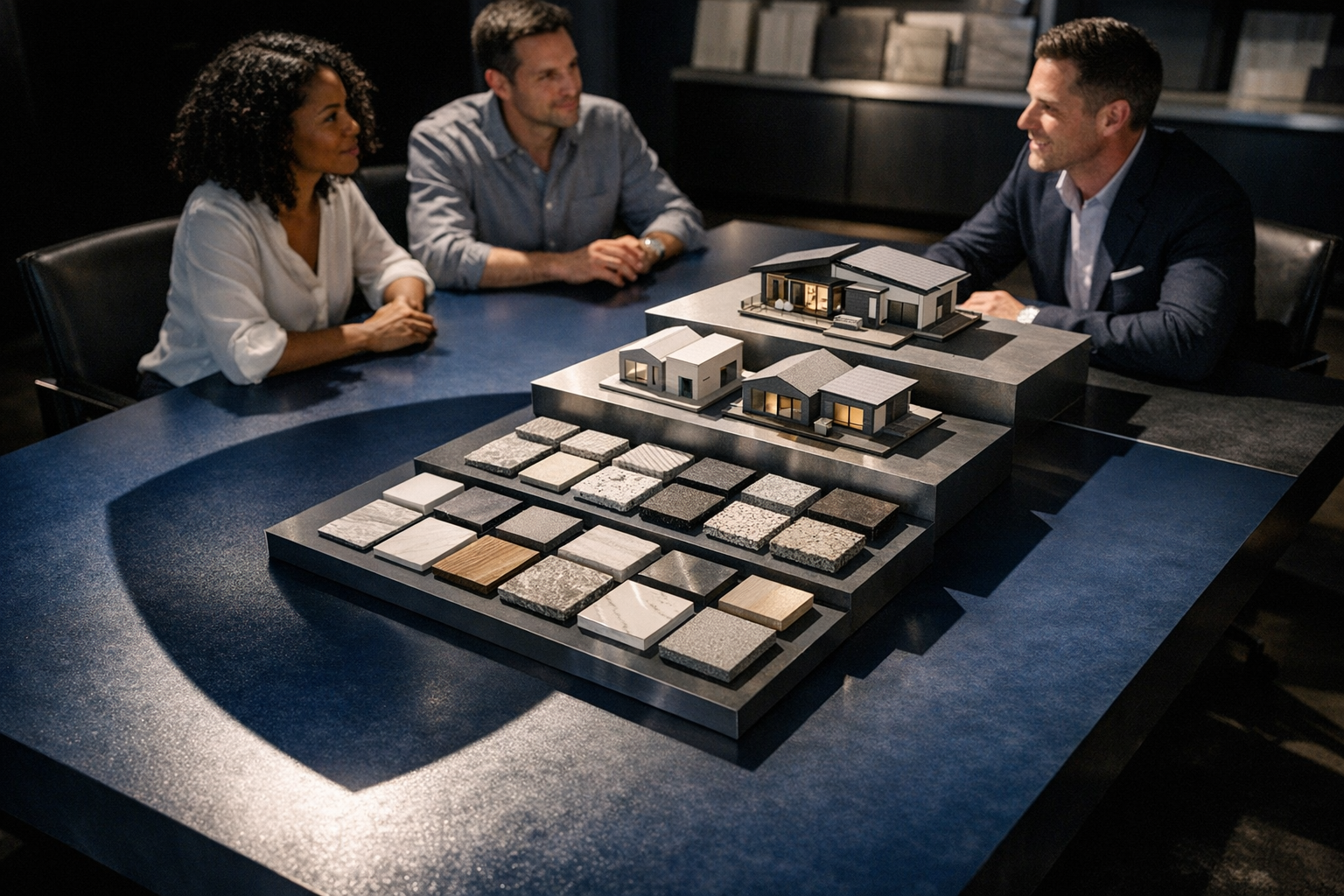
When it’s time to present options, avoid drowning clients in detail. Bundle each option as a discrete choice tied to a problem they care about: “This $76,000 option completely resolves the circulation issue between kitchen and family room,” instead of “Here are ten line items of structural and finish changes.” Show the total with all options first, then what happens if they remove specific ones, and always reconnect it to their priorities.
Psychology matters as much as process. Conversations go badly when you respond from a “Parent” state (“That competitor’s price is unrealistic”) or trigger their “Child” state of fear and resentment. Stay in Adult: ask calm questions, clarify scope, and remind them they control the budget through their choices. Your job is to “report the news” on cost, not to convince them to overspend.
Finally, use options to manage real risk, not to hide margin. If a siding system is unfamiliar and requires a specialty subcontractor, it belongs as an option—even if it’s part of the core vision. Explain why: “This system carries more technical risk, so we’re pricing it as a separate option until we all agree it’s the right path.” That transparency builds trust while keeping you profitable.
Over time, this structure—honest early budget talks, paid pre‑con, emotionally intelligent recaps, and confident price‑first presentations—creates a flywheel. You close more of the right projects, spend less time chasing free estimates, and build a reputation as the builder who tells the truth about money without making people feel judged.