Client Hesitation in Sales: Lead, Don’t Chase
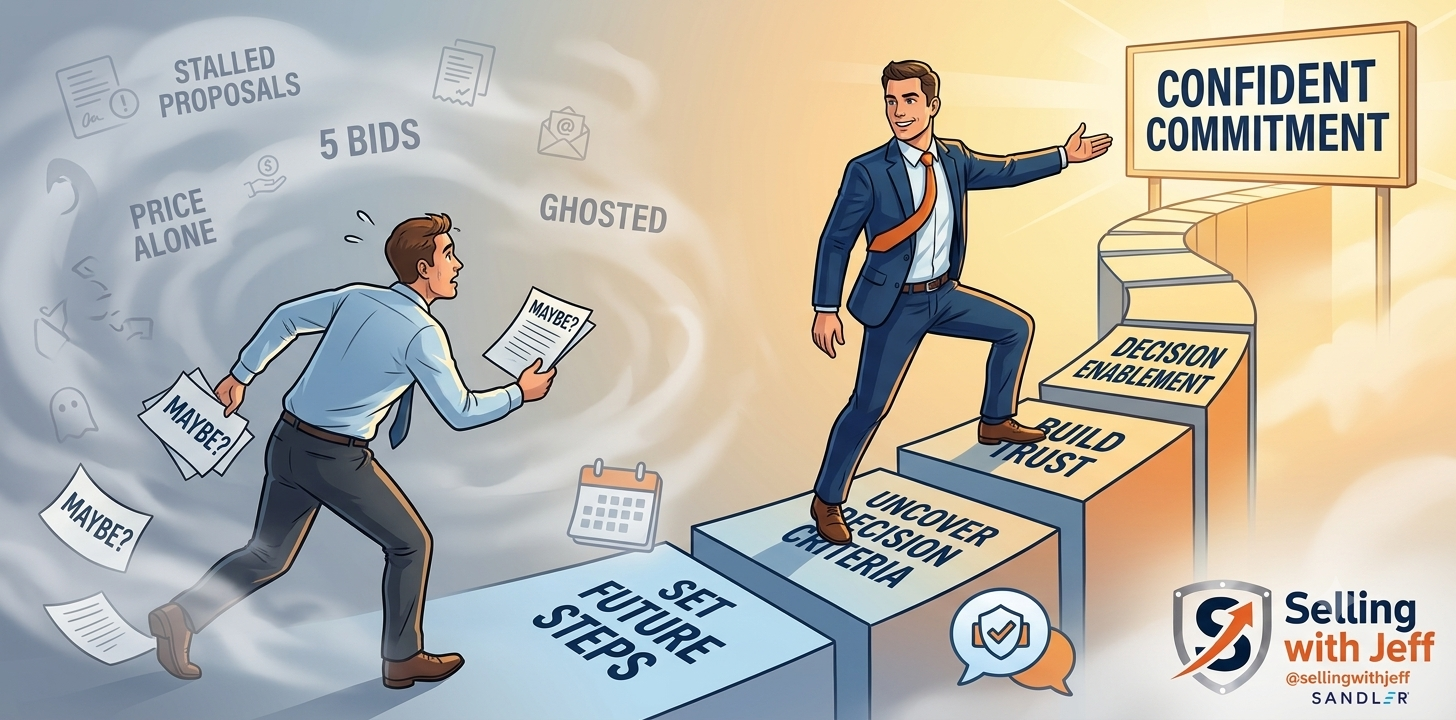
High-value projects rarely die because of price alone. They stall because buyers hesitate, shop multiple bids, or disappear after you send a contract. This article explains how to handle client hesitation in sales by leading the process, setting clear future steps, and enabling confident decisions instead of chasing maybes.
What client hesitation really means in high‑value sales
Client hesitation in sales is usually a sign of low trust and unclear decision criteria, not just price sensitivity. When homeowners seek multiple bids or move slowly, they’re trying to feel safe making a big commitment, so your job is to uncover how they decide and help them reach a confident yes or no.
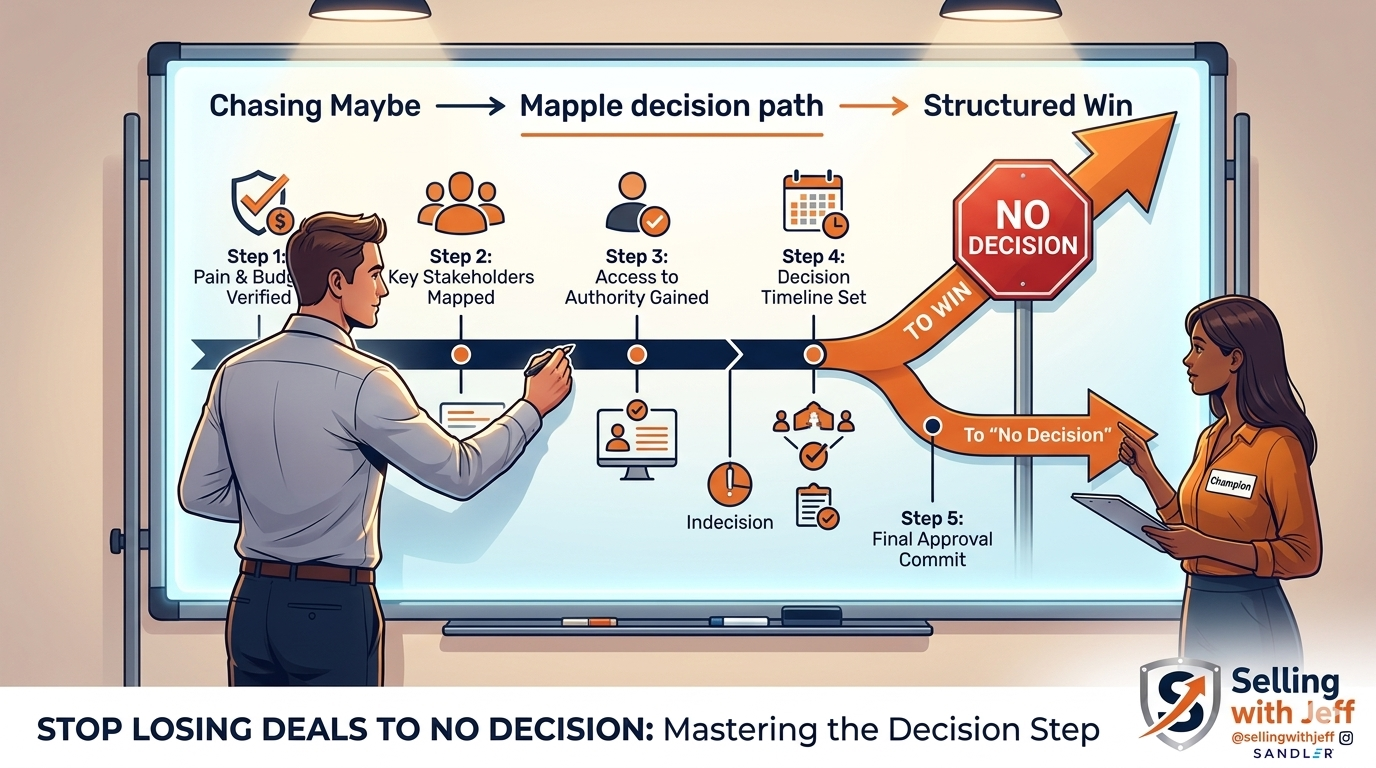
In remodeling and custom-home projects, clients are often making one of the largest financial decisions of their lives. When they say, “We’re talking with five builders,” what they’re really saying is, “We don’t trust anyone yet.” Sandler research shows that teams can lose 20–40% of their pipeline to “no decision” when they skip a clear decision step (Sandler Training). That stall shows up as slow burns, endless design tweaks, or municipalities becoming a convenient excuse. Treat hesitation as a signal to ask better questions: what they hope to gain from multiple bids, how they’ll judge quality, service, and experience, and whether they’ve truly decided to do the project at all.
Lead the process instead of following multiple‑bid buyers
When you let buyers dictate the process, you play their game and lose control. Your inflection point is deciding whether to follow their path—endless unpaid consulting—or lead them down a defined path that fits your business model and margins.
For example, if a prospect insists on getting three bids, you can deliberately position yourself to be the last meeting. Ask who else they’re speaking with and when they expect numbers back, then schedule your meeting for after that date. Being last often wins because you’re most recent in memory and you meet a more educated client. If they want five bids, use questions to test seriousness: “Have you definitely decided to do this project, or are you still exploring?” Habitual shoppers looking for free design ideas will usually reveal themselves, allowing you to slow down—or politely walk away—before you sink hours into a deal that won’t close.
Use clear defined future steps so proposals don’t get ghosted
Most “ghosting” is simply a missing next step. Without a clear future event on the calendar, homeowners default to delay, even when they like you and your proposal. Structured follow-up can dramatically increase conversion compared to ad-hoc chasing (SPOTIO).
Before you email a contract, schedule the follow-up: “I’ll send the agreement today. How long will you need to read it? Great—let’s put 3:00 p.m. tomorrow on the calendar for a quick 15‑minute call to answer questions. If everything looks good before then, just sign and send it back and feel free to cancel the call.” This simple “clear defined future” step turns a vague next step into a specific commitment. To avoid mental gymnastics later, add one more question: “If something comes up and we don’t connect at 3:00, what would you like me to do next—call or text?” Now you have permission and a plan instead of guessing.
Turn slow burns into decisions with true decision enablement
You are not just in the sales business; you’re in the decision‑enablement business. Your real job is helping clients make a good decision—sometimes yes, sometimes no—rather than letting them drift in indecision for months.
Use the pains and impacts they shared early in the process to re‑anchor stalled conversations: remind them of unsafe layouts, aging parents moving in, or the frustration of a kitchen that doesn’t work for their family. Then frame the next step—pre‑construction agreement, design retainer, or a specific selection meeting—as the tool that lets them finally resolve that pain. Instead of pushing for a signature, ask, “If all prices were the same, what else would you look for between builders?” Their answers—quality, service, trust, experience—give you a roadmap for questions that build trust by being interested, not interesting. Over time, consistently leading, setting clear futures, and enabling decisions replaces client hesitation with confident commitments and fewer lost opportunities to “no decision.”