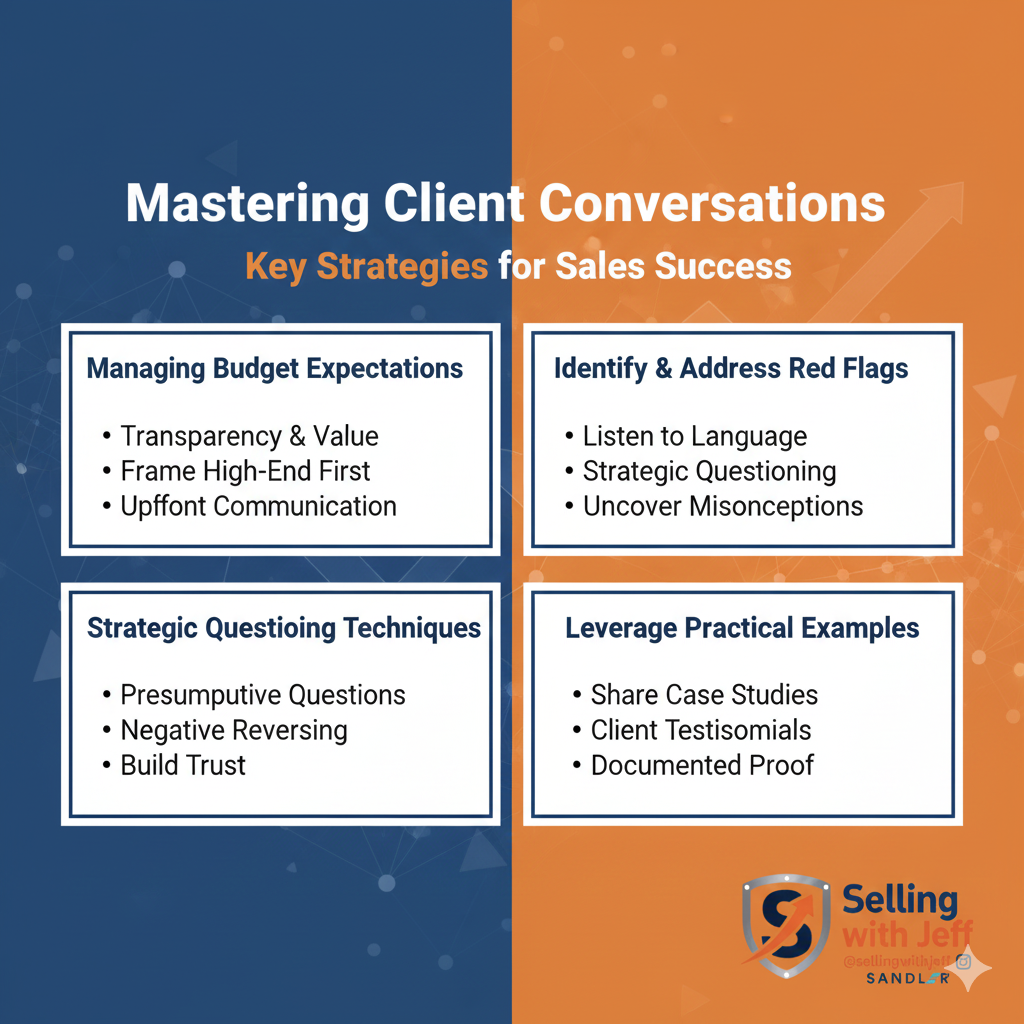

Mastering Client Conversations: Key Strategies for Sales Success
Unlock the secrets to effective client communication with proven strategies to manage expectations, build trust, and close deals efficiently.
Posts about:
Unlock the secrets to effective client communication with proven strategies to manage expectations, build trust, and close deals efficiently.
Effective communication is the cornerstone of building trust with your clients. As a sales professional, your ability to establish a rapport and foster a genuine connection can make the difference between a one-time sale and a long-term relationship. Start by actively listening to your clients’ needs and concerns. This not only shows that you value their input but also helps you tailor your solutions to meet their specific requirements.
In the fast-paced world of sales and design, the importance of having clear, defined future steps cannot be overstated. By establishing explicit next steps at the end of every client interaction, you ensure that both parties are on the same page, reducing the likelihood of misunderstandings and unnecessary follow-ups. This practice not only streamlines the communication process but also helps in setting realistic expectations for project timelines and deliverables.
In the world of sales, building and maintaining strong networks is paramount to success. A robust network serves as the foundation for generating high-quality client referrals. The key lies in cultivating relationships with both current clients and potential referral sources. Start by engaging with people on a personal level, understanding their needs, and consistently providing value. This approach builds trust and positions you as a valuable resource in their network.
A successful sales meeting begins long before you step into the room or join the Zoom call. Setting clear expectations from the outset is crucial. This involves defining the purpose of the meeting, outlining the agendas for both parties, and establishing the logistics - who will be attending, the meeting platform, and the duration. This structured approach, often referred to as the PALO method (Purpose, Agenda, Logistics, and Outcome), ensures that everyone is on the same page and paves the way for a productive discussion.