Selling with Jeff

Posts about:

Remodeling (6)

Remodeling Sales: Sell Like a House Doctor

Why remodeling is a “need, don’t want” sale (and why that matters)

Remodeling is a classic “need, don’t want” purchase: homeowners rarely want the disruption, dust, or noise, but they need safety, usability, and dignity in their homes. Great remodeling salespeople act like a house doctor, diagnosing what hurts today instead of pitching luxury upgrades.

Read More

Use “What Number Scares You?” in Remodeling Budget Talks

Why traditional remodeling budget questions backfire

Remodeling budget conversations work best when you replace a direct “What’s your budget?” with the softer, disarming question, “What number scares you?” This shift helps homeowners talk honestly about money, reduces awkward silence, and gives you a realistic ceiling before you invest time in design.

Read More

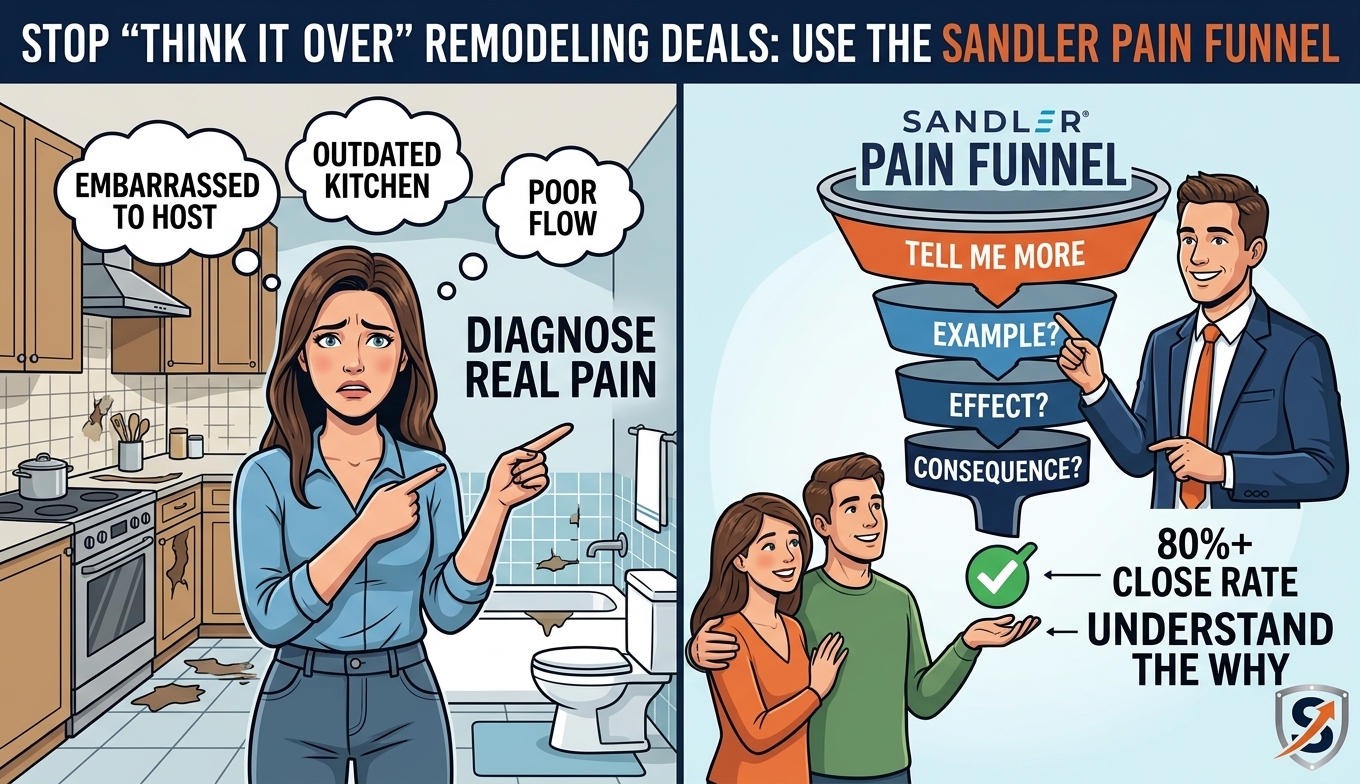
Four Levels of Pain: Close More Remodeling Deals

Understand pain: the most powerful sales emotion

The Sandler “pain step” helps remodelers find a homeowner’s compelling emotional reason to make a change, then connect their project and price to that emotion so decisions happen faster and ghosting drops. In other words, you move from “nice design” conversations to clear, confident yes-or-no decisions.

Read More

Sales Proposal Checklist to Stop Getting Ghosted

Define the real problem: ghosting, bad fits, and missing Type II pain

A sales proposal checklist helps remodelers and contractors qualify deals before investing time in detailed quotes. It focuses on uncovering emotional pain, realistic budget, decision process, and fit so you only write proposals for prospects likely to choose you instead of cheaper competitors.

Read More

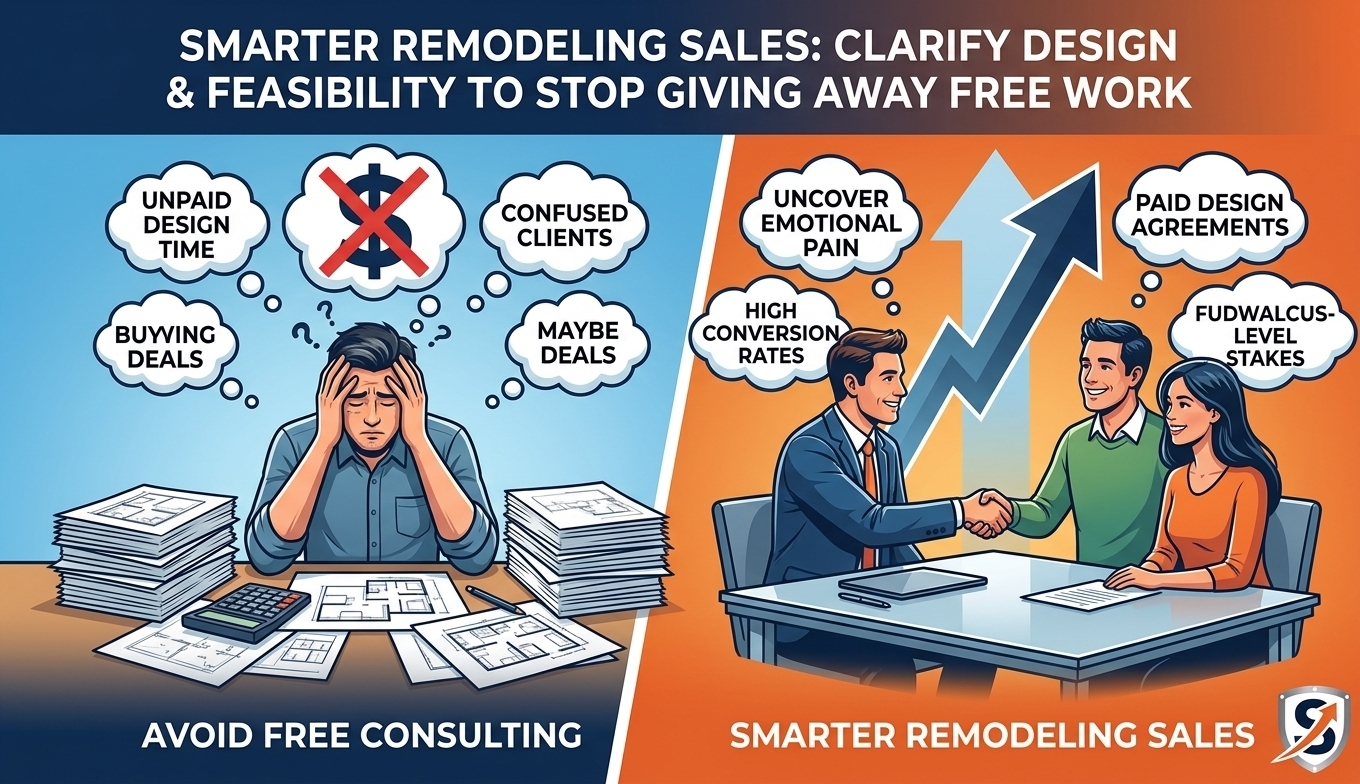
Stop Over‑Designing with Needs, Wants, Wishes

What ‘Needs, Wants, and Wishes’ Really Mean in Remodeling Design

The needs, wants, and wishes framework helps remodeling designers turn emotional client stories into clear design priorities. “Needs” are non‑negotiables the project must include, “wants” are features clients value and will fund, and “wishes” are nice‑to‑have ideas that only belong in the plan if the budget allows.

Read More