Sandler Pain Funnel for Remodelers: Questions That Lead to Budget

Use the Sandler pain funnel to guide remodeling sales calls
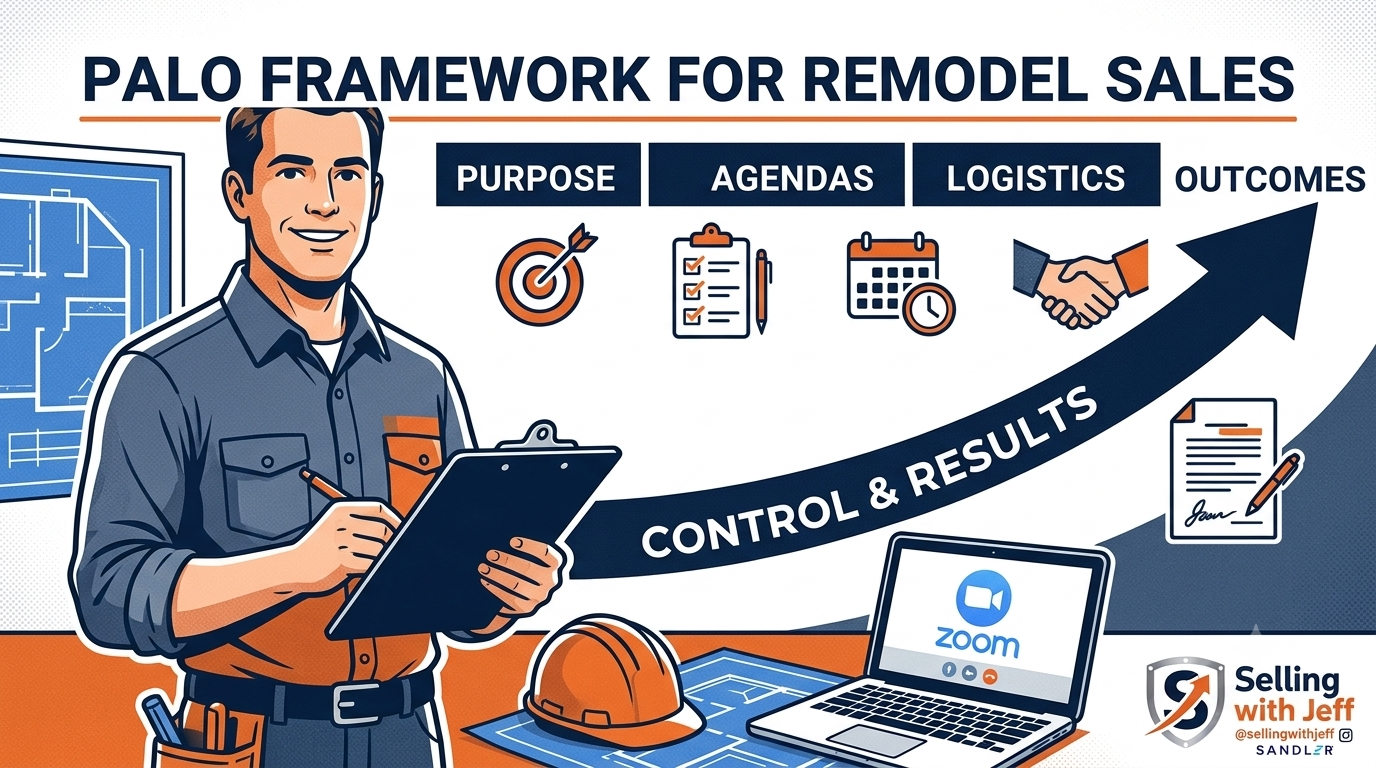
The Sandler pain funnel is a sequence of open questions that takes homeowners from vague complaints to specific, emotional reasons to change. In remodeling, you use it to slow the conversation down, uncover why the project really matters, and only then talk about scope, design, and budget.
Instead of jumping on, “We never use this room,” you ask, “Can you be more specific? Give me an example.” Sandler has taught versions of this funnel for over 50 years because it works across industries: tell me more, how long has that been a problem, what have you tried, did it work, what has it cost you, how do you feel about that (Sandler Pain Funnel PDF). In a remodeling context, those same questions turn “the dining room is awkward” into “my grandkids visit every weekend and there’s nowhere to sit together.”
When you treat the pain funnel as guided self‑discovery instead of an interrogation, homeowners talk themselves into needing help. You’re not persuading; you’re getting them to say, in their own words, why staying the same is no longer acceptable.
Go deeper to impact so budget feels like the natural next step
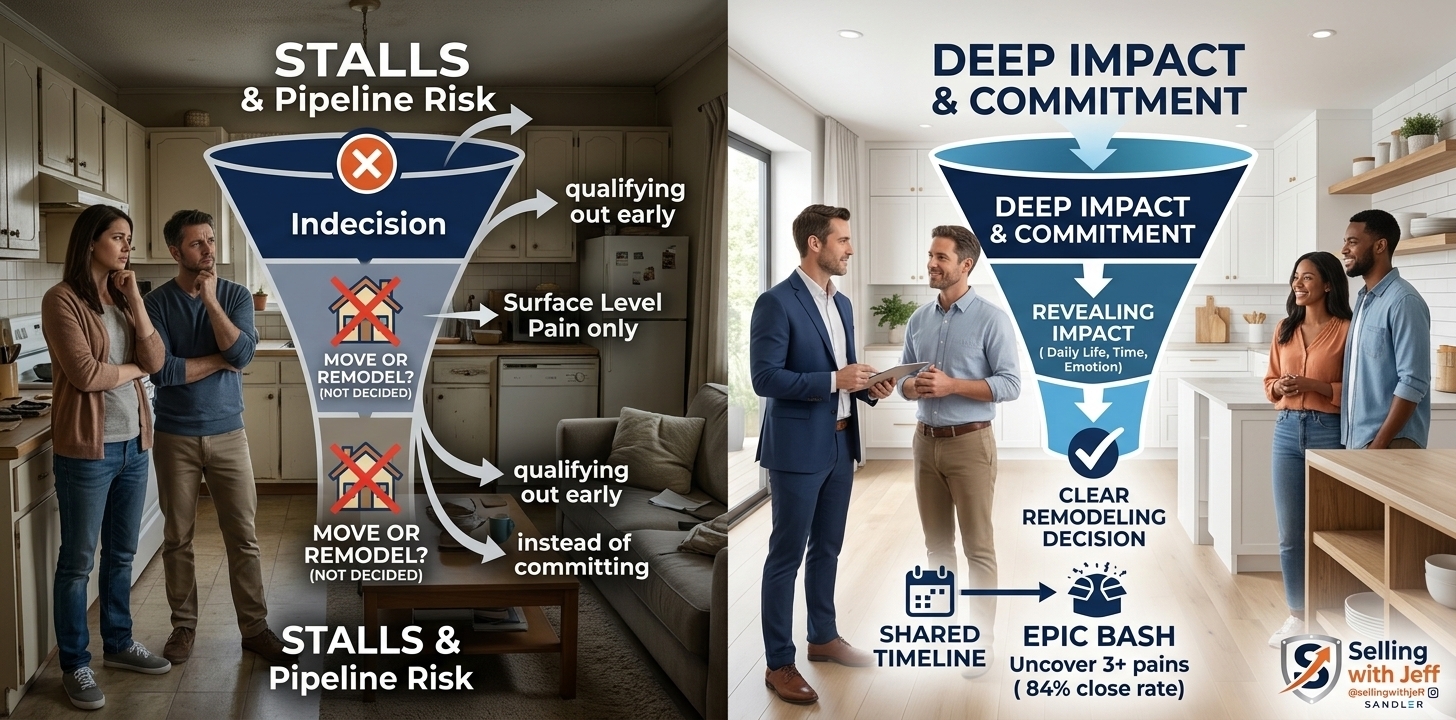
Most remodelers stop halfway down the funnel. They collect surface pain and history (“We’ve hated this layout for 10 years,” “We moved a few lights in 2021”), then rush to ideas and numbers. The real leverage comes when you add the impact layer: “What happens to you and your family if nothing changes?”
Sandler calls this qualifying hard so closing becomes easy (Sandler Pain Step). In the transcript example, the client doesn’t just want more seating; she wants a place where her grandkids can eat together every weekend and where memories with her late husband aren’t erased. That’s emotional impact you can connect to investment.
Once you’ve heard that level of pain, you can naturally ask, “On a scale of 1–5, how much of a priority is fixing this this year?” and, “Is this something you’ve actually set money aside for?” You’re not forcing a budget talk; you’re protecting a goal they just told you is vital.
Handle past projects, price anchors, and “just a number” requests
Clients rarely come to you as blank slates. They’ve remodeled before, watched HGTV, or did a project in 2021 at very different prices. If you don’t surface that history inside the pain funnel, those old numbers silently anchor every decision.
Industry reports show that 82% of homeowners go over budget on renovations and underestimate true costs by about 22% (Zipdo home renovation stats; Remodeling Impact Report summary). Your job is to bring those mismatched expectations into the open.
Ask, “Who did your last project, and why aren’t you calling them?” then, “How did that architect/GC process work for you?” Follow with pain‑funnel style questions: “What was frustrating?”, “Where did things go off track?”, “What would you avoid this time?” You’re uncovering pain with the old model so you can position design‑build—integrated design, budget, and construction—as the antidote, not a line‑item they compare price‑for‑price.
When someone says, “We just want a number,” you can honestly answer, “Most families who’ve remodeled since 2021 tell us their first contractor’s ‘number’ missed hidden costs by 15–30% (renovation overrun data). If it’s okay, let’s spend a few minutes on what’s not working and what’s at stake so any number we discuss is actually useful.”
Script simple pain funnel questions for every remodeling lead
In the session, the biggest breakthroughs came when people admitted they default to reacting and explaining instead of asking. The fix isn’t personality; it’s preparation. Write your core pain funnel questions down and keep them visible on every call or visit.
For first visits, your list might include:
- “What’s happening at home that made you call now instead of waiting a few more years?”
- “Give me an example of a recent moment when the house really didn’t work.”
- “What have you already tried to fix this, and how did it work?”
- “If you don’t change anything, what does that mean for your family over the next 5–10 years?”
Lead intake can use a lighter version. Industry surveys on remodeling show that nearly half of homeowners delay or cancel needed projects because of financial stress and cost confusion (remodeling lead research). If your intake person collects even one emotional example and one impact statement before handing the lead off, your sales team walks in already knowing there’s real pain to explore.
Over time, you’ll find you talk less, qualify faster, and spend more of your design time with people who have both the motivation and budget to move ahead.