Sandler Negotiation Tactics for Remodeler Margins

Turn sales calls into negotiation-free decisions
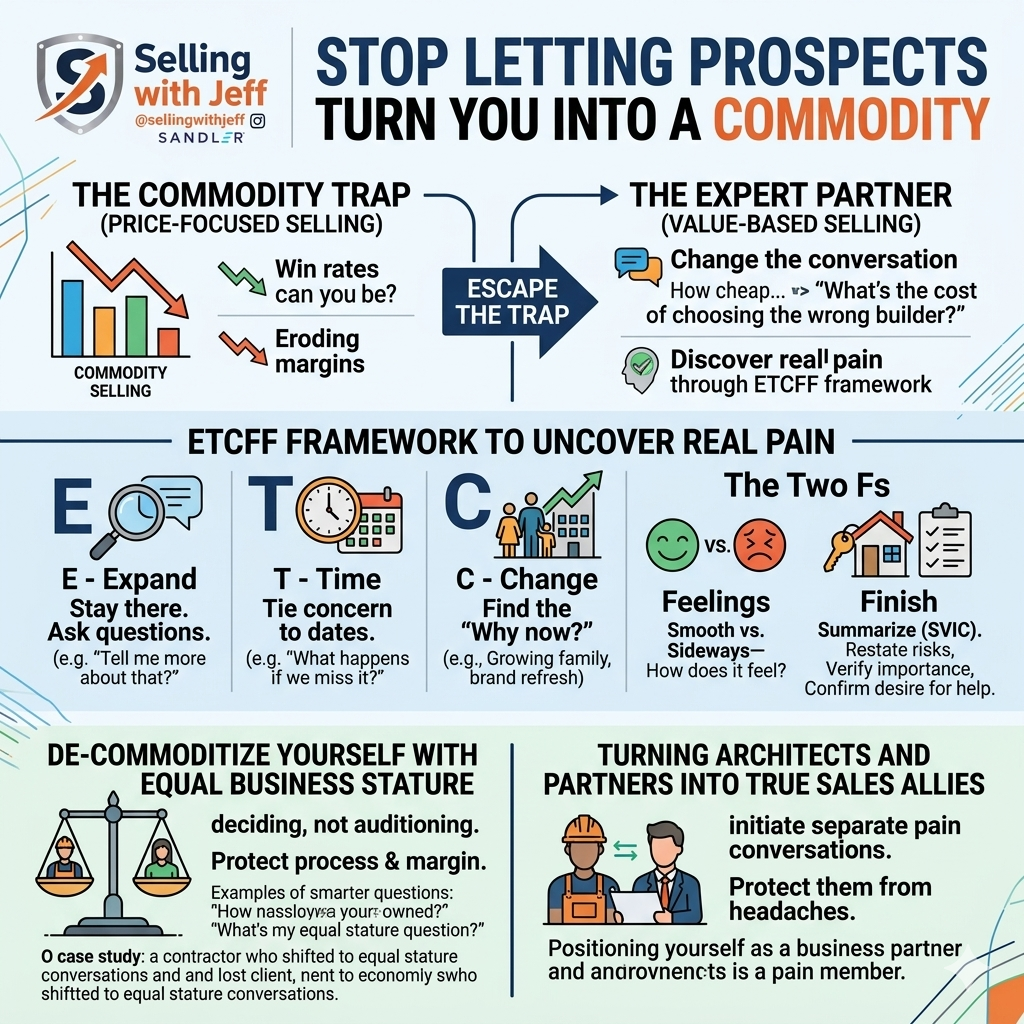
When done well, sales negotiation for remodelers happens long before anyone says, “Can you sharpen your pencil?” Use your sales process to set clear expectations, qualify fit, and agree on next steps so the final number feels like a logical decision, not an invitation to haggle.
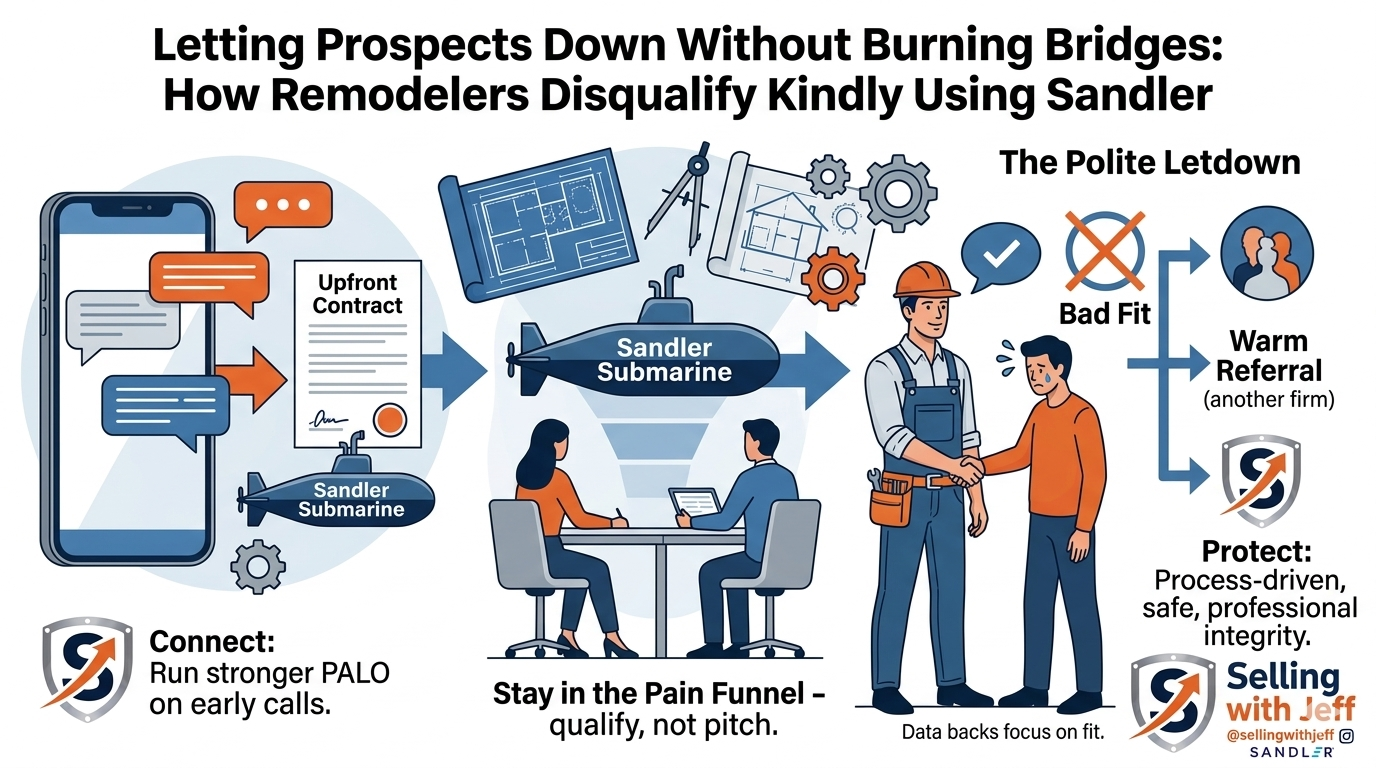
In Sandler terms, that starts with a strong upfront contract. At the beginning of a first visit, align on agenda, time, and outcomes: “By the end, we’ll both know if there’s a fit. You may tell me no, and I may tell you we’re not the right contractor. Is that okay?” This one script gently shows you are willing to walk away, which reduces last‑minute pressure.
For example, a Bay Area design‑build firm adopted a standard upfront contract and reported that “just getting the ‘no’ on the table early” cut their post‑proposal ghosting in half over 90 days.
Use pain and budget to build real pricing leverage
Price objections shrink when homeowners see a clear line from their frustrations to your solution and investment. Slow down to uncover emotional pain, then connect budget to fixing that pain, instead of to square footage or finishes alone.
A Sandler remodeling case study found that when reps rushed pain and skipped deeper questions, final estimates landed 20–30% higher than the rough ranges they blurted out earlier, triggering distrust later (Sandler Remodeling Blog). The fix was simple: pain first, budget second.
On a kitchen project, don’t stop at “layout is dated.” Ask, “How does this affect your mornings, entertaining, working from home?” Once they describe embarrassment hosting friends or tripping over kids, bridge to budget: “When you talked about fixing all this, what were you thinking you’d be willing to invest?” Their number—and emotion—become your leverage.
Offer options, not discounts, when price pressure hits
When a prospect asks for a lower price, keep scope, quality, and service visible. Instead of negotiating, present clear options: the only thing that changes between them is what’s included, not your integrity or margin.
For instance, if your full‑scope bath remodel comes to $85,000 and they hoped for $70,000, avoid saying, “Let me see what I can do.” Instead: “We can get closer to $70,000 by keeping your existing plumbing locations and choosing a mid‑range vanity line. Or we keep everything you loved in the design and stay at $85,000. Which of those two feels right?”
One Sandler trainer tells of a tech client who refused to cut his fee but offered tiered options instead; the buyer chose the highest tier once they saw what they’d lose. The principle is the same for remodelers: never negotiate—only give options.
Protect your mindset: detached, confident, and in control
The more desperate you feel, the weaker you negotiate. Top remodelers act as though their pipeline is full, even in slow months, so they can stay curious and calm instead of chasing every maybe.
Emotional detachment doesn’t mean apathy. It means you want the job but don’t need this job. When you believe, “My job is to help you make the best decision, even if that’s not us,” you ask better questions, call out red flags, and walk away from bad‑fit projects without anger.
One owner tracked his close rate for a quarter after committing to this posture. He started saying, “It’s okay if this isn’t the right project or timing. Can we be honest about that together?” His close rate rose from 32% to 41%, and he cut unpaid design work by two‑thirds—proof that the less attached he became, the more he sold.