Selling with Jeff

Posts by:

Jeff Borovitz

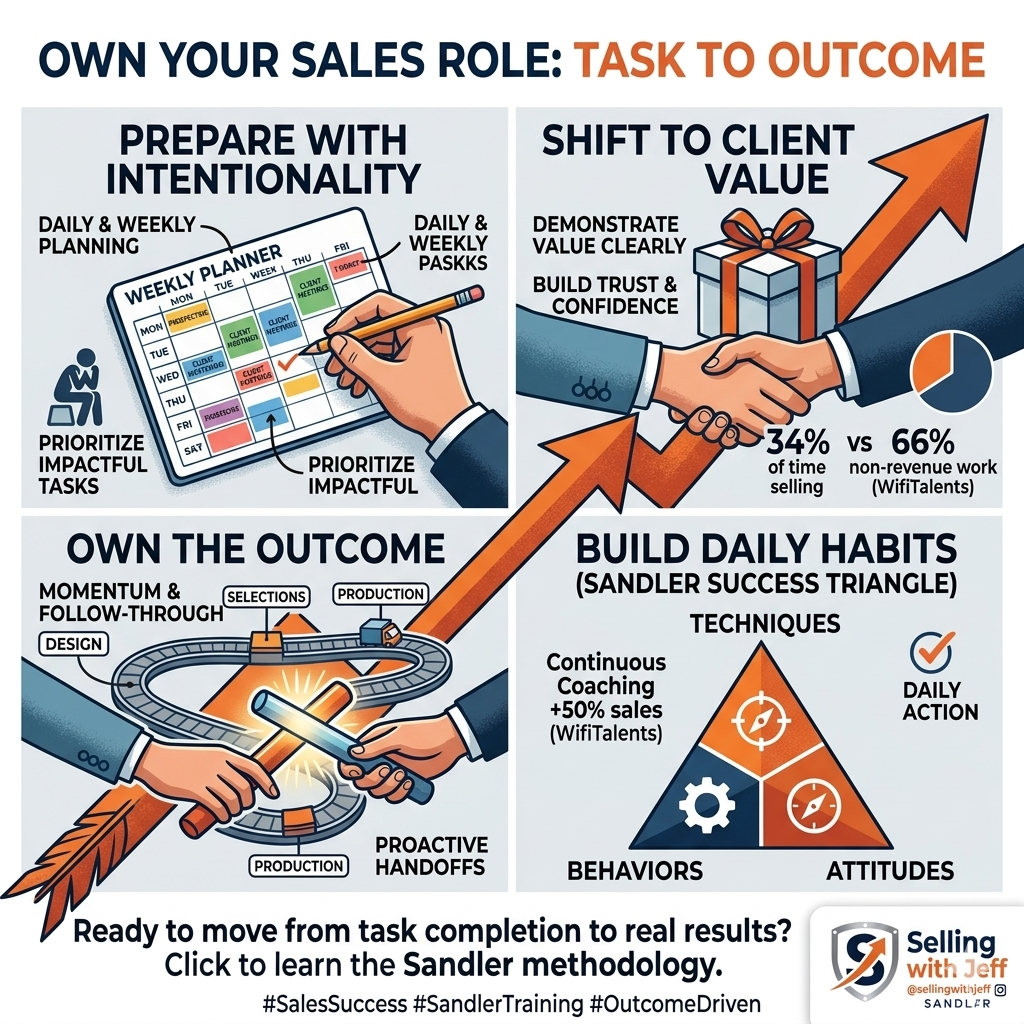
Own Your Sales Role: From Tasks to Outcomes

Prepare your week with intentionality, not autopilot

To own your role you start by deciding what a successful week looks like before it begins. Instead of letting email, Slack, and client emergencies drive your calendar, you block time for the few activities that actually move deals forward and create a better experience for clients and teammates.


Read More

Sandler Thermometer Close: Stop Leaving Deals in Limbo

Why qualified deals still die in the presentation room

The fastest way to lose a great opportunity is to do a long presentation without a clear decision at the end. The Sandler thermometer close fixes this by turning your presentation into a controlled conversation that ends in a clean yes or no, instead of a vague “let us think about it.”

Read More

Underpromise, Overdeliver: A Builder’s Sales Advantage

Build trust first by underpromising and overdelivering

A trust-first sales process means you underpromise and overdeliver on every commitment: times, quotes, and next steps. Builders protect credibility by giving realistic deadlines, hitting them consistently, and avoiding ballpark prices that later move. That simple discipline separates you from “every other builder” and keeps you out of the trust graveyard.

Read More

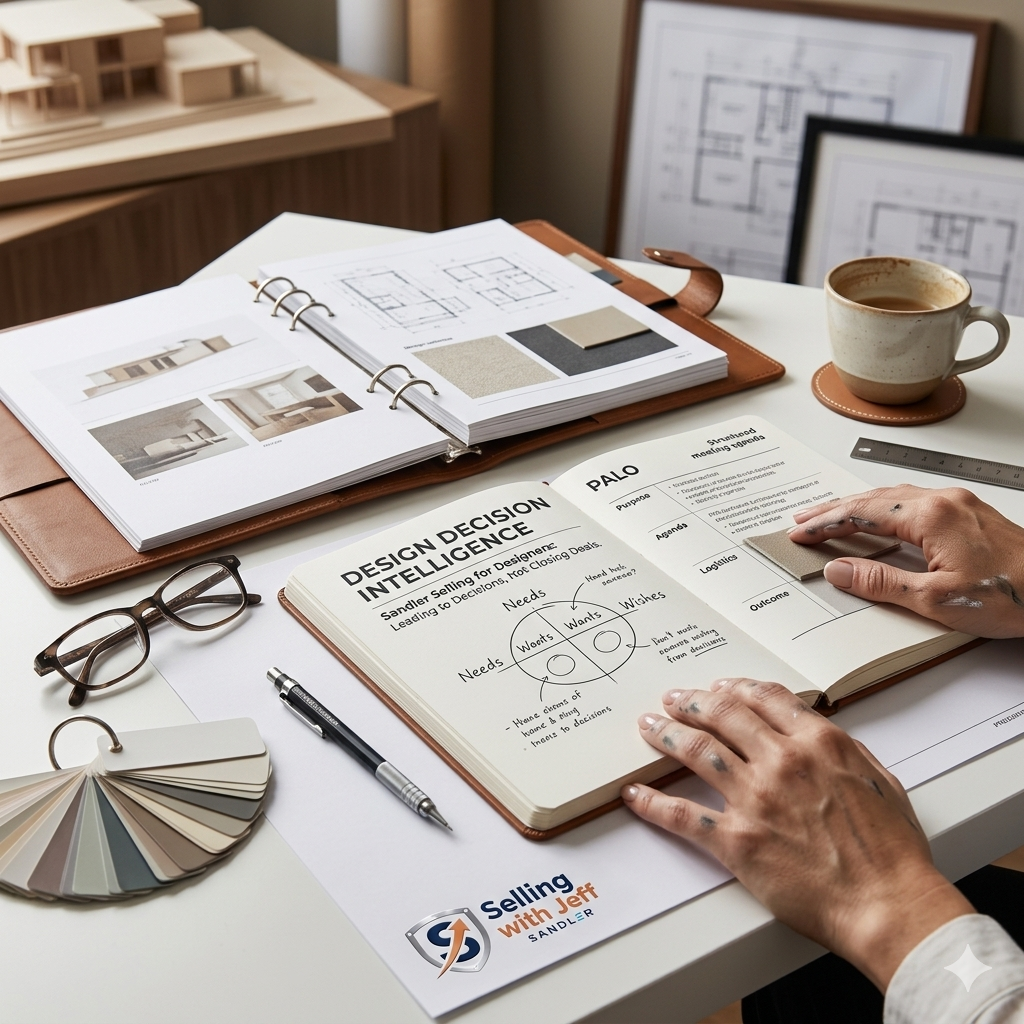
Designers as Budget Stewards: Sandler Selling Without Selling

Why designers are really selling (and why that feels uncomfortable)

Designers sell every day, even if they never present a contract. Sandler sales for designers means guiding decisions, uncovering what really matters, and helping clients trade money for outcomes they care about—without pressure, jargon, or ego. You’re not closing a deal; you’re leading a decision.

Read More

Selling When Dad Pays: Ground Rules for Remodelers

Clarify everyone’s pain before you talk numbers

When a parent or third party is paying for a remodel, selling with multiple decision makers starts with understanding what hurts for each person. That means slowing down long enough to uncover the emotional and practical reasons the parent is involved, instead of assuming they share the kids’ motivations.

Read More