Selling with Jeff

Posts by:

Jeff Borovitz

Sandler Success Triangle: Protect Your Identity at Work

What the Sandler Success Triangle Really Means for You

The Sandler success triangle says sustainable performance comes from three pieces working together: Attitude, Behavior, and Technique. Attitude is how you see yourself, your company, and your market. Behavior is the actions you take. Technique is how you run meetings, ask questions, and move deals or projects forward.

Read More

Design-Build Trust: Stop Losing Clients After Design

Spot the real reason clients leave after design

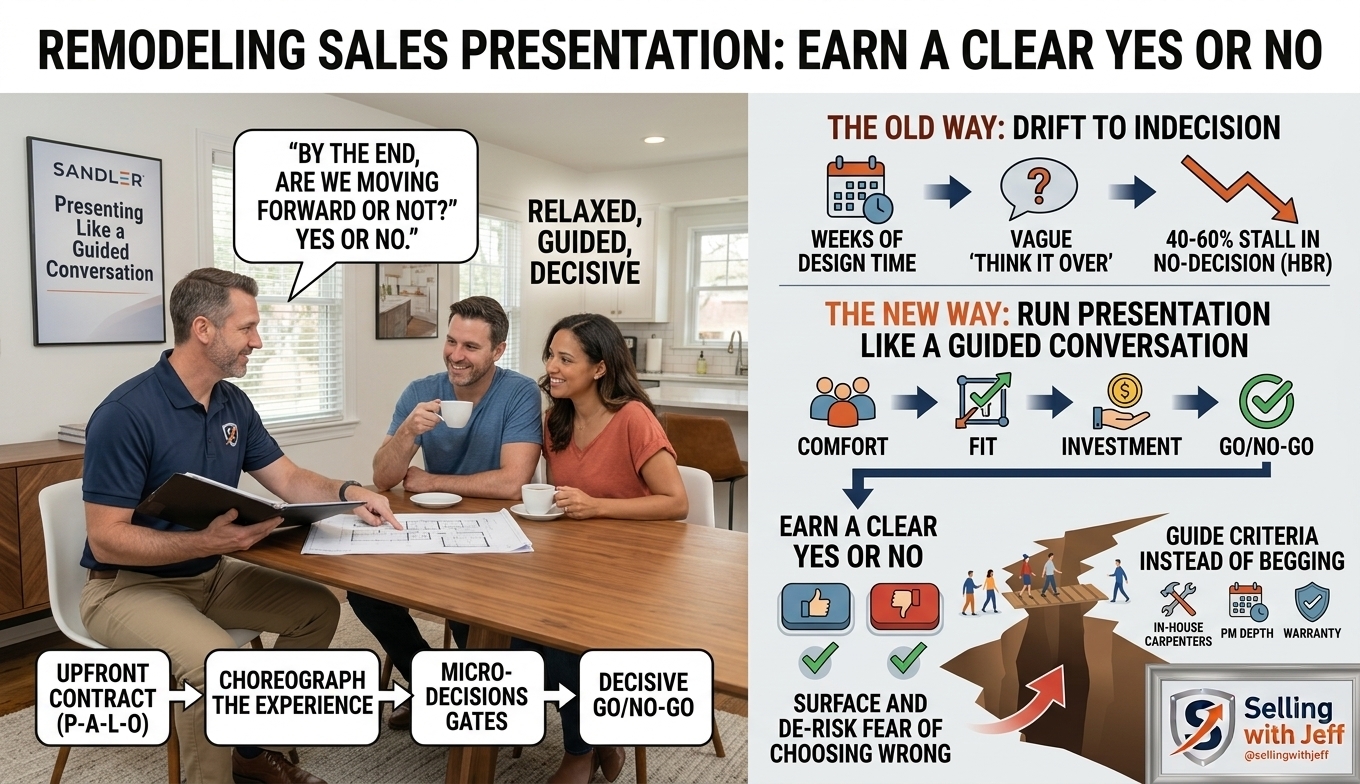
Most design-build firms blame budget when homeowners walk away after design, but often the real issue is missing design-build trust. When clients don’t fully trust your team or process, every price feels risky, every change feels scary, and “We’ll think about it” becomes the safest option.

Read More

Sales Accountability: Knowing When to Walk Away

Accountability vs responsibility in long, complex sales

Sales accountability means owning the outcome of the job, not just checking off your part of the process. In long, pre‑construction sales cycles, responsibility is doing the call, sending the proposal, and booking the meeting. Accountability is making sure the deal either closes cleanly or is intentionally stopped.

Read More

Transactional Analysis for Stronger Remodeler Sales Calls

What transactional analysis is and why it matters in remodeling sales

Transactional analysis in sales is a simple psychology model that explains why smart homeowners act inconsistently in conversations. It says every interaction happens from three ego states—Parent, Adult, and Child—and your results improve when you recognize the state you and your prospect are in and respond on purpose instead of by habit.

Read More

Be Interested, Not Interesting in Post‑Sales Calls

Why “be interested, not interesting” transforms post‑sales

Being interested, not interesting in post‑sales means you focus less on talking about your product and more on asking questions that uncover how things really work for the client. That shift reduces defensiveness, exposes hidden fears like job security, and gives you the information you need to protect adoption, renewals, and expansion.

Read More