
Selling with Jeff

Posts about:

PALO (5)

Make Your PALO Interactive, Then Talk Money

Turn PALO into a real dialogue that builds trust fast

A PALO sales opening is a brief, structured conversation that sets purpose, agenda, logistics, and outcomes for the meeting in a two‑way, question-based dialogue. Done well, it builds immediate trust, gets prospects talking, and turns a stiff sales call into a collaborative working session instead of a one‑sided monologue.


Read More

Equal Business Stature: Stop Being a Free Bidding House

Why contractors lose deals (and margin) when they act like a quoting house

Equal business stature in sales means you and the client both qualify for each other’s time, follow a clear process, and make mutual decisions instead of you begging for the work. When you skip that balance, you become a free quoting house—and your win rates and margins show it.

Read More

Use PALO to Turn Casual Sales Chats into Real Decisions

Why PALO Beats Vague “Upfront Contracts” in Real Sales Calls

A PALO sales meeting framework gives structure to every conversation: you align on purpose, co-build an agenda, clarify logistics, and agree on outcomes. Done well, it replaces vague “check-in” calls with clear, adult-to-adult business discussions that naturally reveal why the prospect is changing and why they need to act now.

Read More

Handle Indecisive Remodeling Clients Without Burning Out

Reset expectations with a clear decision-making framework

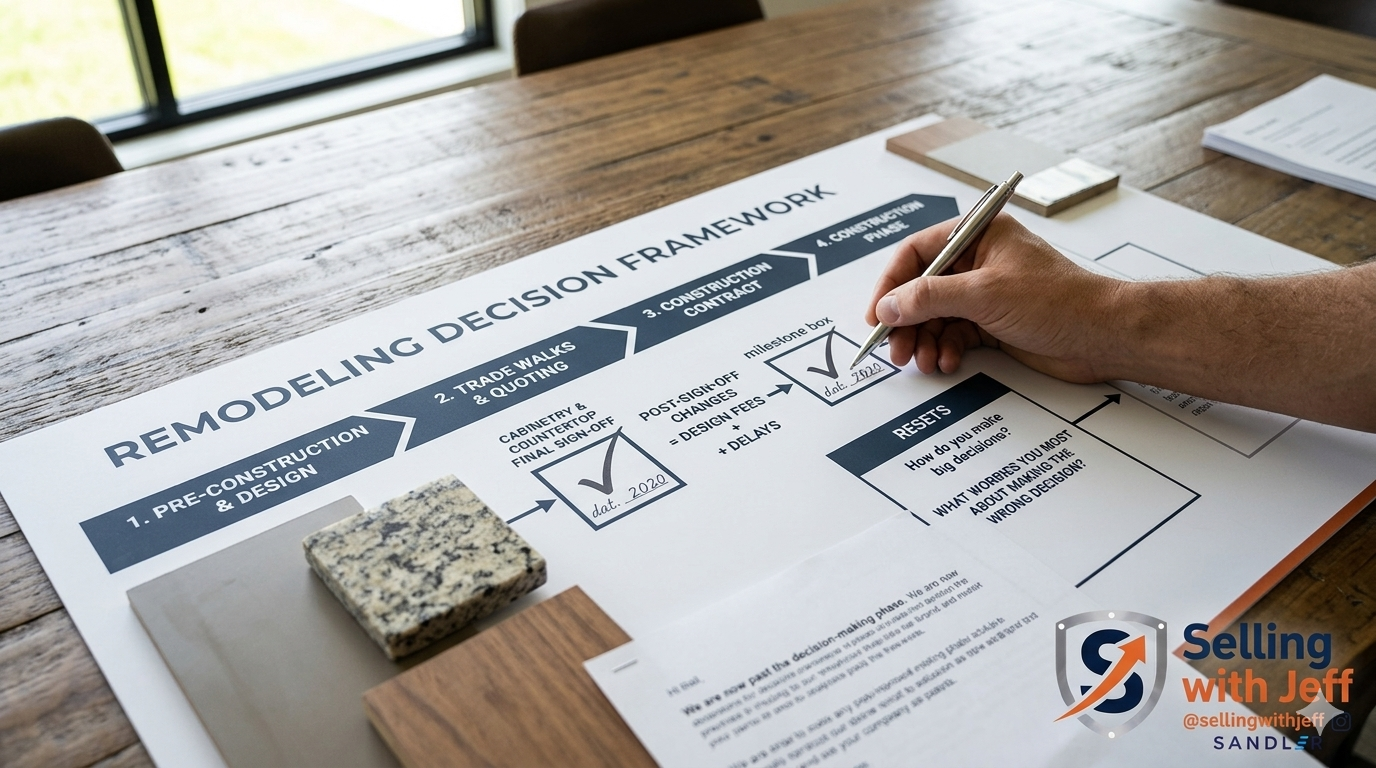
Managing indecisive remodeling clients starts with resetting expectations around decisions, timelines, and scope. You need a written framework that spells out when selections are due, what “locked” really means, and how changes affect cost and schedule, so you can protect your team without making the client feel abandoned.

Read More

Use DISC, PALO, and “Yes, And” to Build Client Trust

Why DISC matters more than you think in client conversations

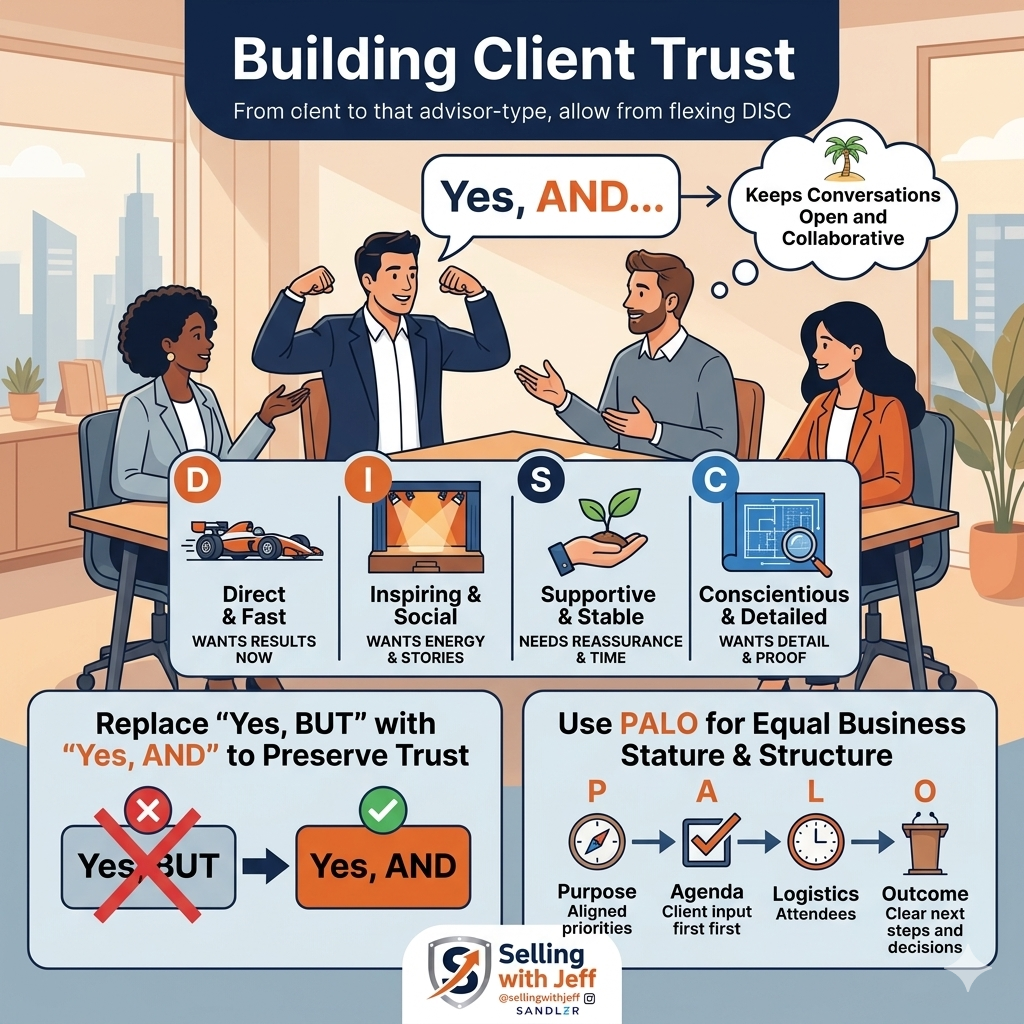
DISC communication styles help you see why some client conversations feel effortless and others feel like you’re speaking different languages. When you adjust how you communicate to match their style, you reduce friction, surface the real issues faster, and create the conditions for honest, trust‑based dialogue.

Read More