
Sales Mindset: Micro Goals That Prevent Complacency
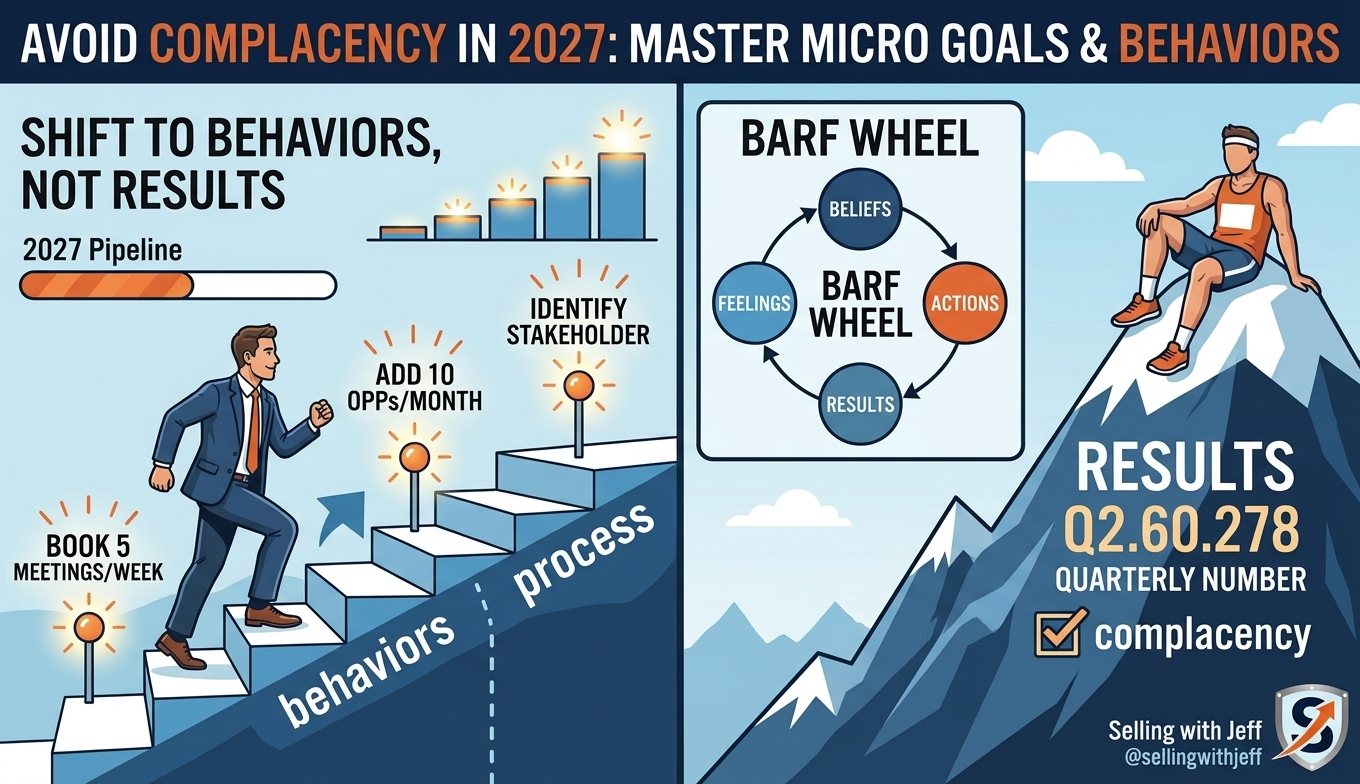
Shift Your Sales Mindset From Results to Behaviors
A strong sales mindset means focusing more on the daily behaviors you control than the quarterly results you don’t. When reps commit to consistent outreach, discovery and follow‑through, they avoid complacency after a big year and build a pipeline that can handle tougher market conditions.
Top performers rarely treat one strong year as proof that “we’ve arrived.” Sales leaders like Tony Wiedenski note that elite reps are “never satisfied”; they keep challenging themselves even when things look good on paper, because a 20% win rate still means 80% of opportunities are lost (source). That mindset keeps attention on what can improve, not just what already works.
Practically, this means shifting conversations from “Did we hit the number?” to “Did we execute the behaviors?” For example, instead of only reviewing closed revenue, review how many net‑new decision makers were added, how many real discovery calls were run, and how many opportunities advanced stages. When the scoreboard looks great, this behavior-first view is what stops the team from easing off the gas.
Use the BARF Wheel to Rewrite Limiting Beliefs
The BARF wheel—Beliefs, Actions, Results, Feelings—is a simple way to see why “just change your attitude” never works. If a rep believes “cold prospecting doesn’t work,” they avoid outreach, get poor results, feel discouraged, and that feeling reinforces the original belief. The loop protects the belief, even when it’s wrong.
To change that loop, start at the other end. Ask, “How do you want to feel 12 months from now?” Maybe it’s confident heading into a more aggressive 2027 target. Then define the results that would create that feeling: for instance, a 30% larger qualified pipeline or improving win rate from 20% to 30%. Next, list the actions required: more first meetings, deeper discovery, earlier access to economic buyers.
Only then do you rewrite the belief: “If I consistently execute these actions, I’ll build a pipeline that supports those results.” This is the same pattern you see in elite performers across industries. As one article on top 1% sellers notes, their edge comes from mindset, strategy, and a constant drive to get better, not luck (source).
Set Micro Goals That Keep Reps Hungry All Year
Micro goals keep teams from mentally checking out when annual targets feel out of reach—or already in the bag. Instead of “Hit $5M this year,” think “Book 5 new discovery meetings with net‑new logos this week” or “Identify one additional stakeholder in every active deal this month.”
Sports coaches use this approach all the time. Rather than obsess over the final score, they focus players on the next drive, the next play. In sales, that might mean giving each BD manager a specific Q4 micro goal: for example, adding 10 new qualified opportunities to the 2027 pipeline or reviving 5 stalled RFPs for a fresh look.
A similar mindset powers individual achievement. One plumbing technician documented by The Plumbing Sales Coach produced over $1 million in revenue from a single truck in a year by being “never satisfied” and relentlessly consistent on everyday service calls. For many reps, that looks like prospecting or relationship‑building 5–6 days a week, not just when they feel motivated.
Turn Behaviors Into a Repeatable Sales Process for 2027
Mindset and micro goals matter most when they translate into a clear, repeatable process. A helpful frame is the classic triangle: behaviors, attitude, and technique. Behaviors are the actions (calls, meetings, proposals). Attitude is what happens in “the one square foot of real estate” between your ears. Technique is how you run discovery, talk money, and qualify.
In practice, behaviors come first. If reps don’t consistently prospect, follow up, and drive next steps, even the best attitude and technique can’t save the number. But as people stick to the behaviors, their confidence grows, and they earn the right to refine technique—just as an athlete who trains daily can then fine‑tune form.
To prepare for a more challenging 2027, document the few critical behaviors that actually move the needle in your market (for example, executive-level discovery calls before RFP release, or proactive renewal planning 9 months before contract end). Build micro goals around those, coach with the BARF wheel in mind, and review progress every two weeks. Over time, you’ll have less of a sales roller coaster and more of a steady climb, even when the market gets rough.