Remodeling Lead Intake: Why Third Position Wins
Why your lead intake makes or breaks every sale
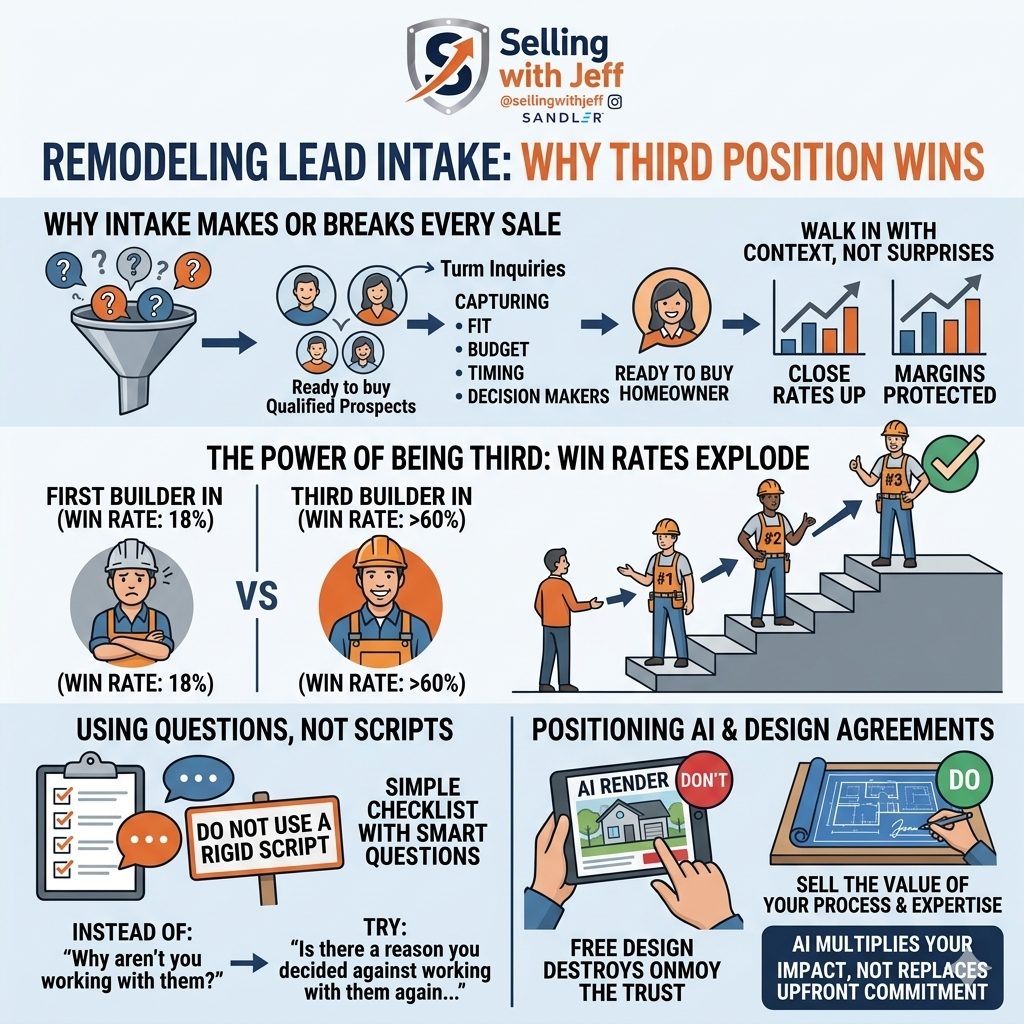
A strong remodeling lead intake process turns random inquiries into well-qualified, ready-to-buy prospects. It captures fit, budget, timing, decision makers, and where else the homeowner is looking, so your sales team walks into meetings with context instead of surprises—and your close rates and margins climb instead of eroding.
For most remodelers, intake is an afterthought: a busy admin “getting the basics” or a salesperson winging it between jobsite calls. That’s risky. One Sandler-trained builder discovered that their leads were “fine” and their salespeople competent—the real leak was intake. They were consistently first in the door and only winning about 18% of design-build opportunities. Once they reworked intake and timing, wins jumped dramatically without changing their marketing spend.
The power of being third: how timing changes win rates
In design-build, being first to meet isn’t always an advantage. Across dozens of projects, one firm tracked that when they were the first builder in, they won roughly 18% of deals. When they were the third company a homeowner met, their win rate shot above 60%. Same team, same market, same marketing—different timing.
Your intake needs to uncover, “Who else are you talking to?” and “Where are you in those conversations?” If a prospect has builder meetings scheduled this Thursday and next Thursday, you can confidently suggest, “Perfect—let’s meet the following Monday.” You’re not stalling; you’re ensuring you’re the one they remember after their expectations have already been reset by others.
Using questions, not scripts, to qualify like a pro
A rigid script sounds robotic and kills trust. A simple checklist guided by smart questions lets an admin or coordinator qualify like a seasoned salesperson while staying human. Focus on neutral, low-pressure phrasing that fits a consultative tone.
Instead of, “Why aren’t you working with that contractor again?” try, “Is there a reason you decided against working with them again—or is that still undecided?” Replace, “Who else are you bidding with?” with, “Have you called any other contractors yet? Which types of firms?” One firm added three questions about other contractors and project stage and quickly saw clearer pipelines and fewer price‑check timewasters, even though each intake call only grew by two to three minutes.
Positioning AI and design agreements without free consulting
AI renderings are tempting as a sales “wow,” but used incorrectly they destroy trust and profit. A large design-build company that began giving free AI concepts before design agreements saw conversion on those deals fall below 20%, compared to 88% when they sold design the traditional way.
The problem: prospects assumed the quick AI concept was what they’d actually get for their fee—on budget and buildable. When reality pushed back, they felt misled. A better play is to use AI behind the scenes to speed drafting, check scopes, or summarize meetings, while you sell the value of your process, expertise, and white-glove experience. AI should multiply your team’s impact, not replace your upfront commitment conversation or give away design for free.