
Why prospects really go silent after “great” sales calls
Most prospect ghosting is not about rude buyers; it is about risk and incomplete decisions. Research shared in Sandler programs shows that roughly 70% of sales effort ends in some version of “no decision” or “we’ll stick with what we’ve got.” Buyers are less afraid of deciding slowly than deciding wrong.
In practice, that fear shows up as polite emails, stalled internal reviews, or silence after a “great meeting.” Stephen M. R. Covey captured the pattern well: when trust goes down, decision speed goes down and cost goes up, as quoted in Demandster. If your process doesn’t deliberately reduce risk and increase trust, you will see more ghosting, especially in complex B2B deals with legal, procurement, and multiple stakeholders.
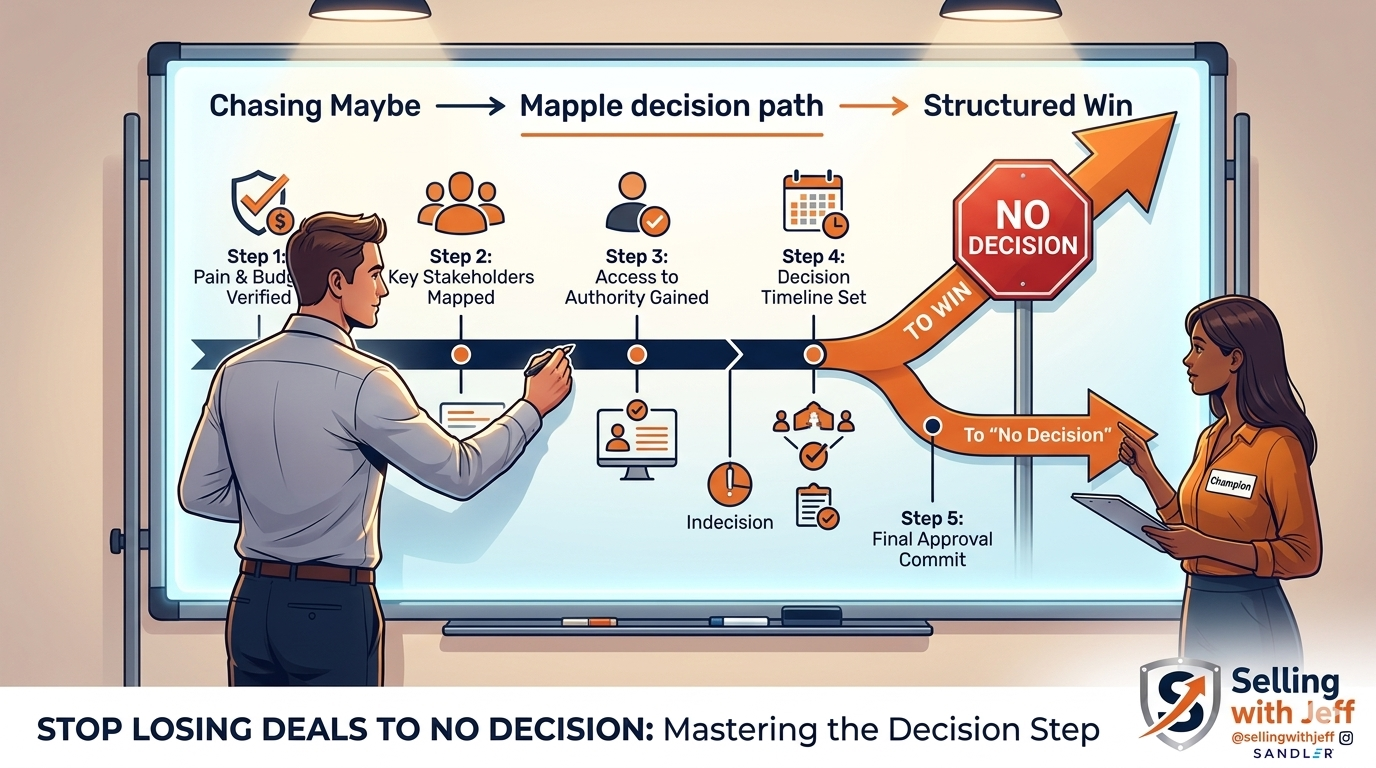
Your job, then, is not just to persuade. It is to help the buyer make a defensible, low-regret choice on a clear timeline. That means treating “no decision” as a signal that a step in your sales process was skipped, rushed, or left entirely to the prospect.
Map the micro-decisions in your sales process
Most teams talk about their sales process as a few big stages: discovery, proposal, close. In reality, buyers make a series of micro-decisions: “Is this worth a second meeting?”, “Do I trust this person?”, “Can I defend this internally?”, “Is the timing right?” If you skip one, ghosting becomes more likely.
A practical way to see those micro-decisions is to flowchart a typical win. Start with first contact and list every moment where either side chose to continue or stop. Many Sandler-trained teams recognize pain–budget–decision as three critical checkpoints. In each, the prospect decides whether the problem is worth solving, whether they can invest, and whether they are willing to involve real decision-makers.
Compare that ideal flow to a recent deal that went silent. Where did you jump straight from “good conversation” to “send the paperwork”? One utility program team, for example, realized they were sending participation agreements before confirming who would own the internal work and how legal would evaluate the contract. Once they added those checkpoints, fewer deals disappeared.
Build trust faster with better questions, not harder closes
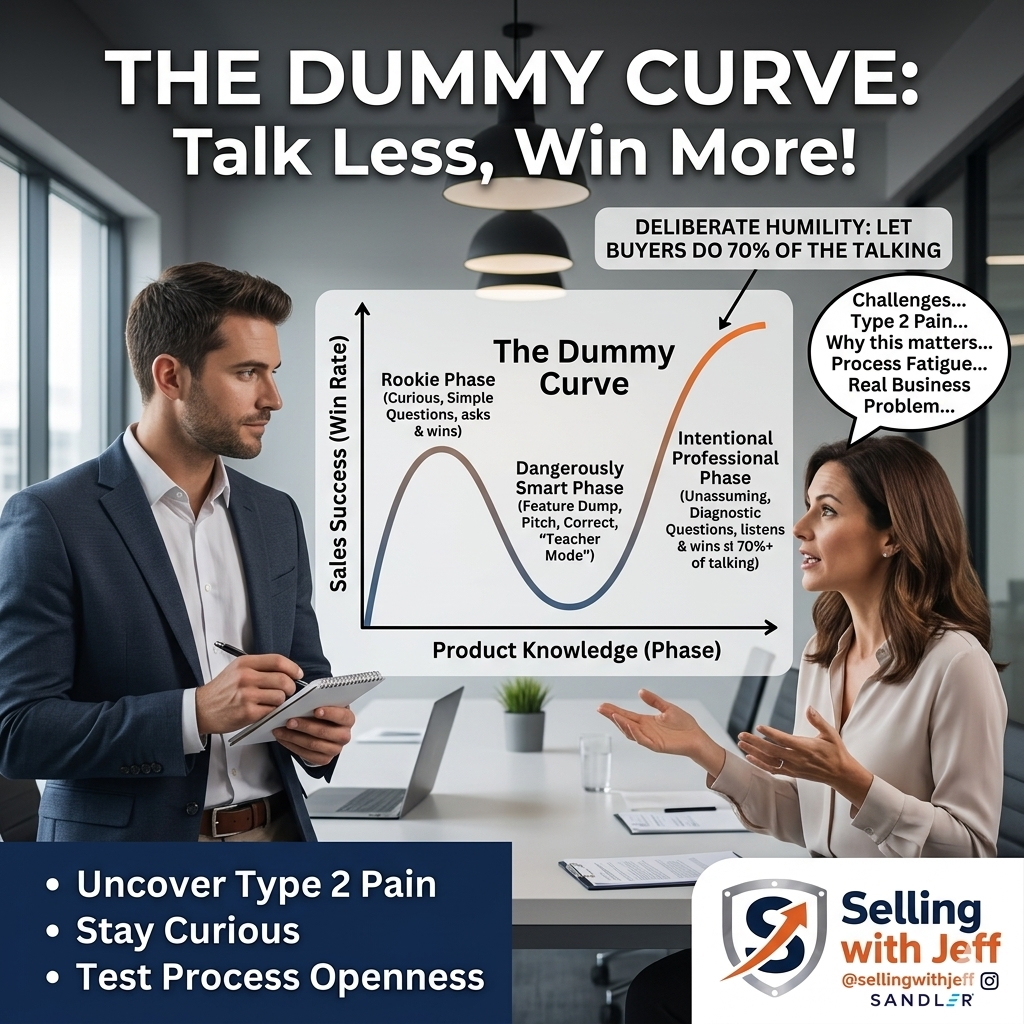
When ghosting happens, sellers often respond by “following up” harder—more emails, more voicemails, more product detail. The real fix is usually better questions earlier, especially around the buyer’s three whys: why change, why now, and why you. Each why deserves its own short, focused conversation.
Use simple, open questions to uncover the real stakes. Instead of pitching features, ask, “Can you give me an example of when this problem last cost you time or money?” Then follow with, “What happens if nothing changes this quarter?” These questions surface both business impact and personal risk, which McKinsey’s global B2B research shows are central to modern buying decisions as buyers juggle an average of ten channels in their journey (McKinsey).
As prospects talk through impact, they effectively build your business case for you. You differentiate not by dumping more slides, but by being the one seller who helps them think clearly about risk, timing, and trade-offs.
Post-sell every next step so ghosting becomes unlikely
Even when a conversation ends well—“I’ll take this to my team” or “I just need legal to bless it”—ghosting risk is still high. The prospect has made a micro-decision, but it is fragile. Post-selling means stress-testing that decision before you leave the meeting instead of after they go dark.
You might say, “This probably won’t happen here, but everyone is busy. If I can’t reach you in two weeks, what would you like me to do?” Or, “When you walk your team through this, what questions do you expect them to ask—and how will you answer them?” Their responses tell you whether they can really carry the deal internally or need more support.
Where stakes and internal effort are high—like energy programs, fleet transitions, or major software changes—offer to help shape the criteria they will use to decide. “Can I share how similar organizations evaluated this so it’s easier to compare?” That way you teach them how to buy from you, reduce last-minute surprises, and turn more “I’ll think about it” conversations into clear yes-or-no outcomes instead of silence.