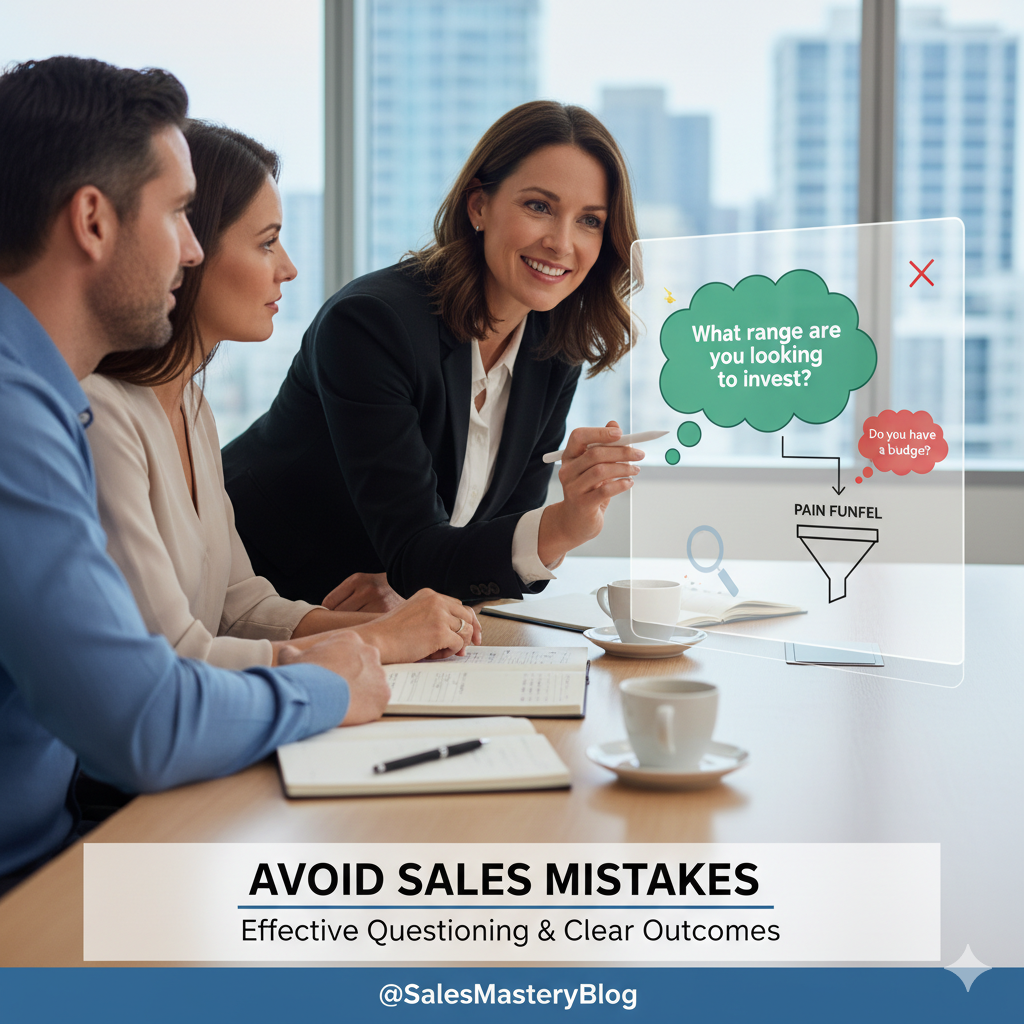
Maximize Sales Efficiency with Effective Questioning Techniques
Discover how mastering the art of questioning can transform your sales approach, leading to enhanced efficiency, shortened sales cycles, and improved win rates.
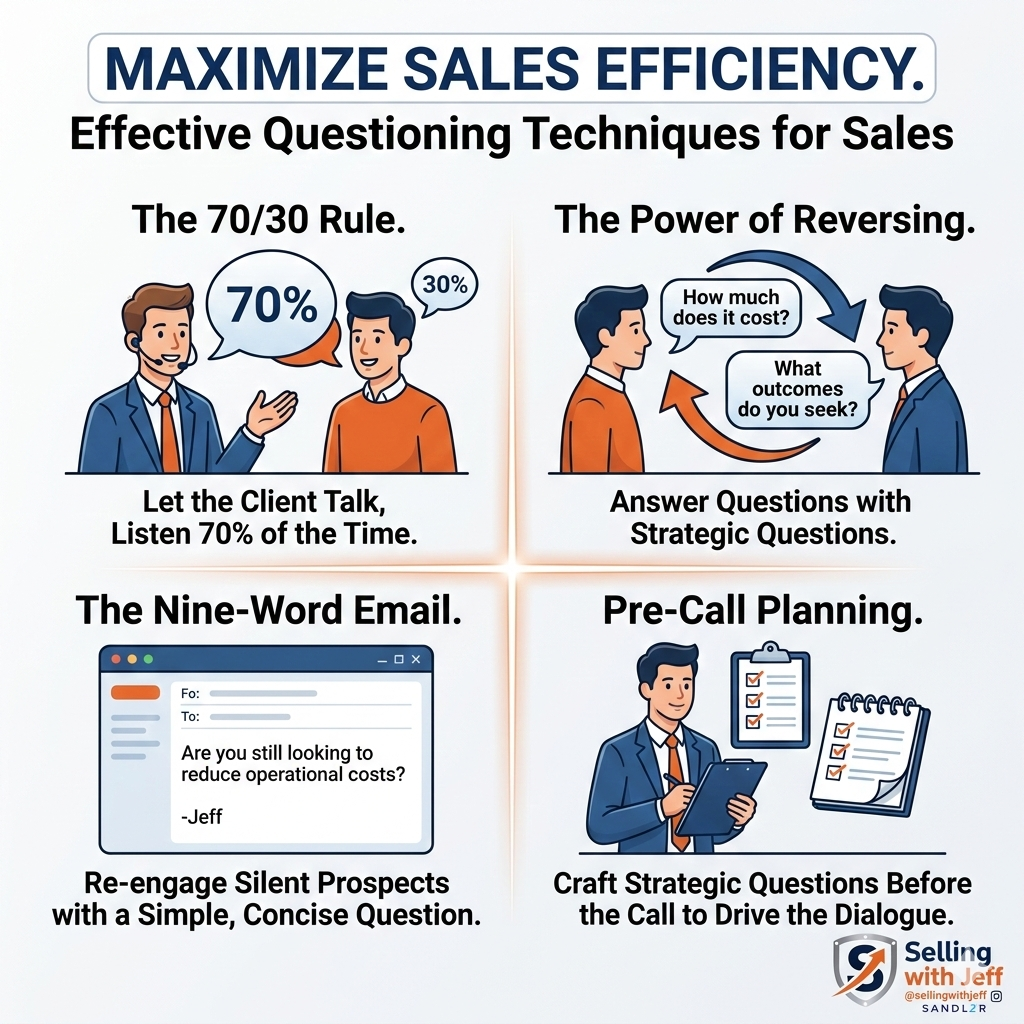
The 70/30 Rule: Letting the Client Talk
One of the most effective techniques in sales is the 70/30 rule, which suggests that clients should be talking 70% of the time during a sales conversation, while the salesperson talks only 30% of the time. This approach is rooted in the idea that the more clients talk, the more information they reveal about their needs, pain points, and decision-making processes.
By actively listening and asking open-ended questions, sales professionals can gather critical insights that help tailor their pitch to the specific needs of the client. This not only builds trust but also positions the salesperson as a consultant rather than a pushy seller. Remember, information is power, and the more you know about your client, the better you can serve them.
The Power of Reversing: Turning Questions into Opportunities
Reversing is a powerful technique that involves answering a question with another question. This strategy keeps the conversation flowing and encourages the client to provide more detailed information. For example, if a client asks about the cost of a service, instead of providing a direct answer, you might respond with, "What specific outcomes are you looking to achieve with this service?"
This approach not only helps in gathering more information but also keeps the control of the conversation in your hands. It’s a subtle, yet effective way to guide the dialogue and uncover deeper insights into the client's motivations and challenges. By mastering the art of reversing, you can turn every question into an opportunity to learn more and build a stronger case for your solution.
Breaking Through with the Nine-Word Email
The nine-word email is a simple yet highly effective tool for re-engaging prospects who have gone silent. The concept is to send an email with a subject line that prompts curiosity and a body that consists of a single, concise question. For example, "Is lowering your operational costs a priority for you?"
This brevity and directness cut through the noise of lengthy, complex emails and prompt a quick response. It leverages the psychology of curiosity and the ease of a simple ‘yes’ or ‘no’ answer. This tactic can significantly increase your response rates and reopen lines of communication with prospects who may have slipped through the cracks.
Pre-Call Planning: Crafting Strategic Questions
Effective questioning starts long before the actual sales conversation. Pre-call planning is essential to ensure you have a clear strategy and a list of well-thought-out questions. This preparation helps you stay focused, cover all necessary points, and adapt to the flow of the conversation.
Consider the goals of the conversation, the client's known pain points, and the information you need to gather. Prepare a mix of open-ended questions, probing questions, and reversals to keep the dialogue engaging and informative. For instance, questions like "What challenges are you currently facing in your sales process?" or "How do you measure success in your role?" can provide valuable insights that guide the conversation and help you position your solution more effectively.
By integrating these techniques into your sales approach, you can enhance your efficiency, shorten sales cycles, and significantly improve your win rates. Effective questioning is not just about asking questions—it's about asking the right questions at the right time.