Mastering Pre-Call Planning for Sales Success
Discover how effective pre-call planning can transform your sales meetings and drive success.
The Critical Role of Pre-Call Planning in Sales
In the fast-paced world of sales, preparation is everything. Pre-call planning is the cornerstone of a successful sales strategy, enabling professionals to approach each meeting with confidence and clarity. By dedicating time to prepare, salespeople can better understand their prospects, predict potential objections, and tailor their approach to meet the specific needs of their audience. This proactive strategy not only enhances the quality of the interaction but also significantly increases the chances of closing the deal.
Six Essential Steps for Effective Pre-Call Preparation
-
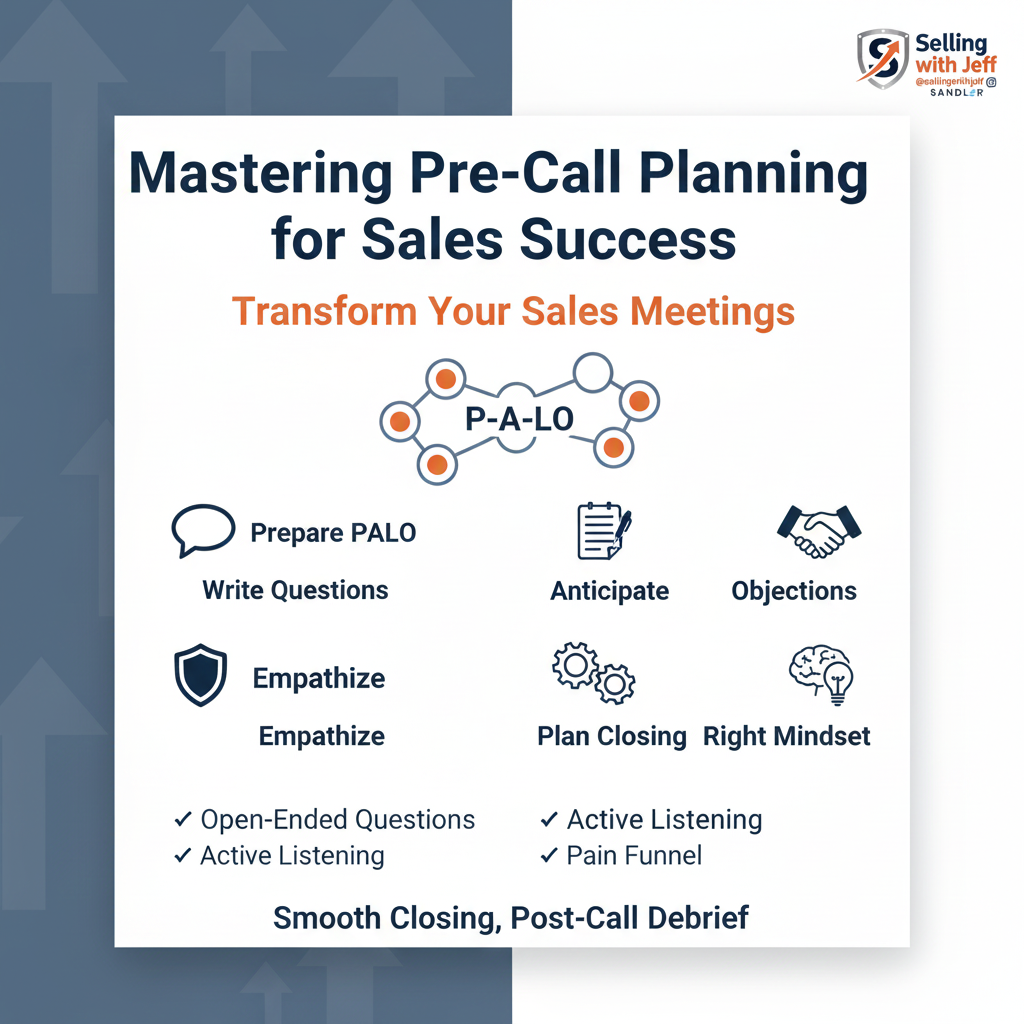
Prepare Your Opening PALO: Begin your preparation by crafting a clear and concise opening statement that outlines the Purpose, Agenda, Length, and Outcome (PALO) of the meeting. This sets the stage for a structured and productive conversation.
-
Write Down Key Questions: Identify the critical questions you need to ask during the meeting. These should cover areas such as the prospect's pain points, budget, decision-making process, and technical requirements. Being prepared with these questions ensures you gather all necessary information.
-
Anticipate Objections: Spend time considering potential objections or challenges that may arise during the conversation. Preparing responses to these objections in advance helps you handle them smoothly and maintain control of the meeting.
-
Empathize with the Prospect: Put yourself in the prospect's shoes and think about how they might perceive the meeting. This empathetic approach ensures that your questions and comments are respectful and considerate, fostering a positive rapport.
-
Plan Your Closing PALO: End the meeting on a strong note by clearly outlining the next steps and desired outcomes. This reinforces the structure of the meeting and sets clear expectations for future interactions.
-
Get in the Right Mindset: Before the meeting, take a moment to focus and get into the right mindset. Approach the meeting with the professionalism and confidence of a consultant, ready to provide valuable insights and solutions.
Practical Techniques to Enhance Your Questioning Strategy
Asking the right questions is a critical component of any successful sales call. Effective questioning allows you to uncover the prospect's needs and pain points, providing insights that inform your sales strategy. Here are some techniques to enhance your questioning:
-
Use Open-Ended Questions: Encourage detailed responses by asking open-ended questions. For example, instead of asking, "Do you have any challenges with your current system?" ask, "What challenges are you experiencing with your current system?"
-
Practice Active Listening: Demonstrate that you are genuinely interested in the prospect's responses by practicing active listening. This involves paraphrasing their answers and asking follow-up questions to show that you are engaged and understand their needs.
-
Incorporate the Pain Funnel: Utilize the pain funnel technique to dig deeper into the prospect's issues. Start with broad questions and gradually narrow down to more specific ones, uncovering the root cause of their pain points.
Ensuring a Smooth Closing and Post-Call Evaluation
A successful sales call doesn't end when the meeting concludes. Ensuring a smooth closing and conducting a thorough post-call evaluation are essential steps to drive continuous improvement and maintain momentum.
-
Summarize Key Points: At the end of the meeting, summarize the key points discussed and confirm the next steps. This ensures that both parties are on the same page and provides a clear path forward.
-
Set Clear Expectations: Clearly outline what will happen next, including any follow-up actions and timelines. This helps manage the prospect's expectations and keeps the sales process moving forward.
-
Conduct a Post-Call Debrief: After the meeting, take time to reflect on what went well and what could be improved. Analyze the responses you received, the effectiveness of your questioning, and any objections raised. This post-call debrief helps refine your approach for future meetings.
By mastering pre-call planning and adopting a consultative selling approach, sales professionals can significantly enhance their performance and achieve better outcomes. Through careful preparation, effective questioning, and thoughtful follow-up, you can transform your sales meetings into powerful opportunities for success.