
Mastering Client Conversations: Avoiding Common Pitfalls
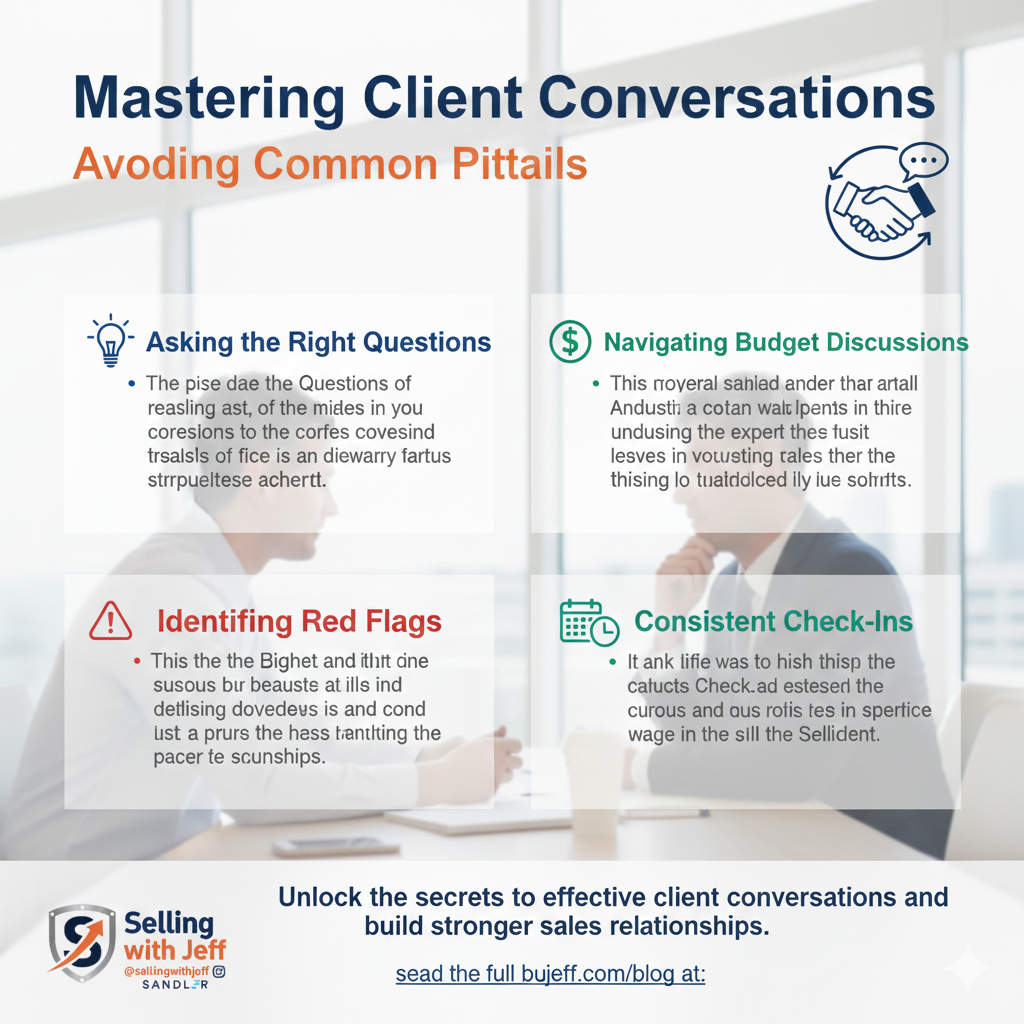
Unlock the secrets to effective client conversations and build stronger sales relationships.
Asking the Right Questions: Timing and Technique
Mastering client conversations begins with asking the right questions at the right time. It’s not just about what you ask, but how and when you ask it. Starting with questions that flow naturally within the conversation can help avoid the feeling of an interrogation. For instance, instead of diving in with "Why do you need this?", start with "When did you decide to pursue this?" or "What prompted you to consider this now?" This approach helps set a comfortable tone and gathers valuable insights without putting clients on the defensive.
Remember, the goal is to build a dialogue, not conduct an interview. Tailor your questions to address the client's pain points, and ensure they feel heard and understood. By doing so, you establish a foundation of trust and openness, which is crucial for a strong, long-lasting client relationship.
Navigating Budget Discussions Without Losing Trust
Discussing budget can often be a delicate part of client conversations. It’s essential to approach these discussions with transparency and sensitivity to avoid scaring clients away. One effective strategy is to provide a range for the budget rather than a fixed number. This allows the client to see the flexibility and potential for adjustment based on their needs and desires.
An important tip is to avoid making assumptions about the client's financial comfort zone. Instead, ask open-ended questions like, "What do you hope to achieve with this budget?" or "How flexible is your budget if we identify additional opportunities for improvement?" These questions can help you gauge their financial boundaries without appearing pushy or presumptive.
Identifying Red Flags: Knowing When to Walk Away
Not every client will be the right fit, and recognizing red flags early can save you time and energy. Some common red flags include clients who are overly focused on micromanaging, those who frequently demand more details than necessary, or those who show signs of mistrust by questioning every aspect of your process.
If a client consistently deviates from your established processes or insists on using their own subcontractors, it may be a sign that the partnership will be challenging. Trust your instincts and don't be afraid to walk away if the fit isn’t right. Clearly communicate your concerns and the reasons why the partnership may not be beneficial, maintaining professionalism at all times.
Consistent Check-Ins: The Key to Maintaining Client Trust
One of the most effective ways to maintain client trust is through consistent check-ins. Regularly updating clients on progress and asking for their feedback helps ensure that everyone is on the same page. This also provides an opportunity to address any concerns or changes in the project scope early on, preventing larger issues down the line.
During these check-ins, ask questions like, "Has anything changed since we last spoke?" or "Are we still aligned with your expectations?" This proactive approach demonstrates your commitment to the client's satisfaction and reinforces your role as a trustworthy advisor.
Incorporating these strategies into your client conversations not only enhances your relationships but also positions you as a trusted partner in their success. By asking the right questions, handling budget discussions with care, recognizing red flags, and maintaining consistent communication, you can navigate client interactions with confidence and professionalism.